
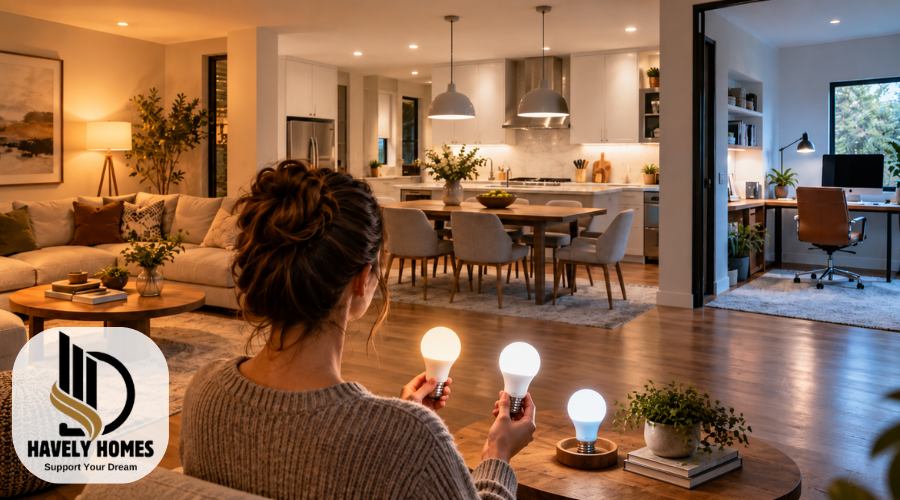
Lighting can completely change how a room looks and feels. A living room may appear warm and welcoming under soft white lighting, while the same space might feel noticeably different under a cooler white bulb. Choosing the right lighting is about more than making a room bright enough.
Understanding how to choose the right light bulb color temperature helps you create comfortable, practical lighting throughout your home. The right choice depends on how you use each room, the amount of natural daylight available, and the atmosphere you want to create.
Light bulb color temperature is measured in Kelvin (K). Lower Kelvin numbers produce warmer-looking light, while higher numbers create cooler-looking light. Knowing this simple difference makes choosing suitable bulbs much easier.
Quick Answer:
To choose the right light bulb color temperature, check the Kelvin (K) rating. Choose 2700K–3000K for cozy rooms and 3000K–4000K for many task areas. Also consider brightness, natural daylight, and room function.
Quick-Guide Table
| Possible problem | What to check | Recommended action |
| Room feels too yellow | Bulb’s Kelvin rating | Try 3000K instead of 2700K for a less yellow appearance. |
| Lighting looks harsh or bluish | Bulbs rated 5000K–6500K | Consider warmer 2700K–4000K lighting, depending on room use. |
| Room feels too dark | Lumen rating and fixture placement | Choose suitable brightness and improve light distribution. |
| Lighting looks uneven | Different Kelvin ratings in nearby bulbs | Use matching temperatures within the same multi-bulb fixture. |
| Wall colors look unnatural | Color temperature and CRI | Test bulbs with a CRI of 90 or above where accurate colors matter. |
| LED flickers when dimmed | Bulb and dimmer compatibility | Check manufacturer instructions and use compatible products. Contact an electrician if flickering continues. |
Simple Steps to Choose the Right Light Bulb Color Temperature
- Identify the room’s purpose: Decide whether the space is mainly for relaxing, cooking, reading, or working.
- Choose a starting Kelvin range: Consider 2700K–3000K for cozy spaces and 3000K–4000K for many everyday task areas.
- Check brightness: Compare lumens rather than assuming higher Kelvin numbers mean brighter light.
- Consider room colors: Look at wall paint, flooring, furniture, and the amount of natural daylight.
- Check bulb compatibility: Confirm the correct base, voltage, fixture rating, and dimming requirements.
- Test before replacing every bulb: Try your preferred color temperature during the day and evening.
What Does Light Bulb Color Temperature Mean?
Light bulb color temperature describes the appearance of white light produced by a bulb. Some bulbs give off a soft, yellowish glow, while others produce a cleaner white or slightly bluish light.
This difference is measured using the Kelvin scale.
A bulb rated at 2700K produces warm-looking light similar to traditional incandescent lighting. A 4000K bulb looks more neutral, while a 6500K bulb produces a much cooler, bluish-white appearance.
Despite its name, color temperature does not tell you how hot a bulb becomes. It also does not measure brightness.
Manufacturers commonly describe light colors as warm white, soft white, neutral white, cool white, or daylight. However, these names can vary between brands.
The Kelvin rating provides a more consistent way to compare bulbs and understand how their light will appear inside your home.
Understanding the Kelvin Color Temperature Scale
The Kelvin scale makes it easier to compare different types of white lighting. Each range produces a slightly different appearance, making some options more suitable for particular rooms and activities.
| Kelvin range | Light appearance | Common uses |
| 2200K–2700K | Extra warm, amber | Decorative lamps and accent lighting |
| 2700K–3000K | Warm or soft white | Bedrooms, living rooms, dining rooms |
| 3000K–3500K | Warm to neutral white | Kitchens, bathrooms, multipurpose spaces |
| 3500K–4000K | Neutral to cool white | Work areas, kitchens, laundry rooms |
| 4000K–5000K | Cool white | Garages, workshops, task lighting |
| 5000K–6500K | Daylight-like, bluish white | Selected detailed tasks and utility areas |
These ranges are general guidelines rather than strict rules. Product labels may also use different names for similar Kelvin ratings.
For example, 2700K is often preferred when homeowners want a cozy atmosphere. A 3000K bulb still looks warm but has a less yellow appearance.
At 4000K, the light becomes more neutral or cool-looking. Higher temperatures, such as 5000K and 6500K, may suit particular work areas but can feel too stark in rooms intended for relaxation.
How to Choose the Right Light Bulb Color Temperature
The simplest way to choose a suitable color temperature is to think about what happens in the room.
A bedroom mainly used for resting may benefit from warm lighting. A kitchen where you prepare meals needs good visibility, while a home office might benefit from more neutral illumination.
Follow these practical steps:
- Identify the room’s purpose. Decide whether you need lighting for relaxation, everyday activities, detailed work, or several purposes.
- Choose the preferred appearance. Warm light creates a softer atmosphere, while neutral and cooler lighting offers a different visual feel.
- Consider natural daylight. A room with large windows may look different under artificial lighting during the evening.
- Look at existing finishes. Wall colors, flooring, furniture, and curtains can influence how the lighting appears.
- Compare similar temperatures. Try 2700K against 3000K or 3000K against 4000K before choosing.
- Test the light at home. Observe the bulb during daylight and after sunset.
Remember that personal preference matters. There is no single Kelvin rating that works perfectly for every homeowner.
Best Light Bulb Color Temperature for Living Rooms, Bedrooms, and Dining Rooms
Living rooms, bedrooms, and dining spaces usually benefit from comfortable lighting that makes everyday activities pleasant.
Living Rooms
For many living rooms, 2700K to 3000K provides a useful starting point. These warm temperatures create a welcoming appearance without requiring particularly bright or harsh lighting.
Table lamps, floor lamps, and wall lighting can add flexibility. A 3000K bulb may also suit a modern living room where homeowners prefer a slightly cleaner white appearance.
Bedrooms
Bedrooms generally work well with warmer lighting around 2700K. Bedside lamps can provide gentle illumination for evening activities without filling the entire room with strong overhead light.
A separate reading lamp may be helpful when additional brightness is needed.
Dining Rooms
Warm white lighting around 2700K to 3000K can make dining areas feel inviting. Pendant lights positioned appropriately above a dining table provide focused illumination while contributing to the room’s overall appearance.
Dimmable lighting offers additional control over brightness. However, the bulb and dimmer must be compatible.
For multipurpose living and dining spaces, adjustable lighting can help accommodate different activities.
Choosing Light Bulb Color Temperature for Kitchens and Bathrooms
Kitchens and bathrooms need lighting that supports everyday tasks while remaining comfortable.
Kitchen Lighting
Kitchen activities include preparing ingredients, reading labels, cooking, and cleaning. A color temperature around 3000K to 4000K can work well, depending on the kitchen design and personal preference.
A 3000K bulb provides a warmer appearance, while 4000K produces a more neutral or cooler look.
Under-cabinet lighting can illuminate countertops where overhead fixtures create shadows. Good placement and sufficient brightness are especially important around food preparation areas.
Bathroom Lighting
Bathrooms often benefit from approximately 3000K to 4000K lighting.
Mirror lighting should illuminate the face evenly for shaving, skincare, and makeup application. Bulbs with good color rendering are also important because they help skin tones and makeup colors appear more accurately.
A bathroom can combine comfortable general lighting with brighter task lighting around the mirror.
Always choose fixtures and bulbs suitable for the bathroom’s moisture conditions. Locations exposed to water may require specially rated lighting products.
Ideal Color Temperatures for Home Offices, Reading Areas, and Garages
Rooms used for concentration or detailed activities need appropriate lighting, but cooler color temperatures are not automatically better.
Home Offices
Approximately 3500K to 5000K may suit home offices, depending on room conditions and preferences.
Neutral white lighting can provide a clean-looking workspace. However, sufficient brightness, glare control, and proper lamp positioning are just as important as color temperature.
Reading Areas
Reading corners can use warm or neutral lighting. A properly positioned reading lamp should illuminate the page without shining directly into your eyes.
A brighter bulb does not necessarily need a higher Kelvin rating.
Garages and Workshops
Garages and workshops may benefit from neutral or cooler white lighting around 4000K to 5000K.
These spaces often require good visibility for storage, maintenance, and detailed tasks. Additional task lighting may be necessary around workbenches.
Laundry and Utility Rooms
Lighting around 3500K to 4000K can provide a practical appearance for laundry and utility rooms.
For every workspace, prioritize adequate light output, even coverage, and minimal glare rather than choosing a bulb based only on its Kelvin rating.
Lighting Choices for Hallways, Staircases, and Outdoor Areas
Hallways and staircases connect different parts of the home, so their lighting should complement nearby rooms.
A hallway leading to warm-lit living spaces may look more consistent with 2700K or 3000K bulbs. However, proper brightness and even illumination matter more than matching color temperatures perfectly.
Staircases need clearly visible steps and changes in floor level. Avoid poorly positioned fixtures that create distracting glare or deep shadows.
Outdoor Lighting
For outdoor areas, warmer lighting is often preferable. DarkSky International recommends 2700K or lower for outdoor lighting where practical.
Warm-colored outdoor bulbs can provide useful illumination while helping reduce the potential impact of excessive cool, blue-rich light at night.
Outdoor fixtures should direct light toward walkways, entrances, or other necessary areas rather than neighboring properties or the sky.
Motion sensors and timers can also help reduce unnecessary lighting.
Remember that Kelvin alone does not determine outdoor safety. Appropriate brightness, fixture placement, weather protection, and visibility are equally important.
How Wall Colors, Furniture, and Natural Light Affect Your Choice
The same light bulb can look different depending on the colors and materials inside a room.
Warm lighting often emphasizes the inviting appearance of wooden furniture, beige walls, and earthy decorative finishes. Cooler lighting may make some white, gray, and blue surfaces appear different.
However, these effects depend on the bulb’s color rendering quality and the materials being illuminated.
A room with white walls does not automatically need cool white bulbs. Likewise, wooden furniture does not mean warm white lighting is the only suitable option.
Natural daylight also influences the overall appearance.
During the daytime, sunlight may dominate the room’s lighting. After sunset, the same space relies more heavily on artificial light, making the bulb’s color temperature more noticeable.
Before buying several bulbs, test one suitable option in the room. Look at your walls, flooring, and furniture under the light to see whether the appearance meets your expectations.
Kelvin vs. Lumens, Watts, and CRI: What Matters When Buying Bulbs?
Light bulb packaging contains several measurements that describe different features.
Understanding them helps prevent purchasing mistakes.
Kelvin (K) describes the color appearance of white light. Lower values look warmer, while higher values look cooler.
Lumens measure how much visible light a bulb produces. Higher lumen ratings generally mean greater light output.
Watts measure electrical power consumption. They do not directly measure brightness.
For example, an LED bulb may produce approximately 800 lumens while consuming much less electricity than a traditional 60-watt incandescent bulb producing similar light output.
Color Rendering Index (CRI) describes how accurately a light source renders colors compared with a reference light source.
For general indoor lighting, a CRI of 80 or higher is a common recommendation. A CRI of 90 or above can be particularly useful when accurately viewing clothing, artwork, food, or skin tones matters.
When shopping, consider all these measurements together. A suitable Kelvin rating cannot compensate for inadequate brightness or poor color rendering.
How to Read Light Bulb Labels and Choose a Compatible Bulb
Before purchasing a bulb, examine the packaging rather than choosing only by its advertised color name.
The Lighting Facts label used on many bulbs provides information such as brightness in lumens, light appearance, wattage, estimated energy cost, and expected life.
Check the printed Kelvin number to identify the bulb’s color temperature.
Next, confirm that the bulb fits your existing fixture.
Important details include the bulb’s shape, base type, voltage requirements, and the fixture manufacturer’s specifications.
Different fixtures use different sockets and connections, so never assume that every household bulb is interchangeable.
Also check whether the product is approved for its intended installation.
Some LED bulbs are unsuitable for fully enclosed fixtures because trapped heat can affect their operation. Others may be specifically rated for enclosed fixtures.
Outdoor and bathroom installations may require damp-location or wet-location ratings, depending on exposure.
If you use a dimmer switch, choose a dimmable bulb compatible with that control.
Following the product instructions helps avoid unnecessary performance problems and ensures the bulb is used as intended.
Matching Light Colors and Using Adjustable LED Lighting
Using the same color temperature in a multi-bulb fixture generally creates a more consistent appearance.
For example, combining 2700K and 4000K bulbs in one ceiling fixture may produce noticeably different patches of light.
However, different temperatures can work successfully when they serve separate purposes.
A home may include three lighting layers:
- Ambient lighting: General illumination for the entire room.
- Task lighting: Focused light for activities such as reading or cooking.
- Accent lighting: Decorative lighting used to highlight particular features.
Adjustable LED products provide additional flexibility.
Standard dimmable LEDs generally reduce brightness without intentionally changing color temperature.
Dim-to-warm LEDs are designed to produce warmer-looking light as they dim.
Tunable-white LED bulbs allow users to change the white light’s color temperature within the product’s supported range.
Some smart bulbs offer this feature through compatible controls or applications.
These options can be helpful in multipurpose rooms, such as dining areas that also serve as temporary workspaces.
Always verify the product’s features and compatibility before purchasing.
Common Color Temperature Mistakes and Safe Lighting Checks
Choosing light bulbs can be straightforward, but several common mistakes can affect comfort, appearance, and performance.
Assuming Higher Kelvin Means Greater Brightness
A 5000K bulb is not necessarily brighter than a 2700K bulb. Always compare lumen ratings when choosing light output.
Using Warm Light Without Enough Brightness
Warm lighting may look comfortable, but activities such as reading, chopping vegetables, and working require sufficient illumination.
Choose appropriate brightness and fixture placement for the task.
Mixing Different Bulb Colors Accidentally
Noticeably different temperatures in one fixture can create an inconsistent appearance. Check existing bulb specifications before purchasing replacements.
Ignoring Glare and Color Rendering
Even a suitable color temperature may feel uncomfortable if a bulb shines directly into your eyes or produces distracting reflections.
Color rendering should also be considered where accurate color appearance matters.
Overlooking Electrical Safety
When replacing a bulb, follow these basic precautions:
- Switch off the light and allow the existing bulb to cool.
- Use a replacement that meets the fixture’s electrical ratings and instructions.
- Never use damaged bulbs, sockets, or electrical fittings.
- Avoid touching exposed wiring or attempting electrical modifications.
If a light repeatedly flickers, a socket appears damaged, or a fixture shows signs of overheating, stop using it and contact a qualified electrician.
Professional assistance is also appropriate when new wiring, fixture alterations, or electrical troubleshooting are required.
Conclusion
Learning how to choose the right light bulb color temperature makes it easier to create lighting that suits each room in your home.
Warm white bulbs around 2700K to 3000K often work well in bedrooms, living rooms, and dining areas. Neutral or cooler white lighting may be more suitable for kitchens, home offices, garages, and other task-focused spaces.
However, Kelvin is only one part of choosing good lighting. Brightness, color rendering, fixture compatibility, natural daylight, and personal preferences also matter.
Start with the room’s main purpose, compare suitable Kelvin ratings, and test your preferred lighting before replacing multiple bulbs. A thoughtful choice can make everyday spaces more comfortable, functional, and visually appealing.
Frequently Asked Questions
Is 3000k A Good Color Temperature For The Whole House?
3000K is a versatile choice for many homes because it provides warm white light without appearing excessively yellow. However, some workspaces may benefit from more neutral lighting, depending on their purpose.
What Is The Difference Between Daylight Bulbs And Natural Daylight?
Daylight bulbs usually produce cooler white light, often around 5000K–6500K. Natural daylight changes throughout the day, so a daylight-labeled bulb cannot reproduce every color and lighting condition found outdoors.
Can I Use 4000k Light Bulbs In A Bedroom?
Yes, 4000K bulbs can work in bedrooms, particularly near dressing tables or work areas. However, warmer lighting around 2700K–3000K is often preferred for a softer, more relaxing atmosphere.
Does Light Bulb Color Temperature Affect Electricity Consumption?
Kelvin describes the appearance of light, not electricity consumption. Two bulbs with different color temperatures can use similar amounts of electricity. Compare their wattage and efficiency when evaluating energy use.
Does dimming an LED Bulb Change Its Color Temperature?
Most standard dimmable LEDs mainly change brightness. Bulbs specifically designed with dim-to-warm or tunable-white technology can change color temperature. Always check the product specifications before purchasing.
Disclaimer: This article is for general home-lighting information only. Bulb specifications, fixtures, and installation requirements can vary. Always follow the manufacturer’s instructions. Thermostat models and troubleshooting procedures also differ; consult the relevant model manual or official support information. Electrical wiring, gas, furnace, and complex HVAC work should be handled by qualified professionals. Havely Homes is an independent informational website, not an official Honeywell support service or Honeywell affiliate. It is intended to provide helpful information to visitors and does not engage in paid promotions or advertising.
