
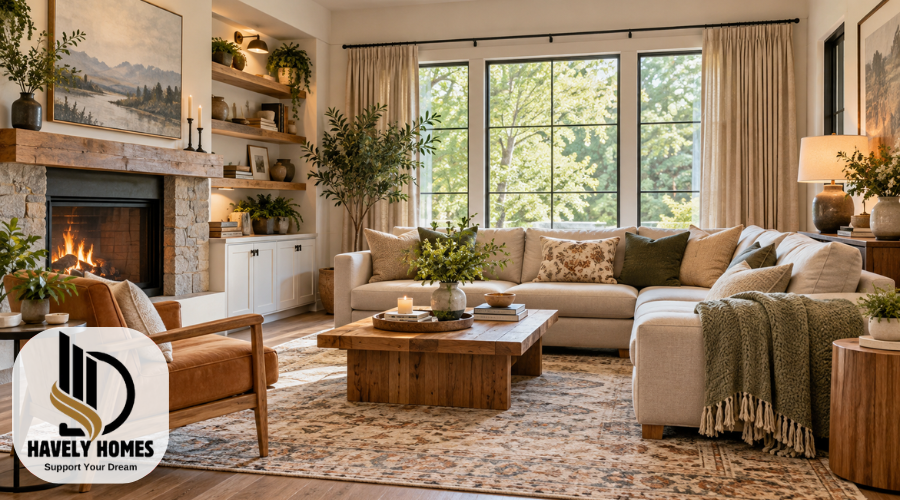
A living room is one of the most important spaces in a home. It is where families relax, guests gather, and everyday moments happen. A thoughtfully decorated living room should look attractive while remaining comfortable and practical for daily activities.
If you are wondering how to decorate a living room, the best approach is to start with your available space, existing furniture, and personal preferences. Furniture arrangement, wall colors, lighting, rugs, and decorative accessories all contribute to the room’s overall appearance.
You do not need expensive furniture or a complete renovation to create a welcoming space. Simple improvements, such as rearranging a sofa, adding cushions, or changing the lighting, can make a noticeable difference.
This guide explains how to plan your living room, choose suitable decorations, work with smaller spaces, and create a beautiful result without unnecessary spending.
Quick Answer:
To decorate a living room, start by measuring your space and planning the furniture layout. Choose coordinating colors, comfortable seating, suitable lighting, and simple decorations that reflect your style without overcrowding the room.
Quick-Guide Table
| Possible Problem | What to Check | Recommended Action |
| Living room feels crowded | Furniture size and available floor space | Remove unnecessary items and consider compact furniture. |
| Furniture looks unbalanced | Sofa, chairs, and focal point | Rearrange seating to create a comfortable, practical layout. |
| Room looks dark | Natural light and existing lamps | Adjust window coverings and add suitable floor or table lamps. |
| Wall colors do not match | Furniture colors and room lighting | Test coordinating paint samples before making changes. |
| Walls look empty | Wall size and available decorations | Add framed pictures, artwork, or mirrors in balanced arrangements. |
| Living room feels unfinished | Rug size, textures, and accessories | Add a suitable rug, cushions, or a few meaningful decorations. |
| Decorating costs are too high | Existing furniture and available budget | Reuse furniture and prioritize affordable improvements. |
Simple Steps to Decorate Your Living Room
- Measure your space: Record the room’s dimensions, doors, windows, and furniture sizes.
- Plan the layout: Position sofas, chairs, and tables to support comfortable seating and clear movement.
- Choose your colors: Select a coordinating palette that complements the furniture and natural lighting.
- Improve the lighting: Combine daylight with suitable lamps for everyday activities.
- Add decorations: Use artwork, cushions, rugs, and plants to introduce personality.
- Check comfort and safety: Keep walkways clear and ensure tip-over-prone furniture is appropriately secured.
Start by Planning Your Living Room Space
Before purchasing decorations, consider how you use your living room. Some households need comfortable seating for family activities, while others prefer a peaceful space for reading or entertaining guests.
Understanding the room’s purpose helps you choose furniture and decorations that support your everyday routine.
Start by measuring the room’s length and width. Note the locations of doors, windows, electrical outlets, and permanent features such as fireplaces. These measurements will help you decide where furniture can fit without blocking movement.
Next, examine the furniture you already own. A comfortable sofa, useful cabinet, or attractive coffee table may work perfectly with a different arrangement.
You should also establish a realistic decorating budget. Separate essential purchases from optional improvements. For example, replacing uncomfortable seating may deserve attention before buying decorative accessories.
A simple floor plan can help you experiment with furniture placement before moving heavy items. You can sketch the room on paper and mark the approximate dimensions of larger pieces.
Good planning reduces unnecessary purchases and makes the decorating process more organized.
Choose a Decorating Style and Color Scheme
Choosing a decorating style gives your living room a consistent appearance. However, you do not need to follow one design style perfectly. Combining elements that suit your preferences can create a more personal space.
Some popular living room ideas include:
- Modern style: Clean lines, simple furniture, and carefully selected decorative details.
- Traditional style: Classic furniture shapes, warm colors, and familiar decorative patterns.
- Minimalist style: Fewer accessories, practical storage, and open surfaces.
- Cozy style: Comfortable seating, soft textiles, warm lighting, and inviting colors.
Once you have a general style in mind, choose a coordinating color scheme.
Neutral shades such as beige, cream, gray, and white provide flexible backgrounds for furniture and accessories. Alternatively, greens, blues, and warmer earthy colors can introduce more personality.
Consider selecting a main wall color, a supporting color for larger furnishings, and one or two accent colors for smaller decorations.
Before painting an entire room, test samples on suitable wall areas. Observe them during daylight and under your usual evening lighting because colors can appear different as lighting changes.
Your final color scheme should complement the furniture and materials already present.
Arrange Your Living Room Furniture for Comfort and Balance
Furniture placement strongly influences how comfortable and practical a living room feels.
Begin by identifying the room’s focal point. This might be a fireplace, television, large window, or attractive architectural feature. Arrange the main seating to make this feature easy to enjoy.
If conversation is important, position sofas and chairs so people can speak comfortably without turning awkwardly.
For a television-focused room, consider viewing comfort, screen reflections, and the placement of nearby seating.
Avoid automatically placing every furniture item against the walls. In larger spaces, moving sofas and chairs closer together can create a defined seating area. In smaller rooms, positioning furniture near the walls may provide more usable floor space.
Keep pathways between entrances, seating, and frequently used areas clear. Coffee tables should be conveniently accessible without making movement difficult.
Consider the visual balance of the arrangement. A large sofa may look more balanced with an armchair, side table, or suitable lamp nearby.
Experiment with a few arrangements before deciding which one feels most comfortable.
Select the Right Furniture, Rugs, and Curtains
Furniture should match both the size of your living room and the way your household uses it.
A large sectional sofa may provide useful seating in a spacious room, while a compact sofa and separate armchair may offer greater flexibility in a smaller space.
Before buying, check the furniture’s dimensions and make sure it can pass through doorways and other access points.
Side tables provide convenient places for lamps, books, and drinks. Choose pieces that complement your main seating without overcrowding the room.
An area rug can visually connect your furniture and define the seating space. A useful arrangement is to choose a rug that extends beneath at least the front portion of the sofa and nearby chairs, where the layout allows.
Consider the rug’s texture, cleaning requirements, and suitability for household activities.
Curtains and blinds are equally important. Light-filtering curtains can soften incoming daylight, while more opaque options offer additional privacy and light control.
Choose window coverings that complement the surrounding furniture and wall colors.
Combining materials such as wood, cotton, linen, and woven textiles can add visual interest without requiring matching furniture sets.
Improve Your Living Room With the Right Lighting
Lighting affects how a living room looks and how comfortably you can use it throughout the day.
Start by making the most of natural light. Avoid placing unnecessary furniture directly in front of windows. Sheer curtains or adjustable blinds can provide privacy while allowing some daylight into the room.
For evening use, combine different types of lighting rather than relying entirely on one ceiling fixture.
Three useful lighting types include:
- General lighting: Ceiling fixtures or other lights that illuminate the main living space.
- Task lighting: Table lamps or floor lamps that provide focused light for reading and similar activities.
- Accent lighting: Decorative lights that highlight artwork, shelves, or architectural details.
A floor lamp beside an armchair can create a comfortable reading area, while a table lamp can make a darker corner more inviting.
Energy-efficient LED bulbs are worth considering because they generally use less electricity than traditional incandescent bulbs.
Choose suitable bulbs and fixtures according to their manufacturer instructions. If new wiring or electrical alterations are required, use a qualified electrician.
How to Decorate Living Room Walls Without Overcrowding Them
Wall decorations can give your living room character without taking up valuable floor space.
Artwork is a practical starting point. A large framed print can become a focal point, while several smaller pieces can create a more personal arrangement.
Mirrors are another option. When positioned thoughtfully, they reflect light and can make a room appear brighter.
Floating shelves can display books, small plants, and decorative objects while providing useful storage.
If you prefer inexpensive changes, consider framed prints, removable decorations suitable for your wall surface, or a carefully chosen accent color.
When choosing decorations, consider the size of the wall and the furniture beneath it. Large empty walls may accommodate bigger artwork, while narrow spaces often benefit from smaller pieces.
Avoid covering every wall with accessories. Leaving some areas undecorated helps maintain visual balance.
For heavy mirrors and shelves, check the wall construction and use appropriate fixing hardware. Seek professional installation advice when the wall type or required support is uncertain.
Decorate Your Living Room With Pictures and Personal Artwork
Pictures can make a living room feel more personal and meaningful.
Family photographs, travel memories, children’s artwork, and favorite prints are all suitable choices. They allow you to decorate with items that reflect your experiences rather than relying entirely on purchased accessories.
A gallery wall is one way to display several pictures together. You can use matching frames for a coordinated appearance or combine different frames for a relaxed style.
Before hanging anything, arrange the frames on the floor to experiment with their order and spacing.
Pictures often look attractive above sofas, console tables, or other suitable furniture. Consider keeping the arrangement visually connected to the furniture beneath it rather than spreading the pieces too far apart.
You can also display smaller framed photographs on shelves or cabinets if you prefer not to make holes in the walls.
Always choose picture-hanging hardware suitable for the frame’s weight and the wall material.
How to Decorate a Living Room With Simple Things
Small decorative changes can refresh a living room without replacing its main furniture.
Cushions are among the easiest accessories to change. Try combining coordinating colors, patterns, and textures to make a sofa look more inviting.
A throw blanket can add softness and warmth, particularly when placed neatly over an armchair or sofa.
Indoor plants can introduce natural color. Choose plants according to the available light and maintenance requirements, and check their suitability if you have children or pets.
Coffee tables and shelves also provide opportunities for simple decorations.
For example, you might arrange a few books beside a small decorative bowl or place a vase on a tray. Avoid filling every available surface, especially when the furniture is used regularly.
Texture also makes a difference. A woven basket, soft cushion, wooden accessory, and smooth ceramic piece can create an interesting combination.
Before purchasing anything new, try moving your existing decorations between rooms. Sometimes a familiar item looks completely different in a new position.
The goal is to create a welcoming room that remains comfortable to use.
How to Decorate a Small Living Room Without Making It Feel Crowded
Decorating a small living room requires careful furniture choices and practical organization.
Start with the largest essential item, usually the sofa. Choose a size that provides comfortable seating while leaving sufficient room to move around.
Furniture with exposed legs or a less bulky appearance may help the space look visually lighter.
Multifunctional furniture can also be useful. An ottoman with storage, nesting tables, or a compact cabinet can provide functionality without requiring several separate pieces.
Make use of vertical space when appropriate. Wall-mounted shelves can provide storage, although they must be securely installed using suitable fixings.
Mirrors can reflect available light, while coordinated wall and furniture colors may create a more continuous appearance.
However, a small living room does not have to be completely white. Darker or warmer colors can work well when chosen thoughtfully.
Avoid filling corners with unnecessary accessories. Store everyday items in baskets, drawers, or cabinets to keep surfaces organized.
Most importantly, maintain clear access to doors, seating, and frequently used areas. A practical layout matters more than simply making the room look larger.
How to Decorate a Living Room on a Budget
A limited budget does not prevent you from creating an attractive living room. The most effective approach is to identify which improvements will make the greatest difference.
Begin with changes that cost little or nothing.
Rearranging furniture, removing unnecessary clutter, and cleaning existing upholstery can make the room feel fresher.
If your sofa is still comfortable but looks worn, consider suitable washable covers or decorative cushions instead of purchasing a replacement.
Secondhand furniture can be another affordable option. Inspect items carefully for damage, stability, cleanliness, and signs of pests before bringing them home.
For wall decoration, framed prints, personal photographs, and simple artwork can provide inexpensive alternatives to costly decorative pieces.
Removable wall decorations may also be suitable, although compatibility with your wall finish should be checked first.
If you plan to repaint, follow the paint manufacturer’s preparation, ventilation, and safety instructions.
Rather than buying everything at once, prioritize essential improvements and add decorative details gradually.
A carefully planned budget allows you to spend money where it improves comfort and everyday usefulness.
How to Use AI to Plan Your Living Room Decoration
AI-based room design tools can help you explore decorating ideas before making purchases.
Some tools allow you to upload a photograph of your room and experiment with different furniture arrangements, wall colors, or decorating styles.
Others can generate visual ideas from written descriptions, such as a request for a cozy living room with neutral furniture and warm lighting.
These features can be useful when you are unsure which colors work together or want to compare several decorating styles.
However, AI-generated images should be treated as inspiration rather than accurate room plans.
Furniture shown in generated pictures may have unrealistic dimensions, incorrect proportions, or details that cannot be reproduced easily.
Always compare suggested arrangements with your actual room measurements, furniture dimensions, and practical requirements.
You can also create a simple digital mood board using photographs of furniture, paint samples, and decorative accessories.
Before uploading pictures of your home, review the tool’s privacy policy and data-handling practices. Avoid sharing images containing identifiable personal information or sensitive household details.
AI can support your decorating decisions, but real measurements and personal judgment remain essential.
Common Living Room Decorating Mistakes to Avoid
Even attractive furniture and decorations may produce disappointing results when the room lacks practical planning.
One common mistake is purchasing large furniture without measuring the available space. A beautiful sofa may become inconvenient if it blocks a doorway or leaves insufficient walking room.
Another problem is choosing an area rug that is too small for the seating arrangement. A suitable rug should help visually connect the furniture rather than appear disconnected from it.
Excessive decorations can also make the room feel crowded. Display meaningful accessories while leaving enough space for everyday activities.
Lighting mistakes are equally common. Relying on a single overhead fixture may leave reading areas and corners poorly illuminated.
Paint colors should also be tested before a major change. A shade that looks attractive in a photograph may appear different in your own room.
Safety deserves attention during decorating.
Tall bookcases, cabinets, and other tip-over-prone furniture should be appropriately anchored according to the manufacturer’s instructions. Wall-mounted items require fixings suitable for the surface and expected load.
Keep electrical cords away from walking routes and follow lighting equipment instructions.
For complex electrical work, uncertain wall installations, or mounting heavy objects, consult a qualified professional rather than attempting work beyond your experience.
A well-decorated room should be safe, practical, and comfortable, not simply attractive in photographs.
Conclusion
Learning how to decorate a living room becomes easier when you focus on planning, comfort, and personal style.
Start by understanding your space and arranging furniture to support everyday activities. Choose coordinating colors, suitable lighting, practical window coverings, and decorations that reflect your preferences.
Simple additions such as cushions, artwork, plants, and rugs can improve a room’s appearance without requiring major spending.
Whether your living room is large or small, prioritize functionality and comfort over temporary trends.
You do not need to complete everything at once. With thoughtful choices and gradual improvements, you can create a beautiful, welcoming living room that feels right for your home.
Frequently Asked Questions
Can I Mix Modern And Traditional Furniture In My Living Room?
Yes. Modern and traditional furniture can work together when pieces share complementary colors, materials, or textures. Choose a few consistent decorative elements to create a balanced appearance without making everything match perfectly.
Can Dark Colors Work In A Small Living Room?
Yes. Dark colors can create a cozy and inviting atmosphere in a small living room. Balance them with suitable lighting, comfortable furniture, and carefully chosen accessories to avoid making the space feel overwhelming.
How Can I Decorate A Rented Living Room Without Damaging The Walls?
Use rugs, cushions, freestanding artwork, and removable decorations suitable for your wall finish. Check your rental agreement and follow product instructions because some adhesive decorations may still damage paint or wallpaper.
How Do I Choose Suitable Indoor Plants For My Living Room?
Choose plants based on the natural light, available space, and care they require. If you have children or pets, check whether each plant is safe before placing it in your living room.
How Often Should I Change My Living Room Decorations?
There is no fixed schedule. Update decorations when your preferences, needs, or budget change. Rearranging existing accessories, refreshing cushions, or replacing worn items can improve the room without frequent purchases.
Disclaimer: This article is provided by havelyhomes.com for general informational purposes only. Decorating results may vary depending on room dimensions, furniture, materials, and individual preferences. Follow manufacturer instructions for furniture, lighting, and wall installations. If a project involves a thermostat, remember that models and troubleshooting procedures differ. Consult your specific model’s manual or official support information. Electrical wiring, gas, furnace, and complex HVAC work should always be handled by qualified professionals. Havelyhomes.com is an independent informational website and is not an official Honeywell support service or affiliated with Honeywell.
