
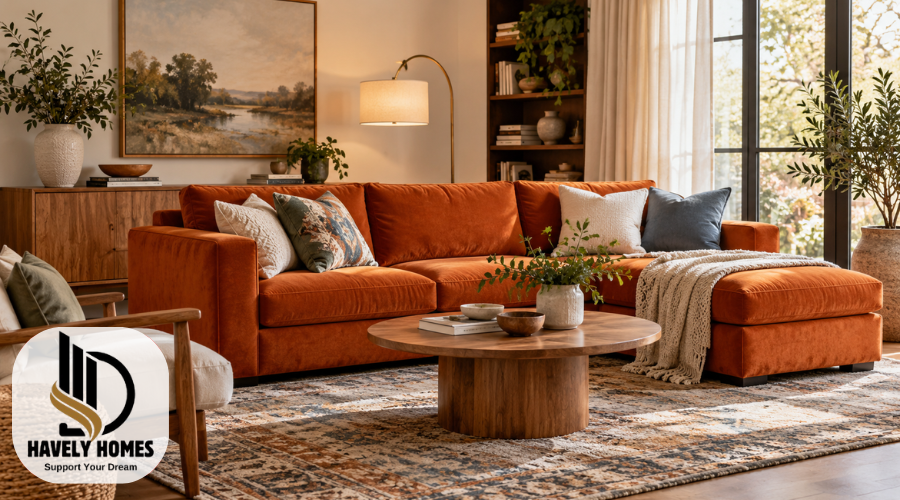
An orange couch can bring warmth, color, and personality to your living room. Whether you prefer a soft terracotta shade or a bright orange sofa, this furniture piece can make an ordinary space feel more inviting and interesting. The right design can become a beautiful focal point while still blending naturally with your existing home decor.
Orange couches come in many styles, including modern sectionals, vintage-inspired sofas, luxurious velvet designs, and classic leather options. Each offers a different appearance and works with different decorating styles.
Choosing the right orange couch involves more than finding an attractive color. You also need to consider the sofa’s size, material, comfort, and placement. This guide explains how to select, decorate, arrange, and maintain an orange couch so your living room looks balanced, comfortable, and stylish.
Quick Answer:
An orange couch can bring warmth and personality to a living room. Start by checking your room’s size, lighting, and existing colors. Then choose a suitable orange shade, couch style, and complementary accessories.
Quick-Guide Table
| Possible Problem | What to Check | Recommended Action |
| Orange couch looks too bright | Wall colors and surrounding decorations | Balance the couch with cream, beige, or other soft neutral shades. |
| Couch makes the room feel crowded | Couch dimensions and available floor space | Choose appropriately sized furniture and maintain clear walkways. |
| Orange shade clashes with furniture | Existing wood finishes and color undertones | Compare upholstery samples with furniture and flooring before buying. |
| Couch looks disconnected from the decor | Rugs, pillows, curtains, and accent colors | Introduce a few coordinated accessories to create a unified appearance. |
| Upholstery shows stains or marks | Fabric type and manufacturer’s care instructions | Use only cleaning methods approved for the specific upholstery. |
| Couch may not fit through the entrance | Doorways, corridors, staircases, and packaged dimensions | Measure the complete delivery route and confirm product dimensions before ordering. |
Simple Steps to Style an Orange Couch
- Choose a balanced background: Use neutral walls or surrounding furniture to let the orange couch stand out naturally.
- Select complementary colors: Consider cream, navy blue, olive green, or warm brown, depending on the couch’s shade.
- Add comfortable accessories: Use coordinating pillows, a soft throw, and a suitable area rug.
- Introduce natural materials: Wooden tables, woven textures, and indoor plants can complement warm orange upholstery.
- Adjust the arrangement: Position furniture to maintain comfortable seating, clear walkways, and a balanced living room layout.
Why Choose an Orange Couch for Your Living Room?
An orange couch is an excellent option for homeowners who want to introduce color without completely changing their interior design. Its warm appearance can make a living room feel welcoming while providing an interesting contrast against neutral furniture and walls.
One advantage of orange upholstery is its versatility. A burnt orange sofa can complement a cozy living room with wooden furniture, while a brighter orange design can bring energy to a modern interior.
Orange couches also suit several decorating styles. Mid-century modern interiors often feature warm colors and simple furniture shapes. Bohemian spaces can combine orange upholstery with patterned rugs, plants, and natural materials. Contemporary rooms may use an orange sofa as the main colorful element against a simpler background.
However, personal preference matters. Before choosing this color, consider your existing furniture, wall colors, and how long you plan to keep the sofa. An orange couch works especially well when you genuinely enjoy colorful interiors and want a statement piece that reflects your taste.
Finding the Right Orange Couch Shade
Choosing the correct shade is one of the most important decisions when decorating with an orange couch. Different orange tones can change the overall appearance of your living room.
Burnt orange is a rich, muted shade that combines warmth with a slightly earthy appearance. A burnt orange couch works particularly well with cream walls, dark wood furniture, and natural textures.
Rust orange has deeper reddish-brown undertones. It can give a room a comfortable, traditional appearance while also complementing vintage furniture.
Terracotta orange takes inspiration from natural clay colors. It pairs beautifully with beige, olive green, light wood, and woven decorative accessories.
Pumpkin orange is warmer and more noticeable. It can bring a cheerful appearance to spaces with neutral backgrounds.
Bright orange creates a stronger visual statement. This shade suits homeowners who enjoy colorful contemporary interiors and playful decorating combinations.
Lighting also affects how upholstery colors appear. A couch beside a sunny window may look different from the same fabric under warm artificial lighting.
Whenever possible, examine an upholstery sample in your living room during both daytime and evening. Compare it with the walls, flooring, and nearby furniture before making your final decision.
Popular Orange Couch Styles for Different Interiors
Orange couches are available in several designs, allowing homeowners to choose furniture that matches their preferred interior style.
Mid-century modern sofas are popular choices for orange upholstery. These designs often feature clean lines, raised wooden legs, structured cushions, and simple silhouettes. Some also include button-tufted backs that add a retro-inspired appearance.
A 70s-inspired orange couch offers another distinctive decorating option. Sofas influenced by 1970s interiors may feature rounded shapes, low seating, textured upholstery, or bold colors. Combining one with a wooden coffee table and a patterned rug can create a nostalgic living room without making the entire space look outdated.
For a more contemporary appearance, consider curved orange sofas. Their rounded forms can soften rooms filled with straight furniture lines and rectangular tables.
Minimalist orange couches usually have simple shapes and limited decorative detailing. They work well when the couch provides the main color and the surrounding furniture remains understated.
A vintage orange couch can also fit beautifully into a modern home. Pair it with contemporary lighting, simple wall art, and neutral accessories to create an attractive combination of old and new styles.
Orange Couch Sectional, L-Shaped, and Modular Options
The shape of your orange couch affects seating capacity, comfort, and how easily people move around the living room.
A traditional two-seater sofa can work well in a compact apartment or small sitting area. Three-seater couches offer additional seating while maintaining a relatively straightforward furniture arrangement.
An orange couch sectional is worth considering when your family needs more seating or enjoys relaxing together. Sectionals combine multiple seating areas into one larger arrangement, although their dimensions vary considerably.
An orange L-shaped couch can fit into a suitable corner or help separate the seating area from the rest of an open-plan room. When selecting one, pay close attention to the chaise direction.
Some couches have a fixed left-facing or right-facing chaise, while certain models allow the chaise position to change. Always check the manufacturer’s specifications because not every L-shaped sofa is reversible.
Modular orange couches offer additional flexibility. Depending on the design, individual sections can be connected or rearranged to create different seating configurations.
Before choosing any sectional, measure the available floor space and consider nearby doors, windows, and walkways. A large couch may provide comfortable seating but can make a room feel crowded when its proportions are unsuitable.
Orange Couch Upholstery: Velvet, Leather, and Fabric
The upholstery material affects how your orange couch looks, feels, and responds to everyday use.
Velvet upholstery has a soft surface and attractive visual depth. Orange velvet couches can look particularly elegant in living rooms with warm lighting and simple accessories. However, velvet’s pile can show changes in shading when touched or brushed, and cleaning requirements depend on its fiber composition.
An orange leather couch provides a different appearance. Burnt orange and cognac-like leather shades pair naturally with wooden furniture, metal accents, and traditional interiors.
Genuine leather and synthetic leather are different materials, so their care requirements should not be treated as identical. Some genuine leathers develop a changing appearance with age, while protective finishes and maintenance needs vary.
Woven fabric upholstery offers another practical option. Fabric couches are available in different textures and fiber blends, allowing homeowners to choose between smoother finishes and more textured surfaces.
For households with children or pets, consider how easily the material can be maintained. Some couches feature removable, washable covers, while others require specific professional cleaning methods.
Also examine the manufacturer’s fabric information, durability details, and cleaning instructions. No upholstery type is automatically stain-proof, scratch-proof, or suitable for every household.
What Colors Go Best With an Orange Couch?
The colors surrounding an orange couch play an important role in creating a balanced living room.
Neutral shades are among the easiest options. White and cream create a fresh background that allows orange upholstery to stand out. Beige introduces additional warmth, while gray can provide a more restrained contemporary appearance.
Brown and natural wood tones are especially attractive with burnt orange or terracotta sofas because they share an earthy color character.
For stronger contrast, consider blue. Navy blue can create a rich, sophisticated combination, while teal introduces a more colorful appearance. Because blue and orange sit opposite each other on the traditional color wheel, they naturally create noticeable contrast.
Green also works well with orange, particularly muted olive, sage, and forest green. These shades can support a nature-inspired decorating scheme.
The key is avoiding too many competing colors. Choose one main background color, let the orange couch provide the strongest visual feature, and introduce one or two supporting accent shades.
This approach gives the room personality without making every decorative element compete for attention.
Wall Colors and Flooring That Complement an Orange Couch
Wall colors influence whether an orange couch feels bold, subtle, modern, or traditional.
White and off-white walls are reliable choices because they create a clean background. They can make a darker burnt orange sofa look especially noticeable without adding more strong color to the room.
Beige, warm gray, and light taupe walls offer a softer alternative. These colors work particularly well in comfortable living rooms with wooden furniture and neutral decorative accessories.
Homeowners who enjoy dramatic interiors can experiment with deep navy, charcoal, or muted green walls. However, darker combinations usually benefit from thoughtful lighting and lighter accessories.
Flooring deserves equal consideration. Light oak-style floors can create an airy appearance, while darker wood tones complement rust and terracotta upholstery.
Neutral carpets and textured area rugs can also help connect the couch with nearby furniture.
Pay attention to undertones before making permanent changes. Comparing paint samples and upholstery swatches under your room’s actual lighting is more reliable than judging colors from online photographs alone.
Rugs, Curtains, and Throw Pillows for an Orange Couch
Accessories can change the appearance of an orange couch without requiring major decorating work.
A cream or beige area rug can soften the strong color of orange upholstery. For a more expressive interior, consider a patterned rug containing small amounts of orange, blue, or earthy brown.
Choose a rug that suits the furniture arrangement rather than simply covering an empty section of floor. In many living rooms, placing the front legs of the couch on the rug helps visually connect the seating area.
Curtains should complement the overall color palette. Light linen-look curtains can create a relaxed appearance, while darker neutral curtains provide more contrast.
Throw pillows offer an easy way to introduce additional colors and textures. Cream, olive green, navy blue, and muted brown pillows can all complement different orange shades.
A soft blanket in a neutral or contrasting color can add another decorative layer.
Avoid using too many large patterns at once. If the rug has a detailed design, simpler curtains and pillows may create a more balanced result.
Mixing smooth fabrics, woven textures, and a few carefully selected patterns can make the space feel interesting without looking cluttered.
Coffee Tables and Accent Furniture That Pair With an Orange Couch
Choosing the right coffee table can help your orange couch feel connected to the rest of the room.
Wooden coffee tables are particularly suitable for burnt orange, rust, and terracotta upholstery. Light wood creates a relaxed appearance, while darker wood can give the space a richer, more traditional feel.
Glass coffee tables offer a visually lighter option, especially in rooms where bulky furniture would make the space feel crowded.
Metal tables can introduce a contemporary or industrial touch. Black metal works well with modern orange couches, while certain warm metallic finishes complement vintage-inspired interiors.
Stone and stone-look tables can provide a calm contrast to colorful upholstery.
Consider the table’s size and shape. A rectangular table often suits a straight sofa, while round or oval designs can make circulation easier in some seating arrangements.
Accent chairs, bookshelves, side tables, and floor lamps should also support the overall design.
A few green plants, framed artwork, and natural decorative materials can help connect the warm couch color with the surrounding space without adding unnecessary furniture.
How to Arrange an Orange Couch in Small and Large Living Rooms
The placement of your orange couch influences both the room’s appearance and how comfortably it functions.
In a small living room, positioning a compact orange sofa against a suitable wall can preserve valuable floor space. Furniture with raised legs may also create a visually lighter appearance because more flooring remains visible beneath it.
Avoid surrounding a small couch with several oversized tables or chairs. A compact coffee table and one practical side table may be enough.
In a larger living room, an orange sectional can help define the main seating area. You can position the couch facing a television, fireplace, or another natural focal point.
For open-plan spaces, an L-shaped sofa may help distinguish the living room from a dining area without requiring a physical divider.
Keep walking routes clear and make sure doors, cabinets, and drawers can open comfortably.
Also consider the position of windows. Natural light can highlight the upholstery color, but prolonged direct sunlight may contribute to fading in some materials.
The most successful arrangement is one that supports everyday activities while allowing the orange couch to feel like a natural part of the room.
What to Check Before Buying an Orange Couch
Buying a couch involves several practical decisions beyond appearance. A sofa can look beautiful in a photograph but still be uncomfortable or unsuitable for your living space.
Start by measuring the area where you plan to place it. Record the available width and depth, and consider the space needed for nearby furniture.
You should also measure doorways, corridors, staircases, and elevators along the delivery route. Check the couch’s packaged dimensions and whether any sections can be safely separated for delivery.
Comfort is another important consideration. Seat depth, seat height, back support, and cushion firmness affect how the couch feels during everyday use.
If possible, sit on a similar model before purchasing. Someone who prefers upright seating may find a very deep sofa less comfortable than a person who enjoys lounging.
Examine the furniture’s frame materials, cushion construction, upholstery information, and any available durability details.
When shopping online through Amazon or another furniture retailer, review the complete product description rather than relying on the listing title.
Important things to check include:
- Exact couch dimensions and seating configuration.
- Upholstery material and available color samples.
- Assembly requirements and delivery arrangements.
- Customer reviews, especially those discussing comfort and durability.
- Warranty coverage, return conditions, and possible return shipping costs.
Remember that screen settings and photography can affect how orange upholstery appears. Requesting a fabric sample, when available, can help you make a more confident decision.
Orange Couch Care Tips and Common Decorating Mistakes
Regular maintenance helps an orange couch remain attractive and comfortable.
For fabric upholstery, remove loose dust and debris with a suitable upholstery attachment when permitted by the manufacturer. Follow the care label before applying water, cleaning solutions, or other treatments.
Some removable covers are machine-washable, while others are not. Never assume a cover can be washed simply because it has a zipper.
Velvet upholstery may need gentle cleaning methods suited to its specific fibers and pile. Avoid aggressive rubbing, which can affect the fabric’s appearance.
Leather upholstery requires care based on the leather type and finish. Use only suitable products recommended for that material, and avoid applying household cleaning mixtures without confirming compatibility.
To help reduce unnecessary wear, follow the manufacturer’s guidance on cushion rotation, sunlight exposure, and routine cleaning.
Decorating mistakes can also affect how your couch looks. Common examples include choosing an orange shade that clashes with existing undertones, using too many bold accessories, or buying a sectional that overwhelms the available space.
Another mistake is selecting a rug that looks disconnected from the seating arrangement because it is too small.
For stubborn stains, delicate upholstery, damaged frames, or serious cushion problems, a qualified upholstery cleaner or furniture repair professional may be the better option.
Thoughtful maintenance and balanced decorating choices can help preserve the couch’s appearance and everyday usefulness.
Conclusion
An orange couch can be a beautiful addition to a living room when its color, shape, and material suit the surrounding space. From warm burnt orange sofas to bright modern sectionals and vintage-inspired designs, there are many ways to include this distinctive furniture piece in your home.
The best results come from choosing complementary wall colors, suitable flooring, comfortable furniture arrangements, and accessories that support rather than compete with the couch.
Before buying, consider your room measurements, upholstery needs, and daily comfort preferences. With careful selection and proper maintenance, an orange couch can become a welcoming and practical feature of your living room while reflecting your personal decorating style.
Frequently Asked Questions
Is An Orange Couch Suitable For A Minimalist Living Room?
Yes, an orange couch can work beautifully in a minimalist living room. Choose a simple sofa design and pair it with neutral walls, understated furniture, and limited accessories to maintain a clean appearance.
Can I Mix An Orange Couch With Patterned Furniture?
Yes, patterned furniture can complement an orange couch when the colors work together. Choose patterns containing neutral or coordinating shades, and balance detailed designs with simpler surfaces to avoid visual clutter.
Is A Vintage Orange Couch Worth Buying?
A vintage orange couch can add distinctive character to your living room. Before purchasing, inspect its frame, cushions, upholstery condition, and dimensions. Consider whether any necessary repairs or professional cleaning are worthwhile.
Will An Orange Couch Fade In Direct Sunlight?
Some orange upholstery materials may fade after prolonged exposure to direct sunlight. The extent depends on the fabric and dye. Follow manufacturer guidance and consider window coverings to reduce intense sunlight exposure.
Can I Update The Look Of My Orange Couch Without Replacing It?
Yes, you can refresh its appearance by changing throw pillows, blankets, rugs, curtains, or nearby decorative accessories. Updating the surrounding color palette can make an existing orange couch feel noticeably different.
Disclaimer: This article provides general home decorating and furniture-care information. Couch materials, construction, durability, and cleaning requirements vary by manufacturer and model. Always consult the product’s official care label, instructions, and warranty information before cleaning or repairing furniture. For difficult stains, structural damage, or specialized upholstery repairs, seek assistance from a qualified furniture professional.
