
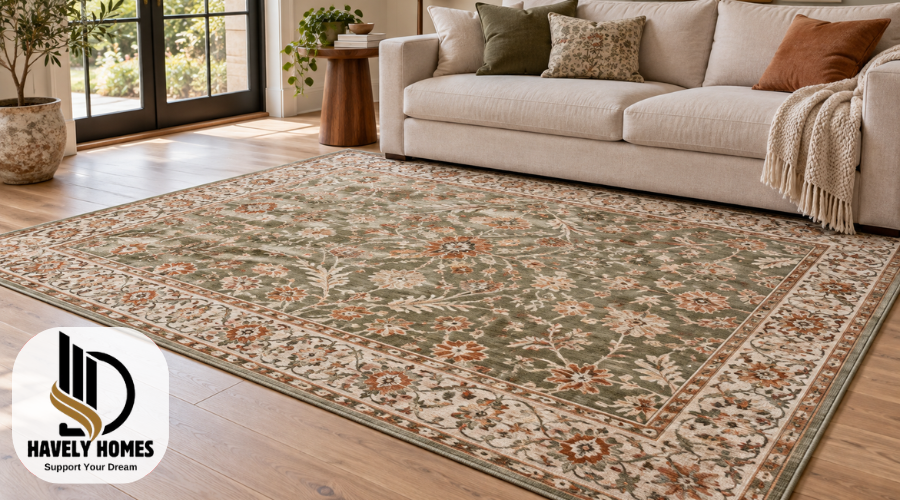
A Lahome rug can add colour, soften a room, and make everyday cleaning more manageable when you choose a suitable washable model. However, appearance is only part of the decision. The rug also needs to fit your furniture, work with your flooring, and suit the way your household uses the space.
Lahome offers different designs and constructions, so one rug’s features should not be treated as standard across the brand. Materials, backing, thickness, and cleaning instructions need to be checked for the specific product.
This guide explains how to compare those details, choose an appropriate size, understand care requirements, and assess reviews before buying. The aim is to help you find a rug that works in your home beyond its product photograph.
Quick Answer:
A Lahome rug may suit your home if its size, material, backing, and cleaning requirements fit your needs. First, check the exact product specifications, attached care label, floor compatibility, and your washer’s capacity.
Quick-Guide Table
| Possible problem | What to check | Recommended action |
| Rug looks too small | Furniture placement and selected dimensions | Measure the furniture arrangement before choosing a replacement size. |
| Rug shifts during use | Backing condition and whether the floor is clean and dry | Clean and dry the floor; confirm permitted grip solutions with the manufacturer. |
| Corners remain raised | Packaging folds and model-specific care guidance | Try gentle reverse rolling where permitted; contact support if curling persists. |
| Vacuum lifts the rug | Suction strength and rotating brush settings | Use low suction and disable the rotating brush where the rug instructions recommend it. |
| Rug will not fit the washer | Rug dimensions and appliance load guidance | Do not force it into the drum; seek an approved alternative cleaning method. |
| Drying instructions conflict | Attached label and exact product documentation | Ask manufacturer support to confirm the correct method before using a dryer. |
| Backing cracks or crumbles | Visible deterioration and movement during use | Stop using it in walkways and contact the manufacturer about replacement. |
Before You Buy: A Practical Checklist
- Measure the space and furniture arrangement.
- Check door clearance and nearby walking routes.
- Confirm the exact rug’s fibres, thickness, and backing.
- Read its washing and drying instructions.
- Check your washer’s load requirements if machine washing is planned.
- Review seller details, return conditions, and possible return shipping costs.
Understanding Lahome Rug Materials and Construction
Start with the material description rather than words such as “soft” or “luxurious.” These describe a selling point but do not tell you exactly what the rug contains.
Faux wool is designed to resemble the feel or appearance of wool without being natural wool. Similarly, faux jute creates a jute-like look using other fibres. For example, a Lahome faux-jute model listed by Home Depot uses polyester with TPE backing. That detail applies to the listed model, not automatically to every Lahome rug.
Pile height describes the length of the surface fibres. Overall thickness also includes the backing and other layers. A low-pile rug may feel soft to the touch while providing relatively little cushioning underfoot.
Check the surface construction, fibre content, backing material, and stated thickness together. This helps you distinguish a lightweight decorative rug from something that offers the fuller feel you may want beside a bed or beneath a seating area.
Choosing Colours and Patterns for Your Home
Lahome’s range includes floral, botanical, geometric, and vintage-inspired designs. The most suitable choice depends on the furnishings already in your room and how much visual attention you want the rug to receive.
In a room with plain upholstery and simple curtains, a patterned rug can introduce detail without requiring many extra accessories. If your sofa, cushions, and wallpaper already have strong patterns, a quieter rug may make the arrangement easier to coordinate.
Choose a colour that connects with something you intend to keep, such as a chair, artwork, or curtain fabric. The shades do not need to match exactly, but they should feel comfortable together.
Product photographs are useful references, although screens and lighting can change how colours appear. Compare close-up images with customer photographs taken in ordinary rooms. If samples are available for your chosen style, they can help you judge the colour against your flooring.
Getting the Size and Placement Right
Measure the furniture arrangement as well as the room. A rug can fit within the floor dimensions yet still look too small beneath the furniture.
In a living room, placing the front legs of the main seating pieces on the rug often helps connect the arrangement. A larger rug may accommodate more of the furniture, depending on the room’s proportions. Avoid choosing solely by the coffee table’s footprint.
For a bedroom, consider where your feet land when you get out of bed. A rug partly beneath the bed should extend into the areas where you want softness. Smaller rugs beside the bed offer another option when the layout or budget does not suit a large one.
In a dining room, check that chairs remain supported when pulled out for use. Mark the proposed rug boundary with removable tape to test the layout. Open nearby doors and walk through the room before settling on a size.
Choosing a Lahome Rug Runner for Narrow Spaces
A Lahome rug runner can bring colour and comfort to a hallway, kitchen, or entryway, but narrow spaces need careful measurement. Record the usable floor width and length, including any restrictions caused by doors or furniture.
Leave enough exposed flooring around the runner for it to sit comfortably within the space. There is no single border measurement that suits every hallway. Balance the runner with the width of the passage and keep doorways unobstructed.
In a kitchen, check cabinet doors, appliance access, and the places where you stand most often. A washable runner is not necessarily an anti-fatigue mat, so do not assume a thin rug will provide substantial support during long cooking sessions.
Choose construction and care requirements that suit the location. An entryway may collect grit and moisture, while a kitchen is more likely to experience food spills. Check whether the exact runner is approved for the intended indoor or outdoor setting.
Is a Lahome Rug Practical for Homes With Kids and Pets?
A washable rug can be useful where spills, muddy paws, and everyday messes are common. Its practicality depends on how easily you can clean the chosen size and whether its texture suits your household.
Consider your usual messes before buying. Pet hair, tracked-in dirt, food spills, and accidents create different cleaning demands. A rug that fits your washing machine and dries conveniently may be more useful than a larger one that is difficult to handle.
Stain resistance does not mean stain-proof performance. Liquids still need prompt attention, and some substances may leave lasting marks. Likewise, washable construction does not make a rug resistant to chewing, claw damage, or repeated scratching.
Think about comfort separately from cleaning. A soft surface may still feel thin over a hard floor. Check the cushioning and stability you need, especially in a room used for floor play. Keep edges flat and inspect the rug regularly for damage or movement.
Non-Slip Backing, Rug Pads, and Floor Compatibility
Lahome describes many washable styles as having built-in non-slip backing. Check the selected product’s specifications, since backing descriptions and construction can differ.
Grip, cushioning, and floor protection serve different purposes. A backing designed to reduce movement does not necessarily provide much padding. It also does not establish compatibility with every floor finish.
Consult both the rug information and your flooring manufacturer’s guidance, particularly for wood, laminate, or vinyl surfaces. If you want extra cushioning, confirm that an additional pad is permitted and suitable for the flooring. Adding layers can increase thickness and affect door clearance.
Keep the floor beneath the rug clean and dry. A damp rug or backing should not be covered by furniture and forgotten. Check underneath periodically, especially after cleaning or a spill.
Even a rug advertised as non-slip needs a practical check after placement. If it shifts during ordinary use or the corners remain raised, address the problem before relying on it in a busy walkway.
Washing and Drying Without Damaging the Rug
Check the attached care label before the first wash. Confirm that the exact rug is machine-washable, then read your washer’s instructions about suitable loads. Being washable does not mean every size will fit every household machine.
Lahome’s general guidance includes cold water, a gentle setting, and mild detergent for machine-washable rugs. Its published information also contains different drying recommendations: some guidance advises air-drying, while other guidance allows low-heat tumble drying. Follow the instructions supplied with your rug and ask support if they conflict.
A straightforward preparation routine is:
- Remove loose dirt and debris using an approved cleaning method.
- Check for damage, loose edges, and any special care restrictions.
- Confirm that the rug fits the washer without being forced into the drum.
- Use the settings and detergent permitted by the rug label.
- Dry it fully according to its instructions before returning it to the floor.
Do not assume a larger washer is suitable based only on the drum opening. The appliance manufacturer’s load guidance also matters. Avoid high heat or adding bleach unless the product instructions explicitly permit it.
Everyday Cleaning, Creases, and Common Problems
Regular cleaning can reduce the need for full washing. Lahome’s washable collection guidance recommends low suction and switching off the rotating brush when vacuuming. Check that this method is suitable for your particular rug and vacuum.
If the vacuum pulls up the rug, stop and adjust the setting rather than repeatedly dragging it through the machine. Ensure the corners are flat, and use another permitted method if the vacuum cannot clean it without bunching.
For a fresh spill, absorb liquid promptly with a clean cloth. Follow the label for further treatment and test any permitted cleaner on an inconspicuous area. Avoid vigorous rubbing or improvised chemical mixtures.
Folded packaging can leave creases. Where allowed, gentle reverse rolling may help the rug settle. Do not apply an iron, steamer, or hairdryer based on a general tip when the model’s instructions are unclear.
Persistent curling, crumbling backing, loose stitching, or unusual changes after washing deserve attention. Contact the manufacturer about product concerns. For difficult stains or specialist cleaning, consult a rug cleaner and provide the fibre and backing information.
Reading Lahome Rugs Reviews With a Critical Eye
Useful Lahome rugs reviews explain which product was purchased and how it performed in an actual home. A high rating alone tells you little about whether the rug suits your needs.
Look for reviews of the same design, material, and size you are considering. A small entry rug can be easier to wash and reposition than a large living room rug, even within the same collection.
Pay attention to details about colour, thickness, texture, edge behaviour, vacuuming, and cleaning. Reviews written after repeated use may answer questions that an unpacking photograph cannot.
Lahome rugs Reddit discussions can help identify questions to investigate, but individual posts do not establish how every product performs. Floor type, vacuum settings, care habits, and expectations may explain different experiences.
Distinguish ordinary owner feedback from sponsored recommendations and documented testing. Be cautious when a review makes sweeping claims without identifying the product or describing how it was used.
Lahome Rugs vs Ruggable: Compare the Specific Options
A useful Lahome rugs vs Ruggable comparison begins with equivalent products. Compare similar dimensions, intended room use, and preferred texture rather than judging the entire brands from one example.
Ruggable offers All-in-One rugs and Two-Piece systems. Its Two-Piece system uses a removable rug cover with a separate pad, while All-in-One products combine the rug into a single washable piece. Many Lahome washable styles are also cleaned as a whole rug.
That distinction matters when considering handling and washer capacity. Compare the part that actually goes into the machine, not simply the rug’s floor dimensions. Check the care requirements for each selected product.
Also compare cushioning, thickness, backing compatibility, available designs, and the total purchase price. Include any required pad or optional accessory in the cost.
Neither construction guarantees the best result for every household. The more useful choice is the one that fits your room, cleaning equipment, comfort preferences, and willingness to manage washing and drying.
Buying Lahome Rugs on Amazon or Other Stores
When browsing Lahome rugs on Amazon or another retailer, compare the detailed specifications before comparing prices. Similar titles or photographs do not establish that two listings contain the same product.
Check the selected dimensions, colour, fibre content, backing, thickness, and care information. Confirm whether the photographs show your chosen variation and whether any accessories are included.
Review the seller’s identity and the return terms that apply to that purchase. A brand’s direct-store policy may differ from a marketplace seller’s policy. Find out who handles a return, whether return shipping costs apply, and whether washing or using the rug affects eligibility.
Prices can vary by size, seller, and promotion. A low “from” price may describe the smallest option rather than the room-size rug shown in the photograph.
After delivery, inspect the label, measurements, colour, and condition before washing. Keep the order details and care information so you can refer to them if a problem develops.
Where Is Lahome Located, and Where Are Its Rugs Made?
Business location, manufacturing origin, and shipping location are separate pieces of information. A rug dispatched from a warehouse in one country may have been manufactured elsewhere.
The official pages reviewed for this guide did not provide enough clear information to confidently state one headquarters location or manufacturing country for every Lahome rug. That uncertainty should not be filled with assumptions from customer comments or similarly named businesses.
For a particular product, check the country-of-origin label and packaging. If the online listing does not identify the manufacturing country, ask the brand or seller for written confirmation for that exact model.
Questions about where Lahome rugs are located may also refer to purchasing or delivery. Check the current shipping policy for your destination, but do not treat shipping coverage as evidence of company headquarters.
Take care with businesses using similar names. Match the company information to the brand, product listing, and order you are researching.
Conclusion
Choosing a Lahome rug starts with the room and your daily routine. Measure the furniture arrangement, decide how much texture and cushioning you want, and consider the cleaning work the chosen size will require.
Before buying, check the exact product’s materials, backing, floor compatibility, and care label. Compare detailed owner feedback and retailer terms without assuming that every Lahome style has identical features.
A well-chosen rug should fit comfortably within your space and remain manageable after everyday use. Giving those practical details as much attention as the pattern helps you make a decision you can live with.
FAQs
Are Lahome Faux-jute Rugs Made From Natural Jute?
Not necessarily. Faux jute describes a jute-like appearance rather than natural fibre content. Some Lahome faux-jute models use polyester, so check the selected product’s material specifications before buying.
Can A Lahome Rug Be Used Outdoors?
Only use a Lahome rug outdoors when the exact model is approved for that setting. Washability alone does not establish outdoor suitability; check its intended use and care instructions.
Will A Soft Lahome Rug Provide Thick Cushioning?
A soft surface does not necessarily mean substantial cushioning. Some styles are thin or low-pile. Check overall thickness and construction, especially when choosing a rug for floor seating or play.
Does Ruggable Always Use A Separate Rug Cover And Pad?
No. Ruggable offers both Two-Piece systems and All-in-One rugs. Compare the specific product with your chosen Lahome model, including what gets washed, cushioning, care requirements, and total cost.
Can I Confirm Where A Lahome Rug Was Made From Its Shipping Location?
No. A shipping warehouse does not establish manufacturing origin. Check the rug’s country-of-origin label or request written confirmation from the brand or seller for the exact product.
Disclaimer: This article provides general information about Lahome rugs. Materials, backing, and care requirements vary by model. Follow your rug’s care label, appliance instructions, and official manufacturer guidance. Consult a professional rug cleaner when specialist treatment is needed. Havelyhomes.com is an independent website and does not claim to represent or be affiliated with Lahome.
