
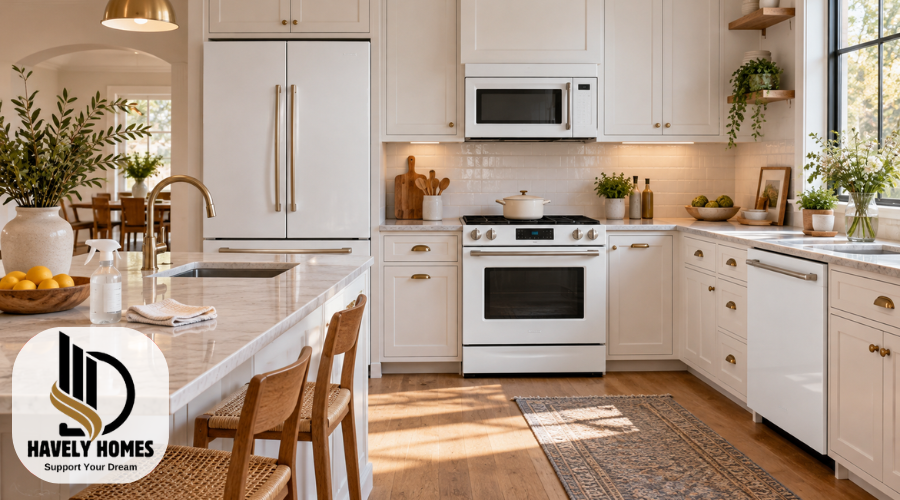
White appliances are a practical and attractive choice for homeowners who want a bright, welcoming kitchen. From refrigerators and dishwashers to ovens and microwaves, these appliances can complement many kitchen designs without making the space feel crowded.
Modern white finishes offer more variety than traditional glossy surfaces. Homeowners can now explore matte textures, smooth glass panels, and decorative hardware that adds personality to their kitchens.
However, choosing the right appliances involves more than appearance. Cleaning requirements, durability, energy efficiency, pricing, and compatibility with existing cabinets are equally important.
This guide explains the different styles, advantages, disadvantages, decorating ideas, and buying considerations to help you make an informed decision.
Quick Answer:
White appliances are refrigerators, ovens, dishwashers, and other kitchen appliances with white finishes. Before buying, check the finish, dimensions, cleaning requirements, and features to ensure they match your kitchen and household needs.
Quick-Guide Table
| Possible Problem | What to Check | Recommended Action |
| White appliances look mismatched | Differences in shade, gloss, and texture | Compare finish samples under kitchen lighting before purchasing. |
| Appliance does not fit | Dimensions and door clearance | Measure the space and check the manufacturer’s installation guide. |
| Fingerprints or grease marks | Surface finish and cleaning instructions | Use a soft cloth and manufacturer-approved cleaning products. |
| Yellowing or discoloration | Surface stains or changes in the material | Clean according to the manual and seek professional advice if discoloration remains. |
| Scratches or damaged finish | Location and extent of surface damage | Avoid abrasive products and contact the manufacturer about suitable repair options. |
| Appliance uses more energy than expected | Model specifications and energy rating | Compare official energy labels and review recommended operating settings. |
Helpful Steps for Choosing White Kitchen Appliances
- Measure your kitchen space: Check appliance dimensions, available clearance, and door-opening space.
- Choose the right finish: Compare glossy white, matte white, and white glass based on appearance and maintenance.
- Match your kitchen colors: Consider cabinets, countertops, backsplash materials, and lighting.
- Compare essential features: Check capacity, energy efficiency, controls, and household requirements.
- Review cleaning instructions: Choose a finish you can maintain using manufacturer-approved products.
- Check installation and warranty details: Confirm installation requirements, warranty coverage, and local repair support before purchasing.
What Are White Appliances?
White appliances are household machines manufactured with white exterior finishes. In kitchen design, the term usually refers to major appliances such as refrigerators, freezers, cooking ranges, ovens, dishwashers, and microwaves.
Traditionally, many white kitchen appliances featured painted metal surfaces, visible handles, and simple designs. These remain practical choices, particularly for homeowners who prefer familiar styles and straightforward kitchen layouts.
Newer designs may include flat doors, concealed controls, decorative handles, matte finishes, and glass panels. Their appearance can be quite different from older models.
In smaller kitchens, white surfaces can visually blend with light cabinetry, helping create an open appearance. Larger kitchens can use them to balance dark cabinets, colorful walls, or natural wood.
The right combination depends on the available space, preferred style, and everyday household needs.
Different Types of White Appliance Finishes
Not all white appliances have the same appearance or surface characteristics. Understanding the available finishes makes choosing and maintaining them easier.
Classic Glossy White
Glossy white appliances have a smooth, reflective appearance. They often suit traditional kitchens and can coordinate with white cabinets or neutral countertops.
Their surfaces may show fingerprints, scratches, or grease depending on the coating. Cleaning instructions vary by manufacturer.
Matte White
Matte white appliances have a softer appearance with less reflection. They work particularly well with modern cabinets, wood countertops, and warm metallic accents.
Some matte finishes are designed to resist fingerprints, but this feature should be confirmed for each product.
White Glass
White glass surfaces create a smooth, contemporary appearance. Certain refrigerator collections offer glass-front designs that coordinate with minimalist kitchens.
Glass may show smudges and requires appropriate cleaning materials.
Before purchasing, check whether an appliance has painted metal, coated glass, or another exterior material. The correct cleaning products and maintenance methods depend on its construction.
Are White Appliances Still in Style?
White appliances remain a relevant option for kitchen design, especially as manufacturers offer contemporary finishes alongside traditional models.
Older white appliances often featured textured surfaces, prominent controls, and basic handles. Many newer designs use cleaner lines, flatter doors, and carefully selected hardware.
Their appearance also depends on surrounding materials.
In modern kitchens, white appliances can complement flat-panel cabinets and simple countertops. Farmhouse kitchens may combine them with wooden shelves, shaker cabinets, and traditional hardware.
For a classic kitchen, cream-colored cabinetry, natural stone, and warm lighting can create a comfortable atmosphere.
Rather than choosing a finish simply because it is fashionable, consider whether it suits your existing kitchen and personal preferences.
A coordinated design that works for your household can remain appealing even as decorating trends change.
Advantages and Disadvantages of White Appliances
White appliances offer several advantages, but understanding their limitations helps prevent disappointment.
One benefit is their flexible appearance. They can coordinate with light-colored cabinets or provide contrast against darker backgrounds.
Some modern white finishes also make fingerprints less noticeable, although this depends on the coating and surface texture.
White appliances can create a clean-looking kitchen without requiring every cabinet or countertop to match exactly.
However, there are potential disadvantages.
Light surfaces may reveal dark marks, cooking stains, or transferred color. Older finishes can sometimes develop discoloration that ordinary cleaning cannot remove.
Different manufacturers also use slightly different white shades, making replacement matching difficult.
Premium decorative finishes may cost more than standard alternatives, and certain configurations may have limited availability.
Importantly, the color itself does not determine cooking performance, durability, or energy efficiency. Those qualities depend on the appliance’s design, materials, and specifications.
White Appliances vs. Stainless Steel and Black Appliances
Choosing between white, stainless steel, and black appliances often depends on kitchen design and maintenance preferences.
White appliances generally create a lighter appearance. They coordinate naturally with pale cabinets and provide a softer contrast against dark colors.
Stainless steel produces a metallic, professional-looking finish that works with many modern kitchens. Traditional stainless surfaces may display fingerprints, although fingerprint-resistant versions are available.
Black appliances create stronger visual contrast and can suit contemporary kitchens with wood, gray, or white cabinetry. Glossy black surfaces may reveal dust and fingerprints more readily.
All three finishes can develop scratches or visible wear. The resistance of a particular surface depends on its protective coating and construction.
Prices also vary according to brand, appliance features, size, and finish.
For practical comparison, consider the exact models rather than assuming one color is automatically easier to clean or more durable.
White is worth considering when you prefer a bright, welcoming appearance and want flexibility when decorating.
Best Kitchen Colors and Design Ideas for White Appliances
White appliances can work with several cabinet colors, countertops, and decorative materials. The goal is to create a balanced appearance rather than make every surface identical.
White and Cream Cabinets
White cabinets create a coordinated appearance, while cream adds warmth. Choose carefully between cool and warm undertones to avoid unwanted color differences.
Gray and Neutral Cabinets
Light gray, beige, and greige cabinets provide gentle contrast. These combinations work well with white countertops and simple backsplashes.
Navy Blue and Charcoal Cabinets
Dark cabinetry makes white appliances more noticeable. Navy blue with white appliances can create a distinctive kitchen without excessive decoration.
Sage Green Cabinets
Soft green cabinets combined with white appliances and wooden details create a natural, relaxed atmosphere.
Natural Wood Cabinets
Oak and other wood finishes add warmth. White appliances can balance their texture and help prevent the room from appearing too dark.
Countertops also influence the finished design. White quartz, natural stone, wood, and some laminate finishes can complement white appliance surfaces.
For backsplashes, consider simple ceramic tiles, subtle patterns, or neutral colors that coordinate with surrounding materials.
Hardware provides another opportunity to connect different elements. Bronze, black, or stainless accents can tie together cabinet handles, faucets, and appliance details.
Before finalizing your design, compare material samples under the kitchen’s actual lighting. Natural and artificial light can make different white shades appear warmer or cooler.
Choosing a White Appliances Set for Your Kitchen
A white appliances set usually includes several coordinating kitchen appliances, commonly a refrigerator, range, dishwasher, and microwave.
Buying a matching collection can simplify the design process because finishes, handles, and overall styling are often intended to complement each other.
However, matching products do not always offer the same features or suit every household.
For example, you may prefer a refrigerator from one manufacturer and a dishwasher from another because of their individual performance and capacity.
Mixing white appliances with stainless steel can also work when finishes are balanced throughout the kitchen.
Before purchasing a complete set, check the dimensions, door-opening space, installation requirements, and available features of every appliance.
Compare package pricing with individual purchases. A bundle is not necessarily cheaper if it includes features you do not need.
Also consider warranties, installation expenses, and future replacement options.
If you are upgrading gradually, choose a white finish that is likely to coordinate reasonably well with your existing appliances.
White Appliances From LG, GE, Samsung, and Café
Several established manufacturers offer white appliances, although their designs, available configurations, and decorative finishes differ.
LG White Appliances
LG offers traditional white appliances alongside its LG STUDIO Essence White designs.
Selected Essence White products include refrigerators, ranges, dishwashers, and over-the-range microwaves. These feature a matte white appearance, with light bronze accents on certain models.
The collection is worth exploring if you prefer coordinated appliances with contemporary styling.
GE White Appliances
GE offers white refrigerators, electric and gas ranges, and dishwashers in different configurations.
Its selection includes practical options for homeowners who prefer conventional white appliances without necessarily choosing premium decorative finishes.
Available features vary by model, so compare capacity, controls, and installation specifications.
Samsung White Appliances
Samsung’s Bespoke refrigerator range includes white glass designs that suit contemporary kitchens.
Some Bespoke refrigerator models were designed with interchangeable door panels. However, replacement panels are not available for every model, and Samsung has indicated that certain replacement panels are no longer offered for purchase.
Check current compatibility and availability before expecting to change colors later.
Café White Appliances
Café offers matte white refrigerators, cooking appliances, dishwashers, and other coordinated kitchen products.
Compatible models in its Customizable Professional Collection support decorative hardware choices, including brushed bronze, copper, black, and stainless finishes.
This can help homeowners coordinate appliances with cabinet hardware.
Across all four brands, availability, warranties, specifications, and service coverage should be checked for your location. Choose appliances for their suitability rather than brand appearance alone.
What to Consider Before Buying White Kitchen Appliances
A carefully planned purchase helps prevent installation problems and unnecessary expenses.
Start by measuring the available kitchen space. Record the height, width, and depth of each appliance location, including the space needed for ventilation and door movement.
Also consider whether appliances can pass through doorways and hallways during delivery.
Choose capacity according to your household. A larger refrigerator may provide additional storage, but it may also use more electricity.
For cooking appliances, consider the available fuel supply, suitable cookware, cooking habits, and essential features.
Energy efficiency deserves attention. In the United States, ENERGY STAR certification and EnergyGuide labels can help compare eligible appliances. Other countries may use different energy-rating systems.
Compare estimated operating costs rather than judging efficiency by color.
Other important considerations include:
- Purchase price and installation charges.
- Warranty terms and replacement-part availability.
- Cleaning requirements and exterior finish durability.
- Local repair services and manufacturer support.
Before ordering, confirm that existing electrical connections, gas supply arrangements, and ventilation meet the chosen appliance’s installation requirements.
A qualified professional should handle any necessary gas or electrical modifications.
How to Clean White Appliances and Keep Them Looking Good
Regular cleaning helps maintain the appearance of white appliances and prevents everyday dirt from building up.
For many painted exterior surfaces, manufacturers recommend a soft cloth with mild soap and water. Wipe away residue and dry the surface with a clean microfiber cloth.
However, always follow the instructions for your particular model and finish.
Matte surfaces may require different care from glossy coatings. White glass should be cleaned using products approved for its specific surface.
Avoid abrasive pads, sharp tools, and harsh cleaning chemicals unless the manufacturer explicitly permits their use.
Cooking grease around handles and nearby surfaces is often easier to remove before it hardens.
If an older appliance begins turning yellow, identify whether the problem is surface staining or discoloration within the material itself.
Heat exposure, aging, and changes in certain materials can affect appearance. Cleaning cannot necessarily reverse these changes.
Avoid experimenting with bleach, strong solvents, or abrasive mixtures to remove persistent discoloration.
Regularly wiping handles, removing spills, and checking for surface damage can help keep appliances looking presentable.
Can You Paint White Appliances to Refresh Their Appearance?
Painting may be an option when a compatible appliance has a worn exterior but still works properly.
Specialized appliance paint products are available for certain metal surfaces, including suitable refrigerator and dishwasher exteriors.
However, not every appliance surface can be safely painted.
Factory-applied matte coatings, decorative glass panels, plastics, and other specialty materials may be unsuitable for ordinary appliance paint.
Painting hot surfaces, stovetops, oven interiors, vents, controls, or electrical components can create safety problems or interfere with appliance operation.
If you are considering appliance paint, begin by checking the appliance manufacturer’s guidance and the paint manufacturer’s surface compatibility instructions.
Preparation and ventilation requirements also depend on the product.
Do not paint over damaged electrical components, gas-related parts, or areas that become excessively hot.
Professional refinishing may be preferable when a surface requires extensive preparation or a particular finish needs specialized treatment.
If the appliance has serious damage or persistent functional problems, replacing it may be more sensible than improving its exterior appearance.
Common Mistakes to Avoid and When Professional Help Is Needed
One common mistake is choosing appliances mainly because they look attractive in photographs.
A refrigerator may coordinate beautifully with the cabinets but still be too large for the available space or unsuitable for household storage needs.
Another mistake is assuming all white finishes look identical. Differences in shade, texture, and gloss can become noticeable when appliances stand next to each other.
Homeowners should also avoid using unsuitable cleaners, attempting unapproved painting projects, or ignoring manufacturer installation requirements.
Simple tasks such as exterior cleaning and checking visible measurements are generally manageable for homeowners.
However, gas connections, electrical wiring changes, and complicated appliance installations should be handled by qualified professionals.
Damaged power cords, suspected gas leaks, unusual electrical behavior, or appliance malfunctions require appropriate professional attention. If you suspect a gas leak, leave the area and contact the gas emergency service from a safe location.
Persistent finish damage may also require manufacturer support or professional assessment.
Conclusion
White appliances can be an attractive and practical addition to kitchens of many sizes and styles. Their bright appearance, range of available finishes, and flexibility with different cabinet colors make them worth considering.
However, the best choice depends on more than design. Appliance performance, dimensions, cleaning requirements, energy efficiency, and overall cost should guide your decision.
Whether you prefer traditional glossy white, contemporary matte finishes, or white glass, compare individual products carefully.
By choosing appliances that complement your kitchen and meet your household’s everyday needs, you can create a comfortable, functional space that remains enjoyable for years to come.
Frequently Asked Questions
Are White Appliances Outdated In Modern Kitchens?
No. White appliances continue to suit modern, traditional, and farmhouse kitchens. Contemporary matte finishes, glass panels, and updated hardware provide alternatives to older designs, making white a practical decorating choice.
Do White Appliances Make A Small Kitchen Look Bigger?
White appliances can help a small kitchen appear brighter and more open, particularly when paired with light cabinets and good lighting. However, the layout, appliance size, and available space also influence the result.
Can You Mix White Appliances With Stainless Steel Appliances?
Yes. Mixing white and stainless steel appliances can create an attractive kitchen when the finishes coordinate with cabinets and hardware. A consistent color scheme helps the combination look intentional rather than mismatched.
Are Matte White Appliances Completely Fingerprint-resistant?
Not necessarily. Some matte white finishes are designed to reduce visible fingerprints, but resistance varies by manufacturer and model. Check the product specifications and recommended cleaning instructions before purchasing.
Are White Appliances More Affordable Than Stainless Steel Appliances?
Not always. Prices depend on the manufacturer, model, features, and finish. Basic white appliances may be affordable, while premium matte white and glass designs can cost more than comparable stainless steel models.
Disclaimer: This article is for general information only. Appliance and thermostat models, controls, and troubleshooting steps may differ. Always consult your model’s manual or official manufacturer support. Electrical wiring, gas, furnace, and complex HVAC work should be handled by qualified professionals. Havely Homes is an independent informational website, not an official Honeywell support service, and has no affiliation with Honeywell. It was created to provide helpful information to visitors and does not engage in paid promotions or advertising.
