
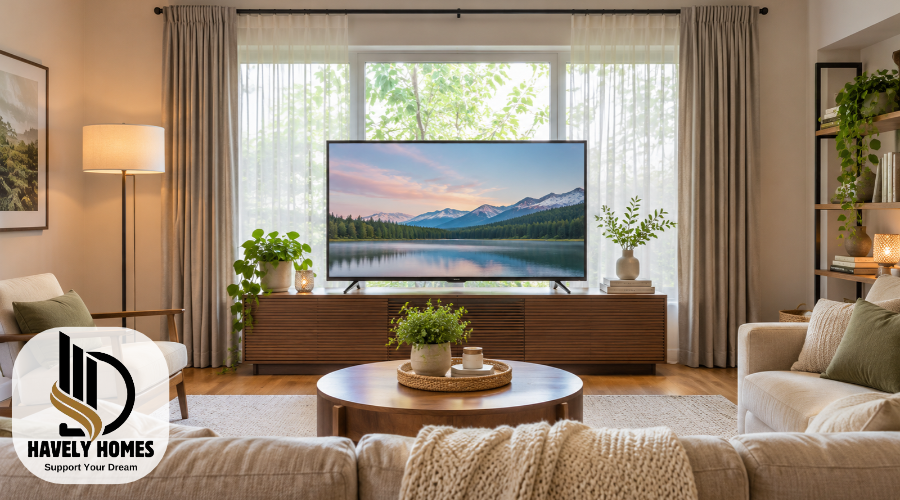
Finding the perfect place for a television is not always easy, especially when windows take up most of the available wall space. Many homeowners consider placing a TV in front of window areas because other walls are occupied by doors, furniture, or architectural features. Although this arrangement may seem unusual, it can be practical with the right planning.
The main concerns are natural sunlight, screen visibility, blocked outdoor views, and keeping the room comfortable. A poorly positioned television can make daytime viewing difficult or interrupt the natural flow of a living room or bedroom.
However, placing a television near a window does not automatically mean sacrificing comfort or attractive interior design. Suitable furniture, thoughtful lighting control, and careful positioning can make a noticeable difference.
This guide explains the advantages, possible problems, furniture choices, safety considerations, and practical layout ideas to help you decide whether this arrangement suits your home.
Quick Answer:
Yes, placing a TV in front of a window can work, but sunlight, screen glare, and blocked views may cause problems. First, check natural lighting, window access, viewing height, and TV ventilation requirements.
Quick-Guide Table
| Possible problem | What to check | Recommended action |
| Screen difficult to see | Bright sunlight behind the TV | Use light-controlling curtains or blinds. |
| Distracting reflections | Windows facing the screen | Adjust the TV angle or seating position. |
| Blocked natural light | TV size and window dimensions | Consider a smaller screen or different placement. |
| Unstable TV stand | Stand capacity and stability | Use suitable TV furniture and secure it properly. |
| Excessive heat | Direct sunlight and ventilation space | Reposition the TV according to its manual. |
| Messy or exposed cables | Cable routes and nearby outlets | Organise cables safely using suitable covers. |
Helpful Steps: How to Position a TV in Front of a Window
- Measure the space: Check the window dimensions and the combined height of your TV and stand.
- Observe natural light: Check sunlight and screen visibility at different times of day.
- Choose suitable furniture: Select a stable TV stand that fits your room and television.
- Test the viewing position: Check screen height and comfort from your usual seating area.
- Keep windows accessible: Make sure the arrangement does not obstruct important window openings or walkways.
- Check safety requirements: Follow your TV manual for ventilation, positioning, and securing the television.
Is It a Good Idea to Put a TV in Front of a Window?
Placing a television in front of a window can be a reasonable solution when your room has limited wall space. It may allow you to arrange furniture more comfortably without blocking doorways or creating awkward seating positions.
For example, a living room with several doors and large windows might have only one practical location for a media console. Using the space in front of a window could make the overall layout feel more organised.
However, this arrangement also has disadvantages. The television may block part of the outdoor view, reduce natural light, or create an uncomfortable contrast between the bright window and darker screen.
The results depend on several factors, including the window’s size, direction, surrounding furniture, and the amount of sunlight entering the room.
A smaller television positioned in front of a wide window may be less visually intrusive than a large screen covering most of the glass.
The best approach is to balance viewing comfort, natural light, and everyday room functionality rather than focusing only on appearance.
Important Things to Check Before Placing Your TV
Before moving your television, examine the room carefully. A few simple checks can prevent uncomfortable positioning and unnecessary furniture changes.
Start by measuring the window, nearby walls, and available floor space. Compare these measurements with the television’s actual width and the dimensions of its stand. Remember that the screen may extend above the window sill even when placed on a low cabinet.
Next, observe the sunlight throughout the day. A location that looks comfortable in the morning may become much brighter during the afternoon.
Consider these practical checks:
- Window access: Make sure the television does not prevent windows from opening, closing, or being cleaned.
- Viewing height: Aim to keep the screen’s centre near seated eye level when practical.
- Seating distance: Choose a position that feels comfortable from your usual sofa or chair.
- Electrical access: Check that suitable outlets are available without stretching cables across walkways.
- Ventilation: Leave the clearance required by the television manufacturer’s instructions.
- Emergency access: Never obstruct a window needed as an emergency escape opening.
It also helps to mark the proposed television and furniture positions before moving anything heavy.
How Windows Affect TV Glare and Viewing Comfort
Natural daylight is one of the biggest challenges when positioning a television near a window.
When a bright window sits directly behind the TV, the screen may appear relatively dark against the surrounding daylight. This brightness difference can make viewing uncomfortable, particularly during sunny afternoons.
A window opposite the television creates a different problem. Sunlight and outdoor objects may reflect directly on the screen, making darker scenes harder to see.
Windows beside the television can also produce reflections, depending on their position and the screen’s angle.
Some televisions have anti-reflective or matte screens that help manage reflections. However, these features do not completely eliminate glare or solve every problem caused by a bright window behind the television.
Adjusting picture brightness may improve visibility, but it is better to manage the room’s lighting first.
Before finalising your arrangement, test the proposed viewing position during different daylight conditions. If reflections remain distracting, changing the screen angle, adding window coverings, or choosing another wall may provide better results.
Best Curtains and Blinds for a TV in Front of a Window
Choosing suitable window coverings can make a television area more comfortable without permanently removing natural light.
Different curtains and blinds offer different levels of light control.
Sheer curtains soften incoming daylight while allowing the room to remain bright. They work well when sunlight is moderate, although they may not provide enough control for strong backlighting.
Light-filtering blinds offer another flexible solution. They reduce harsh daylight while preserving a softer, naturally lit appearance.
Room-darkening shades block more light and may improve screen visibility during daytime viewing.
Blackout curtains are particularly useful when you need stronger light control for films, gaming, or television viewing in a very bright room.
Layered curtains can provide greater flexibility. For example, you can use sheer curtains during ordinary daytime activities and close heavier curtains when watching television.
Neutral shades such as cream, beige, grey, and warm white can complement many interior styles without drawing attention away from the room.
Whichever option you choose, make sure the coverings remain easy to operate and do not rest against the television or block its ventilation openings.
Choosing the Right TV Stand and Furniture
The right TV stand can help a television look more naturally integrated into a room with large windows.
A low-profile media console is often a useful choice because it can keep the overall arrangement visually balanced. However, the television itself will still block some glass, so consider the combined height of the cabinet and screen.
A compact stand may suit smaller rooms, while a wider console can provide additional storage and create a more balanced appearance.
Freestanding television floor stands are another possibility. Some have slimmer frames than traditional cabinets, making them useful where floor space is limited.
TV lift cabinets can conceal compatible televisions when they are not being used. However, they require suitable furniture dimensions, adequate ventilation, and sufficient space for the lifting mechanism.
Storage design also matters. Open shelving provides convenient access to devices, while closed cabinets help hide accessories and reduce visual clutter.
Before purchasing furniture, check its weight capacity, overall dimensions, and compatibility with your television.
Choose a stable stand designed for television use, and follow the manufacturer’s anchoring instructions. Decorative tables or unsuitable shelves should not replace properly designed TV furniture.
Can You Mount a TV in Front of a Window?
Mounting a television directly in front of a window is more complicated than placing it on a cabinet.
Traditional wall mounts require suitable structural support. Window glass, ordinary trim, and unsupported window frames are not appropriate surfaces for attaching heavy televisions.
If there is a solid wall beside the window, an adjustable wall bracket may offer a practical alternative. Depending on its design, the bracket may allow the screen to turn towards the seating area.
A purpose-built freestanding TV mount can also work in certain rooms, provided it is compatible with the television and installed according to its instructions.
Some homeowners prefer mounting the screen on a nearby wall rather than positioning it directly against the window. This may improve ventilation, preserve more daylight, and make maintenance easier.
Before installing any bracket, check the television’s mounting specifications, bracket weight rating, and supporting structure.
If the installation requires drilling into an unfamiliar wall or making structural changes, consult a qualified installer.
TV in Front of Window Living Room Layout Ideas
Living rooms often present the biggest furniture arrangement challenges because they must accommodate seating, tables, storage, and walkways.
In a small living room, positioning the television on a compact media unit near the window may help preserve valuable wall space. A simple sofa arrangement facing the screen can create a comfortable viewing area without overcrowding the room.
For narrow living rooms, consider placing the television towards one side of a wide window rather than directly in its centre. This can preserve more of the outdoor view and allow flexible furniture placement.
In open-plan spaces, furniture can help define the television area without requiring additional walls. A sofa facing the screen, supported by armchairs and a coffee table, can create a natural seating arrangement.
If your room has floor-to-ceiling windows, avoid assuming that a low television stand will prevent the screen from obstructing the glass. Consider the full screen height and the room’s main sightlines.
Another practical option is an adjacent wall with an adjustable television bracket.
The most successful living room layout allows comfortable viewing while maintaining clear walkways, balanced furniture spacing, and useful natural light.
Practical TV Placement Ideas for Bedrooms
Bedrooms often have limited wall space because beds, wardrobes, doors, and windows occupy much of the room.
Placing a television near a bedroom window may be useful when the wall opposite the bed is otherwise unavailable.
A compact TV stand can provide a suitable location without requiring a large entertainment cabinet. However, the screen should be positioned at a height that feels comfortable when watching from your usual resting position.
If you normally watch television while sitting upright in bed, consider how pillows and the headboard influence your viewing angle.
Window coverings are especially important in bedrooms. Room-darkening blinds or lined curtains can help manage daylight while also providing privacy.
Avoid placing furniture where it blocks access to windows, wardrobes, or essential walkways.
For very small bedrooms, an adjacent wall or suitable corner position may provide a better solution than placing the television directly in front of the window.
The aim is to create a comfortable viewing area without making the bedroom feel crowded.
How to Make a TV in Front of a Window Look Stylish
A television positioned near a window does not have to look awkward. Thoughtful furniture choices and simple decorative details can help it blend naturally with the room.
For a modern interior, choose a streamlined media console with clean lines and a simple finish. This keeps attention on the overall room rather than the television.
A minimalist arrangement benefits from limited accessories, concealed cables, and furniture that does not overwhelm the available space.
For a cosy living room, warm wood furniture, soft curtains, textured rugs, and comfortable seating can create a welcoming atmosphere.
Modern rustic interiors can combine natural wood finishes, neutral fabrics, and understated decorative pieces to balance the television’s contemporary appearance.
Plants may also soften the area around the screen. Choose suitable positions that provide enough daylight without obstructing ventilation, cables, or window access.
When exploring TV in front of window ideas on Pinterest or other design platforms, use the images for inspiration rather than copying layouts exactly.
Your window measurements, furniture size, and daily activities should guide the final design.
Protecting Your TV and Keeping the Area Safe
Safety should remain a priority when positioning electrical equipment near windows.
Prolonged direct sunlight can create unwanted heat around a television. Depending on the model and conditions, excessive heat may affect its performance or components. Television manufacturers commonly advise avoiding direct sunlight and maintaining proper ventilation.
Always check your specific TV model’s user manual for placement and clearance requirements.
Keep ventilation openings unobstructed and avoid positioning the television close to heaters or other heat sources.
Furniture stability is equally important. Use a suitable stand and secure the television and furniture against tipping according to the manufacturers’ instructions.
Electrical cables should remain organised, protected from damage, and away from areas where people might trip.
Avoid running power cords beneath rugs or overloading electrical outlets. Do not attempt electrical wiring changes yourself.
Windows can sometimes develop condensation, particularly in rooms with moisture or ventilation problems. Keep televisions away from water exposure, leaks, and damp surfaces.
Households with children or pets should take additional care with accessible cables, unstable furniture, and objects that might encourage climbing.
A safe arrangement should support ordinary daily activities without creating unnecessary hazards.
Common TV Placement Mistakes and How to Avoid Them
One common mistake is choosing a television position based entirely on appearance without testing how daylight affects the screen.
A beautiful arrangement may become frustrating when afternoon sunlight makes viewing difficult. Check lighting conditions before purchasing furniture or installing mounts.
Another mistake is selecting a stand that is too tall or unsuitable for the television’s size and weight. This can create uncomfortable viewing angles or stability concerns.
Some homeowners also place large screens directly across windows without considering how much daylight or outdoor visibility will be lost.
Poor cable management is another problem. Loose wires can make the arrangement look unfinished and create avoidable hazards.
Seating should not be overlooked either. A television may look perfectly centred in photographs but feel uncomfortable when viewed from the sofa.
Finally, avoid copying online design ideas without checking room measurements, window access, and the television manufacturer’s requirements.
Practical comfort should always come before decorative trends.
When to Choose Another TV Location or Get Professional Help
Placing a television in front of a window is not suitable for every room.
If strong sunlight regularly affects viewing, the screen blocks an important outdoor view, or window access becomes difficult, another location may work better.
An adjacent wall is often worth considering because it can preserve natural light while providing a more comfortable viewing position.
Corner arrangements may also be suitable when they allow the screen to face the main seating area.
If the room has very limited space, rearranging existing furniture may be more effective than buying a larger stand or complicated mounting system.
Professional assistance becomes important when television installation involves structural supports, unfamiliar wall materials, electrical changes, or complex mounting equipment.
A qualified electrician should handle any necessary electrical installation or wiring modifications.
The right arrangement should make everyday viewing easier while keeping the room safe and functional.
Conclusion
Placing a TV in front of a window can be a practical and attractive solution when your home has limited wall space. However, achieving a comfortable result requires more than simply choosing a convenient location.
Natural light, screen reflections, furniture dimensions, viewing height, and safety all influence how well the arrangement works.
Suitable curtains, a stable TV stand, and thoughtful furniture positioning can help reduce common problems while maintaining an inviting interior.
Every room has different windows, proportions, and seating needs. Rather than following one fixed design rule, choose a television position that supports comfortable viewing, preserves useful daylight, and keeps your home practical and safe.
Frequently Asked Questions
Can You Put A TV In Front Of Floor-to-ceiling Windows?
Yes, but large windows make it harder to preserve natural light and outdoor views. Consider the screen’s size, sunlight exposure, and window access before choosing a suitable stand or alternative location.
Should A TV Be Centred In Front Of A Window?
Not necessarily. Centring the television may create a balanced appearance, but an off-centre position can preserve more of the view. Choose the arrangement that best supports comfortable viewing and everyday room use.
Does The Direction Of The Window Affect TV Placement?
Yes. The direction of the window influences when direct sunlight enters the room. Observe the lighting throughout the day before deciding where to position your television or whether additional window coverings are needed.
Are Matte-screen TVS Better For Rooms With Large Windows?
Matte or anti-reflective screens may reduce distracting reflections, but their effectiveness varies by model. They cannot completely solve problems caused by a bright window behind the television or strong direct sunlight.
Can A TV Lift Cabinet Work In Front Of A Window?
A compatible TV lift cabinet can help keep the screen hidden when it is not needed. Check cabinet dimensions, lifting clearance, ventilation requirements, and whether the raised television obstructs important window access.
Disclaimer: This article is provided by Havely Homes for general informational purposes only. TV installation and safety requirements vary by model, so always follow the manufacturer’s manual or official support guidance. Thermostat models and troubleshooting instructions also differ; this article does not provide thermostat support. Electrical wiring, gas, furnace, and complex HVAC work should be handled by qualified professionals. Havely Homes is not affiliated with Honeywell or an official Honeywell support service. Havely Homes was created to provide information to visitors and does not engage in paid promotions or advertising.
