
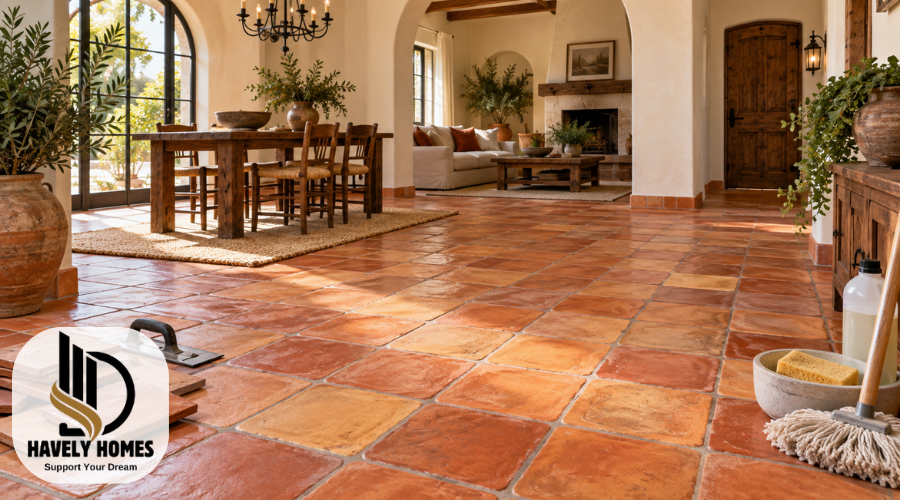
Saltillo tile is a traditional terracotta flooring material that brings warmth, natural colour, and rustic beauty into a home. Its earthy shades and handmade appearance make it a popular choice for homeowners who want flooring with character rather than a perfectly uniform finish.
Originally produced in Mexico, these clay tiles work particularly well with Spanish-style, Mediterranean, Southwestern, and rustic interiors. Their natural colour variations can make a room feel welcoming while complementing wooden furniture, neutral walls, and traditional architectural details.
However, Saltillo flooring requires more consideration than many modern tiles. Its porous surface needs suitable protection, installation can be challenging, and regular maintenance helps preserve its appearance.
Understanding the available styles, costs, installation requirements, and cleaning methods will help you decide whether this flooring is a practical choice for your home.
Quick Answer:
Saltillo tile is handmade terracotta flooring known for its warm colours and rustic appearance. Before choosing it, check its sealing requirements, moisture resistance, installation location, and maintenance needs to ensure it suits your home.
Quick-Guide Troubleshooting Table
| Possible Problem | What to Check | Recommended Action |
| Dark stains or spots | Look for spills or worn sealer. | Clean gently with a compatible pH-neutral cleaner and assess the sealer. |
| White powder on tiles | Check for moisture and salt deposits. | Investigate moisture sources before attempting removal or resealing. |
| Dull or cloudy finish | Inspect for cleaning residue or damaged coating. | Use manufacturer-approved cleaning methods and seek advice before recoating. |
| Cracked or loose tiles | Check for movement, impact damage, or uneven flooring. | Ask a qualified tile installer to assess the underlying cause. |
| Slippery surface when wet | Check the surface finish and wet-area suitability. | Keep surfaces dry where possible and seek advice about slip-resistant finishes. |
| Discoloured grout | Look for trapped dirt, moisture, or staining. | Clean with a grout-compatible product and investigate recurring moisture. |
Helpful Steps Before Buying Saltillo Tile
- Choose the installation area: Decide whether the tiles will be used indoors or outdoors, considering moisture exposure and local climate.
- Check the material: Confirm whether the product is authentic handmade Saltillo or a ceramic or porcelain alternative.
- Compare colours and shapes: Examine samples to understand natural colour differences, surface texture, and actual dimensions.
- Review the finish: Ask whether the tiles are raw, pre-sealed, matte, or glossy, and check their maintenance requirements.
- Calculate the quantity: Measure your floor area and allow additional material for cutting, breakage, and future repairs.
- Confirm installation requirements: Check the manufacturer’s guidance and obtain a detailed quotation from an experienced installer.
What Is Saltillo Tile?
Saltillo tile is a traditional type of terracotta tile associated with Saltillo, a city in Coahuila, Mexico. Authentic tiles are handmade using natural clay, giving them a distinctive appearance that differs from machine-produced flooring.
During traditional production, clay is shaped into moulds, dried, and fired in kilns. The firing process creates natural differences in colour, while handmade production results in small variations in thickness, texture, and edges.
Some tiles have slight surface marks or irregular shapes. These features are part of their handmade character rather than necessarily being manufacturing defects.
Unlike many glazed ceramic tiles, traditional Saltillo has a relatively porous clay surface. It absorbs moisture more readily and generally needs sealing to improve stain resistance.
It is also important to distinguish authentic Saltillo from Saltillo-look products. Some ceramic and porcelain tiles reproduce its warm colours and rustic appearance but have different performance and maintenance requirements.
For homeowners, this distinction matters because two tiles that look similar may behave very differently after installation.
Saltillo Tile Colors, Finishes, and Popular Styles
One of the most attractive features of Saltillo flooring is its natural colour variation. Traditional Saltillo tile colors include golden yellow, burnt orange, terracotta red, peach, and warm brown.
The shades can vary within a single tile and between individual pieces, creating a floor with a rich, natural appearance.
Traditional Saltillo usually features warm orange and reddish tones. It works particularly well with cream walls, exposed timber, and rustic furniture.
Manganese Saltillo is known for its darker appearance, often featuring smoky brown and earthy tones. It can create a more subdued look than traditional orange terracotta.
Antique-style Saltillo typically has a more weathered appearance, with textured surfaces and irregular details that suggest an older floor. Exact colours and textures depend on the manufacturer.
The chosen finish also influences the final appearance.
A matte finish maintains a softer, more natural look. Satin finishes introduce a gentle sheen, while glossy finishes reflect more light and can make the clay colours appear deeper.
Some sealers enhance the natural colour, while others are designed to preserve a lighter appearance.
For bright interiors, lighter terracotta shades can complement white or cream walls. Darker tones may work better in rooms with natural wood, stone, and warm lighting.
Always compare actual samples under your home’s lighting before making a final choice.
Saltillo Tile Sizes, Shapes, and Flooring Patterns
Saltillo flooring is available in several shapes and sizes, allowing homeowners to create different designs.
Square tiles remain a traditional choice. Saltillo tile 12×12 is particularly familiar and works well in kitchens, dining rooms, and living areas. Smaller squares and larger formats are also available.
However, handmade dimensions are often approximate. A tile sold as 12 inches square may measure slightly less, so you should check the supplier’s actual dimensions and coverage information.
Saltillo tile hexagon designs are another attractive option. Their geometric appearance adds visual interest without losing the natural warmth of terracotta.
Rectangular tiles and specialty shapes are available from some suppliers.
Straight layouts create a simple, organised appearance, while diagonal patterns can introduce movement into a room. Mixed-size arrangements can create a traditional courtyard-inspired design.
Smaller tiles may suit compact spaces, while larger pieces can reduce the number of visible grout lines.
Because handmade tiles vary in size, installers must plan the layout and grout joints carefully. The appropriate spacing depends on the actual tiles and the chosen grout system.
Where Can You Use Saltillo Tile Inside Your Home?
Saltillo flooring can be used in several indoor spaces, provided the installation and finish suit the room’s conditions.
Living rooms are a natural choice. The warm terracotta shades complement wooden furniture, woven rugs, and neutral upholstery. The flooring can also create a strong connection between traditional architecture and modern furnishings.
In dining rooms, Saltillo creates a relaxed, welcoming atmosphere. Proper sealing is especially useful where food and drinks may spill.
Kitchens can also benefit from its rustic appearance. However, cooking oils, food stains, and frequent cleaning make an appropriate protective finish important.
For hallways and entrances, consider the amount of foot traffic and dirt brought in from outdoors. Door mats and regular sweeping can help limit abrasive wear.
Bathrooms require additional planning. Saltillo can be suitable for certain bathroom floors and walls, but moisture exposure must be considered carefully.
Sealing does not replace waterproofing. Wet areas need suitable waterproofing beneath the tile, and the selected finish must provide appropriate slip resistance.
Shower installations require particular care and are best assessed by an experienced professional.
For a balanced interior design, pair terracotta floors with warm white walls, natural fabrics, timber cabinets, and simple decorative details.
Is Saltillo Tile Suitable for Outdoor Spaces?
Saltillo tile outdoor installations can create attractive patios, courtyards, and covered porches, especially in warm climates.
However, traditional Saltillo is not generally considered freeze-thaw resistant. Because the clay absorbs moisture, water trapped inside the tile can expand when frozen and cause cracking or surface damage.
For this reason, outdoor Saltillo flooring is generally unsuitable in regions experiencing repeated freezing and thawing.
Even in warmer climates, exterior installations need careful planning.
The underlying surface should be stable, properly prepared, and designed to manage moisture. Suitable waterproofing, drainage, and compatible installation materials may be necessary.
Surface grip is another important consideration. Some glossy finishes may become slippery when wet, making them less appropriate for exposed walkways.
Outdoor tiles also face sunlight, dirt, rain, and changing temperatures, which can increase maintenance requirements.
Before purchasing, confirm that the exact product is approved for your outdoor conditions.
If you live in a cold climate, frost-rated porcelain with a Saltillo-style appearance may be a more dependable alternative.
Advantages and Disadvantages of Saltillo Tile Flooring
Saltillo flooring offers several benefits, but understanding its limitations is essential before installation.
Its biggest advantage is its appearance. Natural colour variations, handmade edges, and earthy tones create a distinctive finish that manufactured tiles may not reproduce exactly.
When installed correctly and maintained appropriately, Saltillo can provide long-lasting flooring in suitable indoor environments.
It also complements various decorating styles, from traditional Spanish interiors to contemporary homes featuring natural materials.
However, its porosity is a significant drawback.
Unprotected clay can absorb spills and develop stains. Protective sealers help reduce this risk, but they require maintenance and do not make the tile completely stainproof.
Saltillo is also susceptible to chips, scratches, and surface wear, particularly when exposed to heavy impacts or abrasive dirt.
Its uneven texture and hard surface may feel different from perfectly smooth modern flooring. Like other hard tiles, it offers little cushioning underfoot.
Installation may also cost more because handmade variations require additional attention.
Saltillo is worth considering when its distinctive appearance matters enough to justify the extra maintenance.
Saltillo Tile vs. Ceramic, Porcelain, and Other Terracotta Tiles
Although Saltillo, ceramic, and porcelain tiles all involve fired clay materials, their properties can differ considerably.
Traditional Saltillo is generally more porous and irregular than most modern glazed ceramic and porcelain flooring.
Ceramic tiles are available in many colours and finishes. Glazed versions typically offer a protective surface that makes everyday cleaning easier, although performance varies by product.
Porcelain is generally denser and has very low water absorption. Properly rated porcelain products can be suitable for busy kitchens, bathrooms, and certain outdoor applications.
Other terracotta tiles may share Saltillo’s earthy appearance, but their manufacturing methods, absorption rates, and finishes are not necessarily identical.
For homeowners wanting authentic handcrafted character, Saltillo offers a distinctive appearance.
For those prioritising stain resistance, consistent dimensions, and simpler cleaning, glazed ceramic or porcelain may be more practical.
In bathrooms and exterior spaces, selecting a tile with appropriate moisture, slip-resistance, and frost-performance ratings is more important than appearance alone.
Ultimately, the best option depends on the room, household habits, climate, and maintenance preferences.
How Much Does Saltillo Tile Cost?
Saltillo tile costs vary according to the tile’s size, finish, supplier, installation requirements, and location.
In the United States, published 2026 project estimates place professional installation of a 150-square-foot Saltillo floor at approximately $900 to $4,200, including materials and labour. A typical estimate is around $2,550, although individual projects can fall outside this range.
These figures are general planning estimates rather than guaranteed prices.
The material itself may cost more when you choose specialty shapes, particular colours, or factory-sealed finishes.
Labour costs also depend on the condition of the existing floor, the complexity of the layout, and the installer’s experience.
Additional expenses can include removing old flooring, preparing the substrate, waterproofing, grout, adhesives, sealers, and delivery charges.
To estimate the amount of tile needed, multiply the room’s length by its width. For example, a room measuring 12 feet by 15 feet has a floor area of 180 square feet.
You should then allow additional material for cutting, breakage, and future repairs. The suitable allowance depends on the pattern, room shape, and actual tile dimensions.
Ask suppliers for coverage per box rather than relying only on nominal tile sizes.
For accurate budgeting, request a written installation quotation that separates material, labour, preparation, sealing, and other charges.
Where to Buy Saltillo Tile and What to Check Before Purchasing
Homeowners searching for Saltillo tile near me can begin with local flooring showrooms, specialist tile suppliers, and retailers selling terracotta products.
Seeing samples in person is especially helpful because photographs may not accurately represent the natural colour variation.
Floor & Decor lists sealed and unsealed Saltillo products in different shapes and sizes, although availability depends on the location and product.
When searching for Saltillo tile at Home Depot, check the material description carefully. Some products use Saltillo in their colour or collection name but are actually glazed ceramic or porcelain.
Lowe’s has also listed handmade Saltillo and Saltillo-style flooring products. Individual listings may be discontinued or unavailable, so current stock should always be confirmed.
Before ordering, check whether the tile is authentic handmade clay, unsealed, or factory-sealed.
Also review the stated thickness, actual dimensions, recommended applications, and installation requirements.
Delivery charges can be significant for heavy flooring materials, so include freight when comparing prices.
Request samples where possible and ask about damaged deliveries, product returns, and matching future orders.
Natural variation is expected, but checking several pieces from the intended batch helps avoid surprises during installation.
Saltillo Tile Installation: Important Steps and Considerations
Installing Saltillo requires careful preparation because its handmade shape and porous structure create challenges that differ from those of standard manufactured tiles.
The first step is checking the substrate. It must be stable, sufficiently flat, clean, and suitable for the selected flooring system.
Existing cracks, movement, or moisture problems should be evaluated before installation begins.
The correct adhesive is particularly important. Saltillo absorbs moisture readily, so suitable high-strength, latex-fortified thin-set mortar is commonly recommended to support proper bonding.
Installers should follow the adhesive manufacturer’s instructions and confirm compatibility with the tile and substrate.
Before fixing the tiles, dry layout planning helps identify colour variation, uneven dimensions, and awkward cuts.
Tiles from different boxes can be distributed across the floor to create a balanced appearance.
Grout joints are often wider than those used with precision-manufactured tiles, but there is no universal spacing requirement. The correct joint width depends on tile variation and the approved grout product.
Raw Saltillo may need pre-grout sealing or an appropriate grout-release treatment to reduce staining during installation.
Cutting also requires suitable tools and protection against dust and flying fragments.
Final sealing should only take place when the installation has dried or cured sufficiently according to the relevant product instructions.
Incorrect preparation, unsuitable adhesives, poor moisture management, and incompatible sealers can cause expensive problems.
For large floors, wet areas, or complicated substrates, hiring an installer experienced with handmade terracotta is generally the safer choice.
How to Seal, Clean, and Maintain Saltillo Tile
Proper sealing and regular cleaning play an important role in maintaining Saltillo flooring.
Because traditional clay is porous, it can absorb liquids and develop stains if left unprotected.
Penetrating sealers are designed to enter the tile’s pores and help resist moisture and staining while generally preserving a more natural surface appearance.
Surface-forming sealers create a protective finish on top of the tile. Depending on the product, they may produce a satin or glossy appearance.
The best choice depends on the location, desired finish, existing treatments, and manufacturer’s recommendations.
Raw tiles may require protection before grouting. Some factory-sealed products still need a compatible finishing coat after installation.
For everyday cleaning, sweep regularly or use a vacuum suitable for hard floors to remove sand and grit.
Damp mop with a suitable pH-neutral tile cleaner, following the cleaner’s dilution and rinsing instructions.
Avoid routinely using vinegar, strong acidic cleaners, harsh chemicals, or abrasive cleaning tools. These may damage certain sealers or affect the flooring’s appearance.
Clean spills promptly rather than allowing liquids to sit on the surface.
Resealing frequency varies with foot traffic, the type of sealer, cleaning habits, and environmental conditions. There is no single interval appropriate for every Saltillo floor.
If water begins soaking into previously protected tile, the sealer may need attention. However, follow the manufacturer’s testing and maintenance guidance before applying another coat.
Common Saltillo Tile Problems and How to Handle Them
Even well-maintained Saltillo flooring can develop problems over time. Identifying the cause before attempting repairs helps prevent further damage.
Stains are common when spills penetrate porous clay or when protective coatings have worn away. Fresh spills should be cleaned promptly with a compatible product.
Older stains may require specialist cleaning, depending on the substance involved and the type of sealer.
A dull finish can result from ordinary wear, accumulated cleaning residue, or deterioration of a surface coating.
Before applying new sealer, determine whether the existing finish needs cleaning, repair, or professional removal.
Cracks and chips can occur because of impact, substrate movement, or installation problems.
Small cosmetic chips may be repairable, while severely damaged tiles might need replacement. Repeated cracking should be investigated rather than simply covered.
Damaged grout can also allow more dirt and moisture to enter joints. Loose or deteriorating grout should be assessed before repairs.
Another problem is efflorescence, which appears as a white, powdery deposit. It develops when moisture carries soluble salts towards the surface.
Sealing alone will not necessarily prevent this issue because it does not stop water from moving through the underlying floor assembly.
Cloudy or milky finishes can sometimes indicate moisture trapped beneath a surface coating.
Avoid attempting aggressive chemical treatments without identifying the cause.
When stains persist, tiles repeatedly crack, coatings fail, or moisture problems appear, consult a qualified tile restoration specialist or installer.
Addressing the underlying issue is usually more effective than repeatedly cleaning or resealing the visible damage.
Conclusion
Saltillo tile is an attractive flooring choice for homeowners who appreciate natural colours, handmade details, and traditional terracotta character. It can bring warmth to living rooms, kitchens, hallways, and other suitable areas of the home.
However, its porous surface, installation requirements, and ongoing maintenance deserve careful consideration.
Choosing the right tile, checking its suitability for your climate, and using compatible installation and sealing materials can make a significant difference to its long-term performance.
Before purchasing, compare samples, assess the condition of your floor, and prepare a realistic budget.
The best Saltillo flooring is not simply the most attractive option. It is the one that combines your preferred appearance with practical installation, proper care, and the everyday needs of your home.
Frequently Asked Questions
Is Saltillo Tile Suitable For Homes With Pets?
Saltillo tile can work in homes with pets, but claws, dirt, and accidents may affect its protective finish. Regular cleaning, suitable sealing, and prompt spill removal help maintain the flooring.
Can Saltillo Tile Be Installed Over Underfloor Heating?
Some Saltillo tiles may be suitable for underfloor heating when installed with compatible materials. Always confirm the tile manufacturer’s requirements and the heating system’s installation instructions before proceeding.
Does Saltillo Tile Change Colour After Sealing?
Yes, certain sealers can deepen Saltillo’s natural colours or create a glossy appearance. Other products preserve a more natural finish. Test the chosen sealer on a sample before applying it.
Is Saltillo Tile Environmentally Friendly?
Saltillo tile is made primarily from natural clay, but its environmental impact also depends on manufacturing energy, transportation, durability, and maintenance products. Natural materials alone do not guarantee environmental sustainability.
Can Individual Saltillo Tiles Be Replaced Without Changing The Entire Floor?
Yes, individual damaged tiles can often be replaced. However, matching the original colour, dimensions, and finish may be difficult because handmade tiles naturally vary between production batches.
Disclaimer: This article is provided by Havely Homes for general information about Saltillo tile. Installation methods, sealing requirements, and maintenance instructions vary by product. Always consult manufacturer guidance and a qualified flooring professional for complex work. Thermostat models and troubleshooting procedures also vary; consult the relevant model manual or official support. Electrical wiring, gas, furnace, and complex HVAC work should be handled by qualified professionals.
