
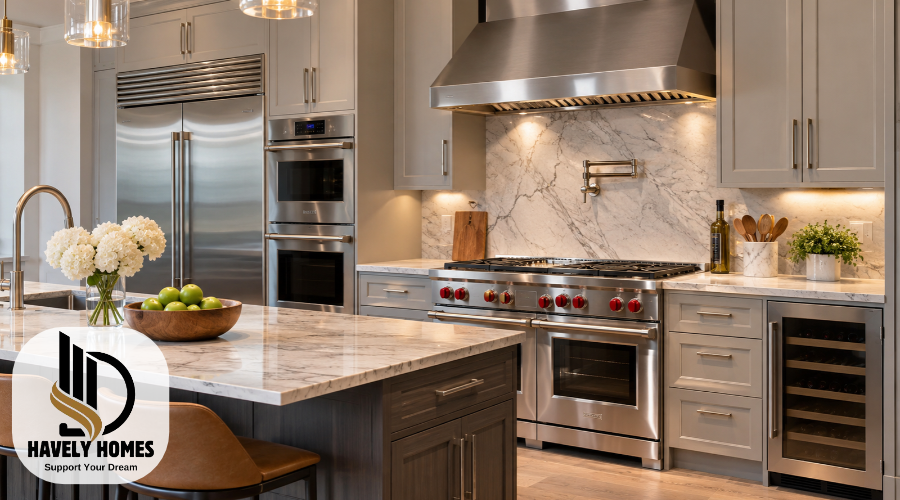
A well-designed kitchen should look beautiful and make everyday cooking easier. High end kitchen appliances help homeowners achieve both goals by combining practical features, modern technology, and attractive designs. From built-in refrigerators to professional-style ovens, these appliances offer different ways to improve the kitchen experience.
Many homeowners consider luxury appliances when renovating their kitchens or building new homes. Some want better cooking control, while others prefer quiet dishwashers, integrated refrigerators, or matching finishes that complement their cabinets.
However, choosing expensive appliances does not automatically guarantee better results. Performance, reliability, available space, and long-term costs are equally important.
Understanding the different appliance types, trusted manufacturers, useful features, and buying considerations can help you create a kitchen that suits your household without paying for things you rarely use.
Quick Answer:
High end kitchen appliances offer advanced cooking features, premium designs, and convenient functions. Before buying, compare performance, kitchen space, energy efficiency, installation requirements, warranty coverage, and long-term costs to find suitable options.
Quick-Guide Table
| Possible problem | What to check | Recommended action |
| Appliance does not fit | Cabinet measurements and door clearance | Confirm exact dimensions before purchasing. |
| High running costs | Energy ratings and estimated consumption | Compare efficient models with suitable capacities. |
| Unnecessary expensive features | Cooking habits and daily requirements | Choose features you will regularly use. |
| Difficult repairs | Warranty terms and local service availability | Confirm authorized repair support before buying. |
| Installation complications | Electrical, gas, water, and ventilation requirements | Consult qualified installers before making modifications. |
| Poor kitchen appearance | Appliance finishes and surrounding cabinetry | Choose compatible finishes and suitable built-in designs. |
Helpful Steps for Choosing High-End Kitchen Appliances
- Identify your needs: Consider household size, cooking habits, and the appliances you use most frequently.
- Measure your kitchen: Check cabinet openings, available floor space, and appliance door clearance.
- Compare important features: Focus on cooking performance, storage capacity, cleaning convenience, and energy efficiency.
- Review your budget: Include delivery, installation, accessories, and potential maintenance costs.
- Check warranty coverage: Confirm manufacturer support, replacement parts, and local repair availability.
- Compare models before purchasing: Read independent reviews and inspect appliances in a showroom whenever possible.
What Makes Kitchen Appliances High-End?
High-end appliances usually offer more design choices, specialized features, and premium finishes than basic household models. Their purpose is to combine everyday functionality with a more refined kitchen experience.
Standard appliances generally focus on essential tasks such as cooking, cooling, and cleaning. Premium models may provide additional convenience, improved controls, and better interior organization. Luxury appliances often go further with integrated cabinetry options, specialized cooking functions, and distinctive designs.
Build quality is another consideration. Some manufacturers use substantial metal components, durable handles, and carefully designed controls. However, materials and construction quality vary between individual models.
Cooking precision can also make a difference. Advanced ovens may offer temperature probes, multiple cooking modes, or improved heat distribution. Refrigerators may include separate temperature zones and adjustable humidity settings.
The important point is that a higher price does not always mean better performance or longer life. Independent testing has shown that some ordinary cooking ranges perform better than expensive professional-style alternatives.
The best purchase is an appliance whose features genuinely improve your daily routine.
Luxury Refrigerators and Built-In Refrigeration Options
Refrigerators are among the most important appliances in any kitchen. Luxury refrigeration focuses on food storage, temperature management, flexible organization, and appearance.
Built-in refrigerators are designed to fit within planned kitchen cabinetry. Integrated models can create a particularly seamless appearance, while panel-ready versions accept compatible decorative cabinet panels.
Freestanding refrigerators are usually easier to replace or reposition. Some counter-depth models offer a more streamlined appearance without requiring fully integrated installation.
Sub-Zero appliances are well known for their built-in refrigeration collections. The brand offers refrigerator and freezer columns, combination refrigerators, wine storage, and undercounter cooling options.
Separate refrigeration columns allow homeowners to arrange refrigerator and freezer storage according to their needs. French-door models provide wide refrigerated compartments, while undercounter units can add convenient storage near kitchen islands or beverage areas.
Premium refrigeration features may include adjustable shelves, humidity-controlled drawers, specialized storage compartments, and independent temperature settings.
Before choosing a refrigerator, compare its usable interior capacity rather than relying only on exterior size. Some built-in models offer less storage than similarly sized freestanding alternatives.
Also consider door clearance, ventilation, cabinet dimensions, and the available delivery route.
Premium Ranges, Cooktops, and Built-In Ovens
Cooking appliances are often the centerpiece of a luxury kitchen. Choosing the right arrangement depends on how frequently you cook, the dishes you prepare, and the space available.
A professional-style range combines a cooktop and oven in one appliance. Many offer substantial grates, multiple burners, and a restaurant-inspired appearance.
Separate cooktops and wall ovens provide more flexibility. For example, a wall oven can be positioned at a convenient height, while the cooktop can sit on a kitchen island or another counter.
Different cooking technologies offer distinct advantages.
Gas cooktops provide a visible flame and responsive heat adjustment. Electric radiant cooktops offer smooth surfaces but can retain considerable heat after use. Induction cooktops heat compatible cookware directly, providing fast heating and responsive control.
Dual-fuel ranges typically combine gas burners with an electric oven.
Convection ovens use fans to circulate heated air. Steam and combination steam ovens offer additional cooking methods, which may be useful for vegetables, fish, bread, and other dishes.
Manufacturers such as Wolf, Thermador, Miele, and Gaggenau provide premium cooking options. Thermador, for example, offers flexible induction cooking surfaces designed to accommodate different cookware arrangements on supported models.
For everyday cooking, prioritize steady simmering, reliable baking, useful oven capacity, and controls that feel comfortable to operate.
High-End Dishwashers and Kitchen Ventilation
A premium dishwasher should make cleaning easier without creating unnecessary noise or inconvenience.
Useful features include adjustable racks, dedicated cutlery storage, multiple wash cycles, effective drying, and soil sensors that adjust cleaning programs.
Cove kitchen appliances focus on premium dishwashing. Cove dishwashers offer adjustable interior arrangements, specialized washing programs, filtration systems, and drying features. Available functions depend on the particular model.
Integrated dishwashers can also accept compatible cabinet panels, helping them blend into surrounding cabinetry.
When comparing models, examine cleaning performance, noise ratings, water consumption, and how easily large cookware fits inside.
Ventilation is equally important, especially in kitchens with powerful cooking equipment.
A suitable range hood helps remove cooking odors, moisture, airborne particles, and, when properly vented outdoors, pollutants produced during cooking.
Ducted range hoods exhaust air outside the home. Recirculating models filter and return air to the kitchen, but they do not remove moisture and combustion gases in the same way.
Choose ventilation based on the cooking appliance, kitchen layout, manufacturer requirements, and applicable local building rules.
High-End Small Kitchen Appliances for Everyday Use
Not every luxury appliance needs a permanent place inside kitchen cabinetry. High-end small kitchen appliances can also improve everyday food preparation.
Premium blenders, stand mixers, coffee makers, toasters, kettles, and countertop ovens may offer precise controls, specialized functions, and attractive finishes.
Wolf Gourmet is one example of a premium countertop appliance brand. Its product range includes countertop ovens, blenders, coffee systems, stand mixers, toasters, and other food preparation equipment.
These products serve different needs. Someone who frequently bakes may benefit from a versatile stand mixer, while a household that prepares smoothies or soups regularly might appreciate a capable blender.
A countertop oven can provide additional cooking space, although its usefulness depends on capacity and available counter space.
Before upgrading, consider how often you will use the appliance, whether its parts are easy to clean, and where it will be stored.
Matching finishes can create a coordinated appearance, but functionality should remain the deciding factor. An attractive appliance offers limited value if it spends most of its time unused.
High End Kitchen Appliances Brands: Popular Names to Know
Several manufacturers specialize in luxury kitchen products. Each offers different designs, features, and appliance categories.
Sub-Zero: Focuses on premium refrigeration, including integrated refrigerators, freezer columns, wine storage, and undercounter appliances.
Wolf: Offers ranges, cooktops, wall ovens, and other cooking equipment for homeowners seeking advanced cooking options.
Cove: Specializes in premium dishwashers with flexible interior arrangements and multiple cleaning programs.
Thermador: Provides cooking ranges, induction cooktops, refrigerators, wall ovens, dishwashers, and coordinated kitchen appliance collections.
Miele: Offers dishwashers, ovens, steam cooking appliances, and built-in coffee systems. Certain Miele dishwashers also feature automatic detergent dispensing.
Gaggenau: Produces integrated cooking, refrigeration, ventilation, and dishwashing appliances with distinctive contemporary designs.
Monogram: Offers luxury refrigeration and cooking equipment, including Statement and Minimalist design collections.
Viking: Is associated with professional-style residential cooking ranges and other kitchen equipment.
La Cornue: Is known for distinctive cooking ranges, particularly its customizable Château collection.
These are examples of established luxury brands, not a ranking of the best manufacturers.
A brand’s reputation can provide a useful starting point, but individual model performance, warranty coverage, replacement parts, and access to qualified technicians matter more when making a final decision.
Are Luxury Kitchen Appliances Packages Worth Buying?
Luxury kitchen appliances packages usually combine several major products from the same manufacturer or related brands.
A typical package may include a refrigerator, cooking range or wall oven, cooktop, dishwasher, and sometimes a ventilation hood.
One advantage is coordinated design. Appliances from the same collection may share similar handles, finishes, display styles, and controls.
Buying a package can also simplify kitchen planning, especially when several appliances are being installed during the same renovation.
Some manufacturers and retailers offer package promotions. However, these offers may have eligibility requirements, model restrictions, or purchase deadlines.
A package is not necessarily cheaper than purchasing appliances separately.
Mixing brands can sometimes be more practical. For example, one manufacturer may offer the refrigerator you prefer, while another has a dishwasher better suited to your household.
Compare the complete package price with the cost of individually selected appliances. Include installation, delivery, accessories, and any promotional conditions.
Choose a coordinated package only when its products meet your actual kitchen requirements.
Matching High-End Appliances With Your Kitchen Design
Luxury appliances should complement the kitchen rather than make the space feel crowded or difficult to use.
Modern and minimalist kitchens often feature integrated refrigerators, smooth induction cooktops, and concealed dishwashers. Traditional kitchens may suit statement ranges, decorative handles, and classic finishes.
Professional-style kitchens frequently use visible stainless steel appliances, substantial cooking ranges, and prominent ventilation hoods.
Stainless steel remains a versatile choice because it works with many cabinet colors and countertop materials.
Custom cabinet panels create a quieter visual appearance, while colored appliances or distinctive metal finishes can become focal points.
Placement is just as important as appearance. Think about the distance between the refrigerator, sink, preparation surfaces, and cooking area.
Leave enough room for refrigerator doors, dishwasher racks, oven doors, and nearby drawers to open comfortably.
For small kitchens, compact built-in appliances and carefully planned storage may be more useful than oversized equipment.
Larger kitchens can accommodate separate cooking zones or additional refrigeration, provided the layout remains convenient.
Always check manufacturer dimensions, installation requirements, and delivery access before finalizing cabinetry.
How to Choose the Best High End Kitchen Appliances for Your Home
Finding the best high end kitchen appliances starts with understanding how your household actually uses the kitchen.
A family that prepares several meals daily may prioritize refrigerator capacity, dishwasher efficiency, and easy cleaning. Someone who enjoys baking may place greater importance on oven performance and temperature control.
Begin with your available space and realistic spending limit. Then compare products based on features you will regularly use.
Independent product testing can help assess cooking consistency, cooling performance, cleaning results, and reliability. Customer reviews may reveal practical ownership experiences, although individual experiences can vary.
Warranty terms also deserve attention. Check what is covered, how long coverage lasts, and whether authorized repair services operate in your area.
Common purchasing mistakes include:
- Choosing oversized appliances without checking available space.
- Paying extra for advanced functions that will rarely be used.
- Ignoring ventilation, electrical, or plumbing requirements.
- Focusing on appearance instead of performance and maintenance.
- Purchasing before confirming repair support and replacement-part availability.
Where possible, visit a showroom to inspect handles, controls, shelves, and interior layouts.
The best appliance is not necessarily the most expensive model. It is the one that performs the required tasks reliably and fits comfortably into your home.
Understanding Prices, Running Costs, and Long-Term Value
Luxury kitchen appliances vary considerably in price. Size, manufacturer, construction, specialized technology, and customization all influence the final cost.
A panel-ready refrigerator may require additional spending on cabinet panels and installation. A professional-style range may need suitable ventilation or changes to the existing utility connections.
For this reason, the purchase price represents only part of the total investment.
Homeowners should also consider delivery, installation, cabinetry adjustments, accessories, electricity or gas consumption, maintenance, and possible repairs.
Warranty coverage can reduce some repair expenses, but exclusions and service conditions vary between manufacturers and products.
Premium appliances can offer good value when their features are used regularly. Better storage organization, convenient controls, or reliable cleaning may make daily kitchen work easier.
However, expensive appliances do not automatically last longer or increase property value.
Think about the total cost of ownership rather than the initial purchase alone.
Spending more on appliances you frequently use may be sensible, while selecting simpler models for less important tasks can help keep the overall kitchen budget under control.
Energy Efficiency, Smart Features, and Appliance Care
Energy efficiency matters when choosing appliances that operate regularly or consume substantial electricity.
When comparing refrigerators and dishwashers, examine their stated energy consumption alongside size and capacity. In the United States, EnergyGuide labels and ENERGY STAR certification can help homeowners compare eligible models.
Other countries may use different energy-label systems.
Induction cooking is generally more energy-efficient than gas cooking because it transfers energy directly to compatible cookware. However, induction requires suitable pans and the correct electrical installation.
A simple magnet test can help identify compatible cookware, although the manufacturer’s guidance should also be checked.
Smart features are another consideration. Some premium appliances offer app-based monitoring, notifications, programmable settings, or connected controls.
These functions may be convenient, but connectivity should not replace essential cooking, cooling, or cleaning performance.
Regular maintenance is also important.
Clean appliance surfaces using approved products, maintain dishwasher filters as directed, and keep refrigerator ventilation areas free from obstructions.
Follow the specific user manual for cleaning schedules, replaceable filters, and recommended maintenance.
Proper care supports efficient operation, although it cannot eliminate normal wear or guarantee a particular appliance lifespan.
Safe Installation and When Professional Help Is Needed
Installing high-end kitchen appliances requires careful planning because different models have different electrical, gas, water, and ventilation requirements.
A built-in refrigerator may need specific cabinet openings, ventilation arrangements, and secure positioning. Dishwashers require suitable water supply, drainage, and electrical connections.
Cooking ranges and wall ovens must also meet the manufacturer’s clearance and installation requirements.
Homeowners can safely perform basic preparation checks, such as measuring available space, reviewing product specifications, checking the delivery route, and identifying existing utility connection locations without disturbing them.
However, technical installation should be handled by appropriately qualified professionals.
Contact a qualified professional when:
- Electrical circuits, outlets, or wiring need modification.
- A gas range requires connection, relocation, or conversion.
- New water supply or drainage connections are necessary.
- Range hood ductwork or ventilation arrangements need changing.
- Heavy built-in appliances require specialist fitting or securing.
Never attempt unauthorized gas work or modify electrical wiring to accommodate an appliance.
If an appliance shows signs of damaged wiring, gas leakage, overheating, or another potentially dangerous fault, stop using it and seek appropriate professional assistance.
Before purchasing, review the exact model’s installation guide, electrical requirements, warranty conditions, and local building regulations.
Professional installation helps protect household safety and reduces the risk of avoidable installation problems.
Conclusion
High end kitchen appliances can improve a home’s cooking experience by offering useful technology, flexible designs, and specialized features. From integrated refrigerators to precision cooktops and quiet dishwashers, there are many options for different households.
However, luxury should not be judged by price or brand recognition alone. An appliance becomes a worthwhile investment when it supports everyday needs, fits the kitchen properly, and remains practical to operate and maintain.
Before buying, consider your cooking habits, available space, preferred design, energy consumption, installation requirements, and long-term costs.
A thoughtfully planned kitchen does not need the most expensive appliance in every category. Choosing reliable, well-suited products can create a beautiful, comfortable, and functional home kitchen that serves your household for years to come.
Frequently Asked Questions
Are High End Kitchen Appliances More Reliable Than Standard Appliances?
Not necessarily. Some luxury appliances offer durable components and advanced technology, but reliability depends on the manufacturer and individual model. Compare independent reliability information, warranty terms, and repair availability before purchasing.
Can I Mix Different Luxury Kitchen Appliance Brands?
Yes, you can combine appliances from different manufacturers. Mixing brands allows you to choose products that best meet your cooking, refrigeration, and cleaning needs while maintaining a coordinated kitchen appearance.
Are Built-in Luxury Appliances Suitable For Small Kitchens?
Yes, provided their dimensions and installation requirements suit the available space. Compact built-in ovens, integrated dishwashers, and appropriately sized refrigerators can create a streamlined kitchen without sacrificing essential functionality.
Do High-end Kitchen Appliances Require Special Maintenance?
Some models require specific cleaning products, filter replacements, or professional servicing. Maintenance requirements vary, so always follow the manufacturer’s instructions and avoid using unsuitable cleaning methods or attempting complex repairs yourself.
Do Luxury Kitchen Appliances Increase Home Value?
Attractive, functional kitchen appliances may appeal to potential buyers, but they do not guarantee a higher property value. Their contribution depends on the overall kitchen, housing market, and buyer preferences.
Disclaimer: This article is provided by Havely Homes (havelyhomes.com) for general informational purposes only. Appliance features, installation requirements, and maintenance instructions vary by brand and model. Always consult the manufacturer’s manual or official support information. Electrical wiring, gas connections, and complex installation work should be handled by qualified professionals. Havely Homes is an independent informational website and does not engage in paid promotions or advertising.
