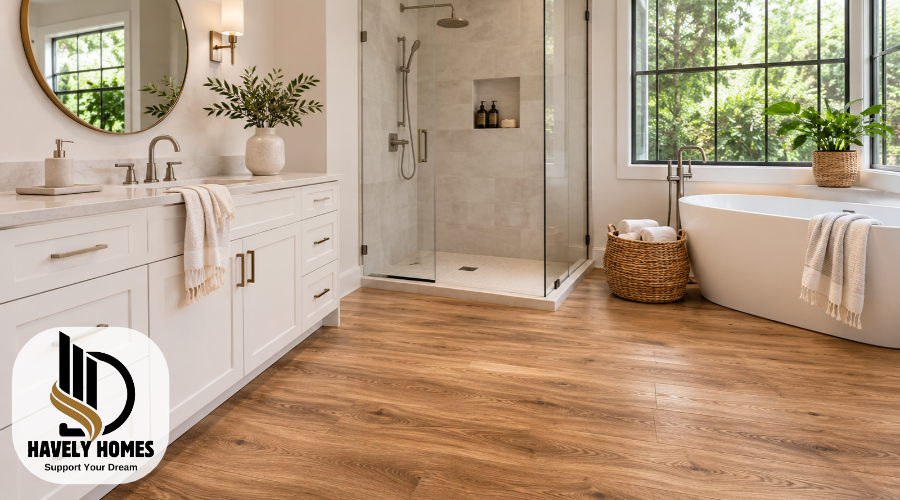
Bathroom wood flooring can make an ordinary bathroom feel warmer, more welcoming, and more stylish. Its natural grain and soft colours work beautifully with modern, traditional, and minimalist interiors. However, choosing wooden flooring for a bathroom requires more thought than selecting flooring for a bedroom or living room.
Bathrooms regularly experience water splashes, steam, humidity, and temperature changes. These conditions can damage unsuitable wood, causing swelling, warping, or surface deterioration.
Fortunately, homeowners have several options. Traditional hardwood, bathroom-approved engineered wood, luxury vinyl planks, and wood-look porcelain tiles can all create different versions of the wooden-floor appearance.
Understanding their benefits, limitations, installation requirements, and maintenance needs will help you choose bathroom flooring that suits your home’s style and everyday use.
Quick Answer:
Bathroom wood flooring can look beautiful, but moisture can damage unsuitable timber. Check whether the product is approved for bathrooms, its water resistance, slip resistance, and installation requirements before choosing real wood or wood-look flooring.
Quick-Guide Table: Common Bathroom Wood Flooring Problems
| Possible problem | What to check | Recommended action |
| Wood swelling or warping | Raised edges, uneven boards, or recent water exposure | Identify the moisture source and seek professional advice if damage is significant. |
| Water collecting on flooring | Splashes near showers, baths, and sinks | Wipe up standing water promptly and check nearby seals. |
| Slippery flooring | Surface condition and wet slip-resistance information | Choose bathroom-suitable flooring with appropriate slip resistance. |
| Damp smell beneath flooring | Persistent moisture, leaks, or discolouration | Investigate the moisture source and arrange professional inspection if needed. |
| Gaps between wooden boards | Changes in humidity or visible movement | Monitor minor changes and consult a flooring specialist if gaps worsen. |
| Damaged floor finish | Scratches, peeling coatings, or worn areas | Follow manufacturer-approved maintenance and repair guidance. |
Helpful Steps for Choosing Bathroom Wood Flooring
- Consider bathroom use: Identify whether the room is a powder room, family bathroom, or frequently wet shower area.
- Compare flooring materials: Look at bathroom-approved engineered wood, waterproof luxury vinyl, and wood-look porcelain tiles.
- Check moisture resistance: Read the manufacturer’s specifications and confirm bathroom suitability.
- Review safety and comfort: Consider wet slip resistance, cleaning requirements, and underfloor heating compatibility.
- Choose suitable colours: Select wood tones and finishes that complement the bathroom’s walls, cabinets, and lighting.
- Compare total costs: Include materials, subfloor preparation, waterproofing where needed, and professional installation.
- Review installation requirements: Make sure the existing floor is sound and any moisture problems are resolved before installation.
Can You Use Wood Flooring in a Bathroom?
Yes, wood flooring can be used in some bathrooms, but not every wooden floor is suitable. The main consideration is how much moisture the floor will experience and whether the manufacturer approves the product for bathroom installation.
Natural wood absorbs and releases moisture as surrounding conditions change. Excess moisture can cause boards to expand, cup, or warp, while dry conditions may lead to shrinkage and gaps.
Water-resistant flooring can tolerate a certain amount of moisture, but it still has limitations. Waterproof flooring is designed to resist water more effectively, although the meaning of this claim depends on the product and its installation conditions.
A powder room without a shower usually experiences less humidity than a family bathroom. This makes some timber flooring options more practical in powder rooms.
Bathrooms containing showers or bathtubs need more careful material selection. Water can collect around fixtures, enter poorly protected joints, and damage the underlying floor.
For most busy bathrooms, moisture-resistant alternatives are generally more practical than traditional solid hardwood.
Types of Bathroom Wood Flooring Explained
Different types of wooden flooring respond differently to moisture. Understanding their construction helps homeowners avoid choosing a beautiful floor that cannot handle bathroom conditions.
Solid Hardwood Flooring
Solid hardwood is made from natural timber throughout each board. It offers authentic grain patterns, natural character, and the possibility of refinishing when sufficient wood thickness remains.
However, solid hardwood is particularly sensitive to moisture changes. Frequent splashing or standing water can cause swelling and movement. Most conventional solid wood flooring is therefore unsuitable for full bathrooms.
Engineered Wood Flooring
Engineered wood usually combines a genuine hardwood surface with layers or a manufactured core designed to improve dimensional stability.
It generally handles normal humidity changes better than solid wood, but this does not automatically make it waterproof. Many engineered wood products are unsuitable for bathrooms.
Some can be refinished, depending on the thickness of their real-wood surface and the manufacturer’s guidance.
Bathroom-Rated Waterproof Wood Flooring
Certain specialist products combine genuine wood surfaces with protective coatings, treated joints, and moisture-resistant construction.
These products may be approved for bathroom use, but their protection varies. Homeowners should check the exact product specifications, installation instructions, and warranty conditions.
The important difference is that bathroom approval applies to specific flooring products, not every board labelled engineered or waterproof wood.
Waterproof Bathroom Wood Flooring and Wood-Look Alternatives
Homeowners who want the appearance of timber without the usual moisture concerns can consider several wood-look materials.
Luxury Vinyl Plank (LVP)
Luxury vinyl plank flooring uses layered synthetic materials with a decorative surface designed to resemble natural wood.
Many LVP products have waterproof construction and are suitable for conventional bathrooms. They are generally comfortable underfoot and easy to maintain.
However, waterproof vinyl planks do not automatically stop water from reaching the subfloor through edges, joints, or plumbing openings.
Wood-Look Porcelain Tiles
Porcelain tiles offer another practical option. They have very low water absorption and come in realistic wood colours, grain patterns, and plank shapes.
A bathroom with wooden floor tiles can achieve a timber-inspired appearance while benefiting from a hardwearing surface.
Porcelain is durable but can feel hard and cold underfoot. Proper installation and suitable wet slip resistance are especially important.
Water-Resistant Laminate
Some laminate flooring products are specifically designed for bathroom environments. They may include protective surface treatments and moisture-resistant joint systems.
Ordinary laminate should not be assumed suitable simply because it is advertised as water-resistant.
For any material, remember that waterproof flooring is not the same as a completely waterproof bathroom floor system.
Choosing the Right Flooring for Different Bathrooms
The best bathroom flooring depends on how the room is used, how frequently it gets wet, and who uses it.
Powder Rooms
Powder rooms normally contain a toilet and washbasin without a shower or bathtub. Their lower moisture exposure may make certain bathroom-approved engineered wood products suitable.
Family Bathrooms
Family bathrooms often experience frequent showers, splashing, and regular cleaning. Luxury vinyl and suitable porcelain tiles can provide a more forgiving surface for everyday use.
Main Bathrooms
A main bathroom can benefit from natural-looking flooring that complements nearby bedrooms. Bathroom-rated real wood may be considered when its installation requirements and moisture limitations can be met.
Children’s Bathrooms
Bathrooms used by children may experience more standing water and wet towels. Prioritising easy cleaning and suitable wet slip resistance is especially important.
Wet Rooms
Wet rooms require a properly designed waterproofing and drainage system. Ordinary wooden boards, laminate, and many vinyl plank products are not approved for continuously wet shower areas.
Choosing flooring based on actual moisture exposure is more important than selecting a material for its appearance alone.
Bathroom Wood Flooring Pros and Cons
Bathroom wood flooring offers several attractive features, but there are practical disadvantages to consider before installation.
The main advantage of real wood is its natural beauty. Every board has individual grain patterns and colour variations that bring character to an interior.
Wood can also create visual continuity between a bathroom and an adjoining bedroom. Depending on its construction and finish, it may feel more comfortable under bare feet than ceramic or porcelain tiles.
However, natural wood requires greater protection against moisture.
Common disadvantages include:
- Possible swelling, cupping, or warping following water exposure.
- Greater attention to cleaning and drying.
- Potential damage to protective finishes.
- Restrictions on installation and warranty coverage.
- Repair or replacement costs after serious moisture damage.
Wood-look flooring offers different benefits. Vinyl is often easier to maintain, while porcelain tiles resist surface moisture and everyday wear well.
Real wood may suit homeowners who value natural materials and can manage the maintenance requirements. For frequently wet bathrooms, suitable alternatives generally provide greater practicality.
Important Things to Check Before Buying Bathroom Flooring
Choosing bathroom flooring involves more than comparing colours and prices. The product needs to perform properly in a room where moisture is unavoidable.
Start by checking whether the manufacturer specifically approves the flooring for bathrooms. A product described as water-resistant may still exclude wet rooms or rooms containing floor drains.
Read the warranty carefully. Some products have conditions relating to standing water, installation methods, cleaning, and accidental flooding.
Slip resistance also deserves attention. A floor that feels secure when dry may become slippery when wet. Ask for relevant wet slip-resistance information rather than judging safety from texture alone.
Check the existing subfloor, particularly if the bathroom has previously experienced plumbing leaks or dampness.
If you plan to install underfloor heating, confirm that both the flooring and heating system are compatible. Some products have temperature restrictions.
Finally, compare surface finishes, construction, thickness, cleaning instructions, and expected daily use. A suitable product should meet your bathroom’s practical requirements as well as your design preferences.
Bathroom Wood Flooring Cost and Budget Considerations
Bathroom wood flooring cost depends on the material, product quality, bathroom size, subfloor condition, and installation requirements.
Solid hardwood and specialist engineered wood can involve higher material costs, particularly when premium timber finishes or specialised moisture protection are required.
Luxury vinyl plank flooring offers options across different budgets. Certain click-lock products may also have relatively straightforward installation requirements when the subfloor is suitable.
Wood-look porcelain tiles vary widely in price. Their installation can involve additional labour, cutting, adhesives, grout, and surface preparation.
The total budget should account for more than the visible flooring.
Additional expenses may include removing existing flooring, repairing damaged subfloors, moisture testing, waterproofing where required, trims, underlay, and fitting around bathroom fixtures.
A small bathroom is not always inexpensive to renovate because cutting materials around toilets, pipework, and corners can increase labour.
For accurate budgeting, request itemised quotations covering materials, preparation, installation, and finishing.
Also consider long-term costs. A lower initial price may offer poor value if the material is unsuitable and needs replacement after moisture damage.
Bathroom Wood Flooring Ideas for a Warm and Stylish Space
Bathroom wood flooring ideas can transform a practical room into a relaxing, attractive space. The right colour, pattern, and combination of finishes can make a noticeable difference.
Natural Oak-Inspired Flooring
Natural oak tones work well with white basins, soft beige walls, and simple bathroom cabinets. This combination creates a welcoming appearance without feeling overly decorative.
Light Wood With Neutral Walls
Pale timber effects can brighten bathrooms and complement white, cream, and light grey surfaces.
Dark Wood Effects
Dark walnut-inspired flooring can create an elegant contrast against white sanitaryware and lighter wall tiles. Good lighting helps prevent the room from feeling too dark.
Herringbone Flooring
Herringbone arrangements introduce pattern and visual interest. Some vinyl and porcelain products are designed specifically for this layout.
Wood-Look Porcelain Planks
Wood-look porcelain tiles can produce a realistic timber appearance with different plank sizes and grain designs.
For a coordinated result, consider the colours of the vanity, wall tiles, taps, and accessories. The flooring should support the overall design rather than compete with every other feature.
Small Bathroom With Wood Floor: Smart Design Tips
A small bathroom with wood floor styling can feel warm and spacious when the materials and layout are chosen carefully.
Light oak, pale beige, and soft natural wood effects often help create an open, airy appearance. Combining these colours with light walls and good lighting can make the room feel less crowded.
Plank direction also influences the visual design. Boards running along the length of a narrow bathroom may emphasise that direction, while a different layout can change how the room’s proportions appear.
There is no single arrangement that works best for every bathroom. The location of the doorway, bath, toilet, and vanity should guide the layout.
Simple flooring patterns can help smaller rooms feel more balanced. Avoid combining strongly patterned floors with too many competing wall finishes.
For practical everyday use, select a bathroom-approved material that is easy to clean around fixtures and suitable for the expected moisture exposure.
Bathroom Wood Flooring Colors and Finishes
Bathroom wood flooring colors can influence whether a space feels bright, calm, modern, or traditional.
Light Oak and Pale Beige
These colours suit Scandinavian-inspired and minimalist bathrooms. They work especially well with white fixtures and soft neutral walls.
Honey and Warm Brown
Warm timber tones create a comfortable, natural atmosphere. They can complement cream tiles, brass-coloured fittings, and traditional cabinets.
Grey Wood Effects
Grey tones suit contemporary bathrooms and combine easily with white, charcoal, or cool-toned surfaces.
Dark Walnut and Deep Brown
Darker flooring creates stronger contrast and can look sophisticated when balanced with lighter walls.
The surface finish matters as much as the colour. Matte and low-sheen finishes often create a softer appearance than glossy surfaces.
Textured finishes may provide additional grip, but appearance alone does not establish slip resistance.
Before buying, examine flooring samples in the bathroom’s actual lighting. Colours can look different under natural daylight and artificial bathroom lights.
Bathroom Wood Flooring Installation: What Matters Most
Correct installation is essential for the appearance, performance, and lifespan of bathroom flooring.
Before installing new flooring, the existing subfloor should be checked for moisture, damage, movement, and uneven surfaces. Installing a new floor over unresolved dampness can lead to serious problems.
Different flooring materials require different preparation methods. Engineered wood, vinyl planks, and porcelain tiles do not share one universal installation process.
Wood and certain floating floors need movement allowances around walls and fixed objects. The required gaps and finishing details depend on the specific product.
Bathroom edges also need careful attention. Water may collect around bathtubs, shower trays, toilets, and pipe openings.
A common mistake is assuming that filling every expansion gap with ordinary silicone will waterproof the floor. Incorrect sealing can interfere with floor movement or fail to provide the protection required by the manufacturer.
Always follow the specified installation system, including approved sealants, trims, underlays, and edge treatments.
In wet rooms and shower areas, flooring must be used with an appropriate waterproofing system and drainage design. Tiles and grout alone do not replace proper waterproofing.
Avoid installing flooring over damaged surfaces or ignoring signs of plumbing leaks.
Professional help is advisable when substantial subfloor repairs, specialist waterproofing, complex tiling, or plumbing modifications are required. Electrical underfloor heating work should be handled by a suitably qualified professional.
Cleaning, Maintenance, and Preventing Water Damage
Regular care can help bathroom flooring remain attractive and reduce the risk of moisture-related problems.
The most important habit is removing standing water promptly, particularly around baths, showers, and washbasins.
Even bathroom-approved wood products have limitations, so spills should not be left unnecessarily.
For real wood flooring, regular sweeping or vacuuming with a suitable floor setting helps remove grit and dirt. Use a cleaner approved for the particular finish.
Avoid soaking wooden floors with water or using steam mops unless the manufacturer expressly permits the cleaning method.
Vinyl and porcelain flooring are generally straightforward to maintain, although the recommended products and cleaning methods still vary.
Bathroom ventilation is equally important. Use a properly functioning extractor fan during and after showering, or provide appropriate ventilation where suitable.
Bath mats can help reduce water reaching the floor, but wet mats should be lifted and dried rather than left trapping moisture underneath.
Look for warning signs such as raised plank edges, unusual gaps, discolouration, soft areas, or persistent damp smells.
Small surface marks may only require appropriate cleaning or minor maintenance. However, swelling, repeated dampness, or signs of moisture beneath the flooring need further investigation.
A qualified flooring professional can assess damaged boards, while a plumber should investigate suspected leaks.
Do not cover persistent moisture problems with new flooring or sealant. Identifying and fixing the source of water is essential before repairs.
Remember that even waterproof planks cannot guarantee protection against water entering through poorly sealed edges or damaged plumbing connections.
Conclusion
Bathroom wood flooring can create a beautiful, comfortable, and welcoming space, but choosing the right material is essential.
Traditional solid hardwood is generally a poor choice for bathrooms with frequent moisture exposure. Bathroom-approved engineered wood may provide a genuine timber appearance, while luxury vinyl and wood-look porcelain tiles offer practical alternatives.
Before making a decision, consider water exposure, slip resistance, installation requirements, maintenance, colours, and total cost.
Always check the manufacturer’s bathroom suitability guidance and ensure any necessary waterproofing is properly designed and installed.
The right bathroom floor should not only complement your home’s interior but also remain practical, safe, and manageable for everyday use.
Frequently Asked Questions
Can Bathroom Wood Flooring Be Refinished?
Some solid hardwood and engineered wood floors can be refinished, depending on their construction and surface thickness. However, specialist waterproof wood products may have restrictions. Always check the manufacturer’s refinishing instructions.
Is Wood-look Flooring Suitable For Underfloor Heating?
Many wood-look porcelain tiles and certain vinyl or engineered wood products are compatible with underfloor heating. Check the flooring manufacturer’s temperature limits and installation instructions before choosing a heating system.
Can I Use The Same Wood Flooring In My Bedroom And Bathroom?
Using matching flooring can create a continuous appearance between rooms. However, the selected product must be approved for bathroom conditions. Wood-look alternatives can provide a similar appearance where traditional timber is unsuitable.
Do Wood-look Porcelain Tiles Need Grout Sealing?
Porcelain tiles generally do not require surface sealing, but some grout products benefit from sealing. Requirements depend on the grout and tile system. Follow the manufacturer’s instructions for suitable protection and maintenance.
How Long Does Bathroom Wood Flooring Usually Last?
Its lifespan depends on material quality, moisture exposure, installation, and maintenance. Properly maintained bathroom-approved flooring can last for years, but persistent leaks or standing water may cause premature damage.
Disclaimer: The information provided by Havely Homes is for general educational purposes only. Bathroom flooring materials, installation methods, and manufacturer requirements vary. Always consult official product instructions and qualified professionals for waterproofing, plumbing, or complex installation work. For unrelated thermostat or HVAC concerns, instructions vary by model; consult the official manual. Electrical, wiring, gas, furnace, and complex HVAC work should be handled by qualified professionals. Havely Homes is not affiliated with Honeywell or its official support services.
