
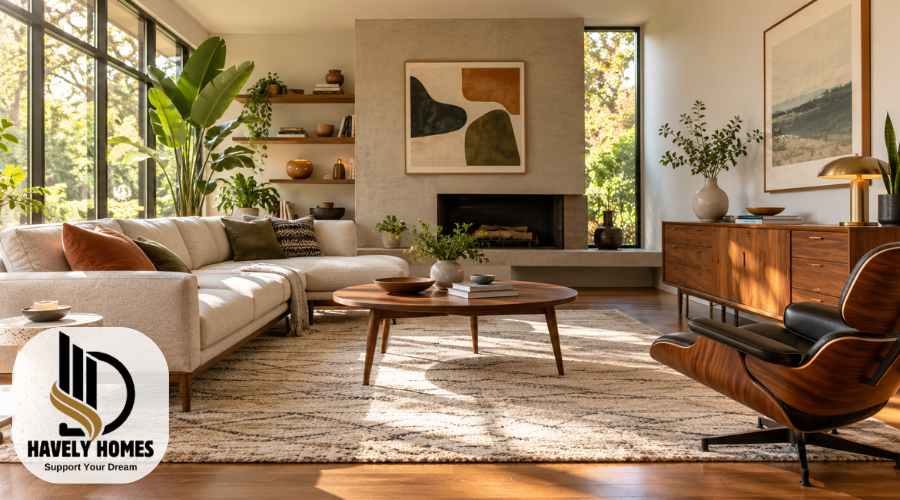
Contemporary mid-century style brings together two ideas that work surprisingly well in the same home. It takes recognizable features of mid-century modern design—clean forms, functional furniture, natural materials, and a close relationship with light and space—and combines them with the comfort and flexibility expected in interiors today.
The result does not need to look like a home preserved from the 1950s or 1960s. A contemporary mid-century interior can include new furniture, modern lighting, current technology, softer fabrics, and a personal color palette while still keeping the simple, purposeful character associated with mid-century design.
This approach can work in many types of homes, from original postwar houses to new apartments. The important part is not copying a particular decade. It is understanding the design principles and adapting them to the room, the architecture, and the way the household actually lives.
Quick Answer:
Contemporary mid-century is a home design approach that blends classic mid-century modern forms, functional furniture, natural materials, and clean lines with today’s colors, comfort, technology, and decorating preferences.
Quick-Guide Table
| Possible problem | What to check | Recommended action |
| Room feels too retro | Number of vintage-looking pieces and patterns | Mix a few mid-century elements with simpler contemporary furniture and décor. |
| Space feels overcrowded | Furniture size, walking routes, and number of accessories | Remove unnecessary pieces and choose furniture that fits the room’s actual dimensions. |
| Too much wood makes the room feel heavy | Wood tones and surrounding materials | Balance wood with glass, metal, stone, ceramics, or textured fabrics. |
| Different pieces feel disconnected | Colors, materials, proportions, and finishes | Repeat a few related colors or materials to create visual continuity. |
| Room lacks personality | Artwork, textiles, plants, books, and personal objects | Add a limited number of meaningful accessories instead of relying entirely on themed décor. |
| Small room feels visually cramped | Furniture profiles and floor visibility | Choose fewer, appropriately scaled pieces and keep important walking paths clear. |
Simple Steps for Creating the Look
- Study the existing room first. Consider its size, natural light, architecture, and how people move through it.
- Choose one or two key furniture pieces. A sofa, lounge chair, dining table, or sideboard can establish the mid-century influence.
- Create a calm material base. Combine wood with complementary materials such as glass, metal, stone, or fabric.
- Add color selectively. Use artwork, rugs, cushions, upholstery, or decorative objects instead of forcing one fixed retro palette.
- Mix old-inspired and contemporary pieces. Avoid buying an entire matching set that makes the room feel staged.
- Finish with personal details. Plants, artwork, ceramics, books, and meaningful objects help the space feel lived-in rather than themed.
What Does Contemporary Mid-Century Style Mean?
Mid-century modern is a historical design term rather than simply another name for contemporary décor. The Getty Art & Architecture Thesaurus describes Mid-Century Modernist design as covering mid-20th-century trends from approximately 1933 to 1965, while definitions can vary depending on the architectural or design context.
Contemporary design is different because it refers to what feels current. It changes as materials, lifestyles, technology, and decorating preferences change.
For that reason, contemporary mid-century is best understood as a modern decorating approach influenced by mid-century modern ideas. It might combine a low-profile sofa and wooden sideboard with a simple contemporary rug, current lighting, modern artwork, and discreet technology.
This distinction is useful because it prevents the room from becoming a historical reproduction. Instead of asking whether every piece belongs to the same decade, consider whether the pieces share a sense of simplicity, good proportion, usefulness, and visual balance.
The Design Features That Give the Style Its Identity
Several characteristics help a contemporary mid-century interior feel connected even when the furnishings come from different periods.
Clean forms are important. Furniture often has a clear shape without excessive decorative carving or heavy detailing. That does not mean everything must be rectangular. Curved chairs, rounded tables, sculptural lights, and other organic forms can soften the straight lines of a room.
Function matters just as much as appearance. Storage should be usable, seating should be comfortable, and furniture should make sense for the people living there.
Many historic mid-century modern houses also explored open interiors, large areas of glass, and stronger connections between indoor spaces and the surrounding landscape. National Park Service documentation of postwar modern architecture identifies open interior plans, visible materials, and large expanses of glass among recurring features.
A homeowner does not need a historically mid-century house to borrow these ideas. Keeping windows visually open, arranging furniture so daylight can move through the room, limiting unnecessary clutter, and combining wood with glass, metal, textiles, or stone can create a similar sense of lightness.
Contemporary Mid-Century Furniture: What Works Best
Furniture usually has the strongest influence on this look. Sofas, lounge chairs, coffee tables, dining tables, sideboards, and storage pieces can establish the character of the room before smaller decorative objects are added.
Look first at shape and proportion. A sofa with a relatively clean outline, a dining table with a simple base, or a cabinet raised slightly from the floor can feel appropriate without looking like a reproduction.
Slender or tapered legs are often associated with mid-century-inspired furniture, but they are not a requirement for every item. Using the same leg style on every table, chair, cabinet, and sofa can actually make a room feel overly coordinated.
Material experimentation was an important part of influential mid-century furniture design. Charles and Ray Eames, for example, explored molded plywood to produce curved furniture forms. MoMA records several of their 1940s chairs made with molded or bent plywood and notes their efforts to combine comfort, function, modern manufacturing, and form.
In a present-day home, contemporary mid century furniture works best when it is chosen for real needs rather than for a label. Check dimensions, seat depth, durability, storage capacity, comfort, and how much walking space remains around the piece.
Mixing a few mid-century-inspired pieces with simpler contemporary furniture usually feels more natural than purchasing an entire matching collection.
Colors, Wood Tones, and Materials That Feel Current
There is no single required contemporary mid-century color palette. A flexible approach is often easier to live with.
Warm white, cream, beige, taupe, soft gray, or other quiet wall colors can create a calm background. Richer shades can then appear in a chair, rug, artwork, cushions, curtains, or other smaller features.
Wood is particularly useful because it adds natural warmth. However, an interior does not need every surface to use the same species or stain. Slightly varied wood tones can look comfortable and collected when there is enough visual connection between them.
Glass, metal, stone, ceramics, and textured fabrics can prevent a wood-heavy room from looking flat. A wooden sideboard beside a metal floor lamp, for example, creates contrast without requiring dramatic decoration.
Historic mid-century design was also more colorful than the neutral versions sometimes seen today. The Metropolitan Museum of Art describes designer Alexander Girard’s mid-20th-century textile work as strongly associated with bright color and bold, simplified geometric patterns.
That gives homeowners room to use color confidently. The key is balance. If the rug has a strong pattern, the sofa and walls may benefit from being quieter. If the room contains several different materials, repeating one or two tones elsewhere can help everything feel connected.
How to Create a Contemporary Mid-Century Living Room
A successful contemporary mid century living room starts with the room itself, not with a shopping list.
Study its size, windows, doors, natural light, focal points, and main walking routes. Furniture that looks elegant online can overwhelm a small room if its dimensions are wrong.
Begin with the largest practical pieces. A comfortable sofa, one distinctive chair, and a properly scaled coffee or side table may provide enough mid-century character without turning every object into a statement.
Seating should also support conversation. Where space allows, chairs can face or angle toward the sofa rather than lining every seat against the walls.
A rug can visually connect the main seating group. Lighting can then be layered using a suitable ceiling fixture along with floor or table lamps. Different light sources make a living room more adaptable for reading, conversation, and quieter evening use.
Storage is equally important. A clean-looking room is easier to maintain when media devices, games, paperwork, and other everyday items have somewhere to go.
For an open-plan room, use proportion carefully. Larger furniture may help anchor a spacious area, while smaller rooms often benefit from visually lighter pieces and fewer objects.
Contemporary Mid-Century Decor Without Creating a Time Capsule
Good contemporary mid century decor supports the furniture rather than competing with it.
Artwork, ceramics, mirrors, lamps, rugs, cushions, plants, and a few meaningful objects can add personality. There is no need to fill every shelf or wall.
Try mixing geometric shapes with softer elements. A structured rug might work with a rounded lamp, leafy plant, curved chair, or textured upholstery. The contrast keeps the room from feeling too rigid.
Negative space is useful as well. Leaving part of a console clear or allowing one wall to remain relatively simple can make the pieces you do display more noticeable.
The easiest way to avoid a “time capsule” effect is to mix influences. A vintage-style cabinet can sit beneath contemporary artwork. A mid-century-shaped chair can be paired with a simple modern floor lamp. Current textiles can soften an older wooden table.
Personal items matter too. A home should say something about the people who live there. Books, art, travel pieces, family objects, or handmade ceramics can often contribute more warmth than a collection of accessories purchased only because they match a design label.
Contemporary Mid-Century House Design and Architectural Details
A contemporary mid century house can mean two different things. One may be an original house built during the mid-20th century. Another may be a newer or traditional home whose interior uses mid-century influences.
Those situations should be approached differently.
Original modern houses may include architectural features worth understanding before altering them. Examples documented by the National Park Service show recurring use of open plans, broad glass areas, simple structural expression, and relationships between buildings and their landscapes.
Flooring, windows, built-in cabinetry, fireplaces, wall materials, and original lighting locations can all influence how an older home feels. Covering or removing distinctive features simply to follow a current decorating trend may erase part of the home’s character.
In a newer house, the style can be introduced more gently. Furniture, lighting, wood finishes, textiles, and artwork can provide the visual connection without pretending that the building itself is historically mid-century.
This makes the style adaptable. A conventional apartment, townhouse, or family home can still use mid-century principles successfully when the design respects the existing architecture.
Bringing the Look Into Dining Rooms, Bedrooms, and Other Spaces
The same ideas can move beyond the living room without making every space look identical.
In a dining room, a straightforward table, comfortable chairs, and well-positioned lighting can establish the style. The table does not need elaborate decoration; a ceramic piece, artwork, or simple centerpiece may be enough.
A bedroom usually benefits from a quieter version of the look. Choose a bed with a simple profile, useful bedside tables, warm materials, comfortable textiles, and enough closed storage to keep surfaces manageable.
For a home office, function should lead the design. Use a desk that suits the work being done, a supportive chair, adequate task lighting, and organized storage. A mid-century-inspired cabinet or desk can contribute character without making the workspace less practical.
An entryway can use the same principles on a smaller scale. A narrow console, mirror, practical storage, and one strong decorative object can create an intentional first impression.
Across all of these rooms, repeat a few connecting materials, colors, or shapes instead of purchasing identical sets. That creates continuity without making the whole house feel like one showroom.
Making Contemporary Mid-Century Work in Small or Open-Plan Homes
Limited space makes proportion especially important.
Before buying furniture, measure the room as well as doorways and other access points. Marking the approximate footprint of a sofa, table, or cabinet on the floor can help reveal whether it will leave enough space to move comfortably.
Furniture raised on visible legs can sometimes make more of the floor visible, creating a lighter visual effect. However, comfort and useful storage should still come first.
In a small room, fewer well-chosen pieces are usually more effective than several small decorative items competing for attention.
Open-plan spaces have the opposite challenge: they need definition without necessarily adding walls. A rug can identify a seating zone, a pendant can establish a dining area, and furniture placement or open shelving can gently separate activities.
Keep normal walking routes clear. A beautiful chair placed directly in a busy pathway will quickly become frustrating regardless of how well it fits the style.
How to Mix Mid-Century Character With Contemporary Design
The easiest way to create a convincing blend is to start with what the home already has.
Look at existing flooring, furniture, window treatments, colors, and architectural details. Decide which elements work before replacing anything.
Then create a few visual links between old-inspired and new pieces. Similar wood undertones, repeated metal finishes, or related colors can make very different furniture feel intentional.
Contrast is helpful too. Pair straight lines with rounded forms. Combine hard surfaces such as wood or stone with softer upholstery, wool, woven fabrics, or curtains.
Pieces from different periods do not need matching dates. Proportion and visual compatibility matter more. A recent sofa can work beside a vintage cabinet if their scale, colors, and materials relate comfortably.
Modern technology does not need to be hidden completely either. Televisions, speakers, charging equipment, and smart-home devices are part of present-day living. Thoughtful cable management and suitable storage can help them sit naturally within the space.
The goal is a home that appears to have developed over time, not a room copied from a historic display.
Common Contemporary Mid-Century Decorating Mistakes
One common mistake is trying too hard to prove the theme. When every chair has tapered legs, every fabric has a retro pattern, and every accessory references the same era, the interior can feel staged.
Another problem is choosing style over comfort. A chair should not earn space in the living room simply because its shape looks appropriate. It should also work for the people who use it.
Poor scale can create similar difficulties. Oversized furniture may block movement, while too many undersized pieces can make a larger room feel scattered.
Avoid assuming that one particular wood color, orange accent, starburst accessory, or furniture shape is essential. Mid-century design was broad and varied.
It is also worth being cautious with products described simply as “mid-century.” Retail labels are useful for browsing, but they do not automatically make a piece historically accurate or suitable for your room.
Most importantly, do not remove useful original architectural features simply because another finish is currently fashionable. Understand what you have before making permanent changes.
When a Designer, Architect, or Other Professional May Be Useful
Many contemporary mid-century updates are straightforward decorating decisions. Moving furniture, changing rugs, adding art, replacing removable accessories, or testing a new color palette can usually be explored gradually.
Professional help becomes more valuable when the work moves beyond decoration.
An interior designer can help with a complicated layout, furniture planning, materials, lighting schemes, or a large renovation involving many connected decisions.
If structural walls, significant architectural elements, or an older historically important property are involved, consult an appropriately qualified architect or building professional before making permanent changes.
Electrical, plumbing, structural, and other regulated building work should be handled according to local requirements and by qualified professionals where necessary. Decorative style should never take priority over safe construction.
Owners of architecturally significant mid-century homes may also benefit from researching original features before removing them. Restoration and preservation decisions can be difficult to reverse.
Conclusion
Contemporary mid-century style works best when it is treated as a thoughtful blend rather than a strict recreation of one period. The strongest interiors take useful ideas from mid-century design—clear forms, functional furniture, balanced materials, natural light, and good proportions—and adapt them to how people live now.
Start with the home’s architecture and everyday needs. Choose furniture that fits the room and feels comfortable, mix materials with restraint, leave enough visual breathing space, and add personality through art, textiles, plants, and meaningful objects.
There is no need for every piece to announce the same style. A home can contain old and new influences while still feeling connected.
When the balance is right, contemporary mid-century design feels less like a decorating theme and more like a comfortable, practical, personal home that happens to carry some of the strongest ideas of mid-century modern design into the present.
FAQs
Is Contemporary Mid-century The Same As Mid-century Modern?
Not exactly. Mid-century modern refers to a historical design movement, while contemporary mid-century generally describes a present-day interior that adapts mid-century forms, materials, and functional ideas to modern homes.
Can Contemporary Mid-century Style Work In A Modern House?
Yes. A home does not need original mid-century architecture. Furniture, lighting, wood finishes, artwork, textiles, and restrained décor can introduce the style without changing the building’s basic architectural character.
What Colors Work With Contemporary Mid-century Interiors?
There is no required palette. Warm neutrals can provide a flexible base, while deeper greens, blues, earthy shades, or stronger accent colors can be introduced through furniture, artwork, rugs, and textiles.
Does All The Furniture Need To Have Tapered Legs?
No. Tapered and slender legs are associated with many mid-century-inspired pieces, but using them everywhere can look overly coordinated. Mixing different shapes and proportions usually creates a more natural interior.
Can Contemporary Mid-century Work In A Small Living Room?
Yes. Choose furniture according to the room’s measurements, limit unnecessary pieces, maintain clear walking routes, and use visually lighter furniture where appropriate. Good proportion matters more than filling the space with recognizable design features.
Disclaimer: This article is provided for general home design and informational purposes only. Interior choices should be adapted to your home’s size, architecture, condition, budget, and practical needs. Historical design definitions and features can also vary by source and context. Decorative changes such as furniture, rugs, artwork, and removable accessories are generally easier to adjust, while structural alterations, electrical work, plumbing, or major renovations may require qualified professionals and compliance with local building requirements. Owners of older or architecturally significant homes should consider researching original features before making permanent changes.
