
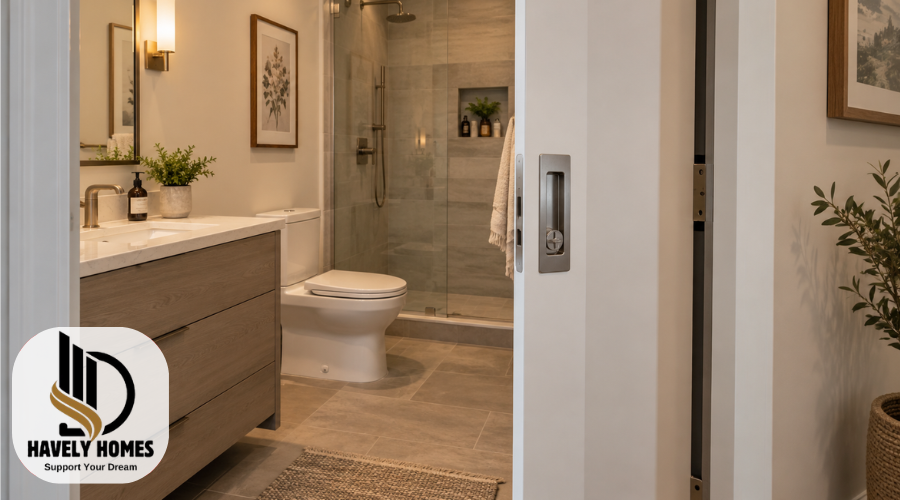
A bathroom should feel comfortable, practical, and easy to move around in. However, traditional swinging doors can take up valuable space, especially in smaller bathrooms. Bathroom pocket doors offer a smart alternative by sliding into the wall instead of opening into the room.
These doors are becoming a popular choice for powder rooms, primary bathrooms, and modern home renovations. They can create more usable space around sinks, toilets, and showers while giving the bathroom a clean, attractive appearance.
However, pocket doors also have some limitations. Privacy, sound control, installation requirements, and maintenance are important factors to consider.
Understanding their benefits, materials, hardware, costs, and installation needs will help you decide whether a pocket door is the right choice for your bathroom.
Quick Answer:
Bathroom pocket doors slide into the wall to save space normally needed for a swinging door. Before installation, check available wall space and have concealed plumbing, electrical wiring, and structural obstacles professionally assessed.
Quick-Guide Table
| Possible Problem | What to Check | Recommended Action |
| Door sticks or slides poorly | Visible dirt, rubbing marks, or damaged guides | Clean accessible components and arrange repairs if sticking continues. |
| Door rattles when moving | Loose accessible guides or uneven movement | Check visible hardware and have the alignment adjusted if needed. |
| Privacy lock does not latch | Whether the latch lines up with its receiver | Follow the hardware instructions or contact an installer. |
| Too much bathroom noise escapes | Gaps around the closed door | Consider compatible seals or a purpose-designed acoustic system. |
| Door becomes swollen or damaged | Moisture marks, peeling finishes, or water leaks | Improve ventilation, repair leaks, and follow the door manufacturer’s care guidance. |
| Door does not retract completely | Visible obstructions or unusual resistance | Stop forcing the door and have the concealed pocket inspected. |
Helpful Steps Before Choosing a Bathroom Pocket Door
- Measure the doorway: Record the opening width and height and the available wall space beside it.
- Check the surrounding layout: Look for nearby switches, outlets, cabinets, and bathroom fixtures that could complicate installation.
- Choose a suitable material: Consider a bathroom-compatible solid-core, engineered wood, or safety-glass door.
- Compare pocket door kits: Check the manufacturer’s requirements for door thickness, weight, wall size, and rough opening.
- Select privacy hardware: Look for a compatible bathroom lock with an outside emergency-release feature.
- Assess installation costs: Request a professional inspection if the wall may contain plumbing, electrical wiring, or structural components.
What Are Bathroom Pocket Doors and How Do They Work?
A bathroom pocket door is a sliding interior door that moves into a concealed space inside the wall. When opened, most or all of the door disappears into this hidden compartment, leaving the doorway clear.
Unlike a traditional hinged door, a pocket door does not need floor space for its swinging movement.
A typical pocket door system includes a door panel, overhead track, rollers, supporting frame, and guiding hardware. The rollers allow the panel to move along the track, while the frame creates the space needed to store the door inside the wall.
Pocket doors are also different from barn doors. Although both slide horizontally, barn doors move along the outside of a wall. Pocket doors disappear inside it.
This design can make a noticeable difference in smaller bathrooms. Instead of planning the room around a swinging door, homeowners can use the surrounding floor area more efficiently.
Why Choose a Pocket Door for Your Bathroom?
The main reason homeowners choose pocket doors is to make better use of limited space.
In a small bathroom, a regular door may swing toward a vanity, toilet, or shower entrance. Replacing it with a pocket door can remove that obstruction and make the layout easier to use.
Pocket doors are particularly useful in powder rooms where every inch matters. They can also work well in primary en suites, where a bathroom connects directly to a bedroom.
For Jack-and-Jill bathrooms shared between two bedrooms, pocket doors may provide a practical entrance arrangement when both doorways have suitable wall space and privacy locks.
Another advantage is improved movement through narrow hallways. Without an open door extending into the passage, people can move more comfortably between rooms.
However, a pocket door does not eliminate all space requirements. It needs enough clear wall length to accommodate the sliding panel. Therefore, the surrounding wall must be assessed before choosing this design.
Bathroom Pocket Doors: Pros and Cons
Understanding the advantages and disadvantages of a pocket door for bathroom use can prevent expensive mistakes.
Advantages of bathroom pocket doors
- Save floor space by eliminating the traditional door swing.
- Create a cleaner appearance in modern and traditional bathrooms.
- Improve movement around nearby fixtures and furniture.
- Offer various materials, finishes, glass styles, and hardware options.
- Provide a convenient layout where a swinging door would be awkward.
Disadvantages of bathroom pocket doors
- Standard systems may provide less sound privacy than well-sealed hinged doors.
- Installation can require opening and rebuilding part of a wall.
- Plumbing, electrical wiring, and structural framing may complicate installation.
- Concealed hardware can be more difficult to access for repairs.
- Poor-quality rollers or incorrect installation may cause sticking and rattling.
A traditional hinged door may be more suitable where sound privacy is especially important or the wall contains essential utilities.
The better choice depends on your bathroom layout, available wall space, budget, and daily needs.
Beautiful Bathroom Pocket Door Ideas for Different Styles
Pocket doors are available in designs that complement almost any bathroom interior. Choosing the right finish can make the doorway feel like a natural part of the room.
White panel pocket doors are a timeless option for traditional, farmhouse, and transitional bathrooms. Their simple appearance works beautifully with neutral walls, decorative mirrors, and classic bathroom fittings.
For contemporary interiors, flush pocket doors create a smooth, uncluttered look. A flat door panel painted in the same color as the surrounding wall can make the entrance appear less noticeable.
Natural wood finishes introduce warmth and texture. Light oak tones work well with modern bathrooms, while darker wood finishes can complement traditional cabinetry.
Homeowners interested in pocket door bathroom ideas may also consider decorative panels, subtle grooves, or contrasting trim.
Frosted glass pocket doors are another attractive option, particularly when a bathroom has limited natural light. They allow some light to pass between rooms while reducing direct visibility.
For a coordinated appearance, match the door hardware with other bathroom details. Black handles can complement modern fixtures, while brushed nickel or brass finishes can work with a variety of decorating styles.
Choosing the Best Pocket Door Material for a Bathroom
Bathroom conditions are different from those in a bedroom or hallway. Regular exposure to humidity makes material selection particularly important.
Solid-core doors are often worth considering because their heavier construction can provide a more substantial feel and may reduce some sound transmission compared with lightweight hollow-core alternatives.
Hollow-core doors are generally lighter and more affordable. However, their construction usually offers less resistance to everyday noise.
Engineered wood doors can provide a stable, attractive option, but their moisture resistance depends on the particular product, finish, and construction. Not every engineered or MDF door is suitable for a humid bathroom.
Solid wood can also work when properly finished and maintained, although changes in moisture may cause some wood doors to expand or move.
Bathroom pocket doors with glass offer another possibility. Frosted or opaque glass can improve light sharing without making the bathroom completely visible.
Choose glazing that meets applicable safety requirements, such as approved tempered or laminated safety glass.
Before purchasing, check whether the door is suitable for bathroom conditions. Its thickness and weight must also match the selected track and frame.
Properly finished edges, adequate ventilation, and protection from direct water exposure can help preserve the door.
Privacy, Sound Control, and Light in Bathroom Pocket Doors
Privacy is one of the most important considerations when selecting a bathroom door.
Traditional hinged doors generally close against a surrounding frame. Standard pocket doors often need small clearances around the panel so it can slide smoothly.
These gaps can allow sound to travel between rooms. Conversations, running water, and other bathroom noises may be more noticeable.
A solid-core door may improve sound control, but the surrounding gaps still matter.
Some specialized pocket door systems use acoustic seals, improved jambs, and other components to reduce sound transmission. Their effectiveness depends on the complete system rather than the door panel alone.
Glass doors create a different privacy concern.
Although frosted glass reduces visibility, it does not always hide silhouettes completely. A person standing close to the glass may still be visible, especially when the bathroom is brightly lit.
For shared family bathrooms, solid doors often provide greater visual privacy.
Sliding pocket doors with glass may be better suited to private en suites where natural light is desirable.
Before deciding, consider who uses the bathroom, how close it is to living spaces, and whether visual privacy or sound reduction matters most.
Pocket Door for Bathroom With Lock: Privacy and Hardware Options
A bathroom pocket door should have a suitable privacy locking system.
Unlike traditional doors, pocket doors usually require hardware that sits flush or nearly flush with the panel so the door can slide into the wall without catching.
A pocket door for bathroom with lock typically uses a purpose-designed privacy latch. Depending on the product, this may operate through a thumb turn, small lever, or push-button mechanism.
Some locks include a recessed finger pull that helps users close the door when the panel is fully open.
An emergency release is an important safety feature. It allows someone outside to unlock the bathroom if a child becomes trapped or an occupant needs assistance.
Hardware comfort also matters. Handles should be easy to reach and operate, particularly for children, older adults, or people with limited hand strength.
Soft-close mechanisms are another useful option. They slow the panel near the end of its travel, reducing sudden impacts and making operation smoother.
Before buying, confirm that the lock, handle, and soft-close hardware are compatible with your door’s thickness, weight, and frame.
How to Choose the Right Bathroom Pocket Door Kit and Size
A bathroom pocket door kit provides the main components needed to create the sliding door system.
Depending on the manufacturer, a kit may contain the pocket frame, overhead track, rollers, hangers, guides, and installation hardware.
However, the door panel, jambs, trim, privacy lock, and handles may be sold separately.
Choosing a suitable kit begins with accurate measurements.
The main factors include door width, height, thickness, weight, available wall length, and wall construction.
The rough opening usually needs to be a little more than twice the door width. For example, some manufacturer’s framing systems require a rough opening width equal to twice the door width plus one inch. Other systems may specify different dimensions.
Always follow the measurements supplied with your selected product.
The kit must also support the weight of the door. Heavy solid-core and glass doors may require stronger tracks and rollers than lightweight panels.
For bathrooms designed with accessibility in mind, consider the actual clear opening and the ease of operating the handle.
In the United States, applicable accessibility standards commonly require at least 32 inches of clear doorway width. However, these standards do not automatically apply to every private home.
Planning around the needs of household members is just as important as choosing an attractive door.
Can You Install a Pocket Door in an Existing Bathroom Wall?
Installing a pocket door during new construction or a major renovation is generally more straightforward because the wall framing is already accessible.
Retrofitting one into an existing bathroom can be more complicated.
The wall must contain enough uninterrupted space for the door to slide into its pocket. A nearby corner, window, or structural obstruction may make the design impractical.
Plumbing is another major consideration. Bathroom walls frequently contain water supply lines, drainage pipes, or other concealed services.
Electrical outlets, light switches, and wiring can also interfere with the pocket cavity. Some walls contain ventilation ducts that cannot simply be removed.
A load-bearing wall may require specially designed structural support and professional assessment before modification.
Homeowners should also consider towel rails, cabinets, and other wall-mounted accessories. Fasteners installed in the pocket area can damage or obstruct the sliding door.
When extensive plumbing relocation or structural work is necessary, a conventional hinged door may be a more economical option.
Before starting a retrofit, have the wall assessed by a qualified professional.
Bathroom Pocket Door Installation: Planning and Safety
Proper installation is essential for smooth operation, privacy, and long-term reliability.
Although some experienced homeowners install pocket doors themselves, projects involving concealed utilities or structural modifications require professional attention.
The general installation process involves several important stages.
- Assess the wall: Determine whether the wall has suitable framing and enough space for the pocket door system.
- Check measurements: Confirm the required opening dimensions against the manufacturer’s installation instructions.
- Prepare the opening: Remove finishes and modify framing only after structural and utility conditions have been properly assessed.
- Fit the frame and track: Install the pocket door system according to its specific instructions, keeping the assembly level, square, and properly aligned.
- Install the door: Fit the compatible hangers, guides, and hardware, then adjust the movement as instructed.
- Finish and test: Complete the surrounding wall, install the trim and privacy lock, and check that the door opens and closes freely.
One important mistake to avoid is using fasteners that extend into the pocket cavity. Incorrectly sized screws can scratch the door or prevent it from sliding.
Use only the fastening specifications approved for the particular frame.
Do not cut into walls until concealed wiring, plumbing, and other services have been identified. Electrical alterations should be handled by a qualified electrician, while plumbing changes require an appropriately qualified plumber.
Structural modifications may require a contractor or engineer and applicable building permits.
After installation, confirm that the door moves smoothly, the lock releases correctly, and the opening provides safe access.
How Much Do Bathroom Pocket Doors Cost?
The total cost of bathroom pocket doors depends on the door material, hardware, labor, and installation conditions.
For general planning, published 2026 estimates in the United States place many installed pocket door projects around $800 to $2,500. However, complicated retrofits and premium installations can cost considerably more.
A basic hollow-core door with standard hardware is generally less expensive than a heavy solid-core or decorative glass design.
Additional features, such as soft-close mechanisms and specialized acoustic systems, may also increase the price.
Labor can represent a significant part of the total expense. Installing a pocket door in a finished wall may require drywall removal, framing changes, painting, and trim replacement.
If plumbing, electrical wiring, or ventilation ducts need relocation, the cost can increase substantially.
Homeowners planning a complete bathroom renovation may find it easier to include pocket door installation while the walls are already open.
Before beginning, request detailed quotes that separate materials, installation labor, finishing, and possible utility work.
Allow some flexibility in the budget for unexpected conditions discovered inside the wall.
Common Bathroom Pocket Door Problems and Maintenance Tips
A properly installed pocket door should move smoothly with minimal effort. However, like other moving household fixtures, its hardware may require occasional attention.
One common problem is a door that becomes difficult to slide. Dirt around accessible guides, worn rollers, or misaligned components may contribute to this issue.
Rattling can occur when guides become loose or the door moves unevenly.
A privacy lock that does not engage correctly may indicate that the door and receiving latch are no longer properly aligned.
Homeowners can perform a few basic maintenance checks:
- Clean visible track openings and accessible guides using methods recommended by the manufacturer.
- Check for loose, easily accessible hardware without dismantling the wall.
- Look for visible damage, rubbing marks, or unusual movement.
- Test the privacy lock and emergency release periodically.
- Avoid forcing the panel when it sticks.
Do not apply random lubricants to rollers or tracks. Some systems use sealed bearings or components that have specific maintenance requirements.
Bathroom humidity also deserves attention. Use suitable ventilation, preferably an exhaust fan that removes moist air outdoors, and repair water leaks promptly.
Poor ventilation can contribute to moisture-related damage around doors and finishes.
If the track is damaged, the door repeatedly jumps out of alignment, or concealed hardware requires repair, contact a qualified installer.
Conclusion
Bathroom pocket doors can be an excellent choice for homeowners who want to save space and improve the appearance of their bathrooms. They are particularly helpful in compact layouts where a traditional swinging door creates obstacles.
However, a successful pocket door installation involves more than choosing an attractive panel. Privacy, sound control, durable materials, suitable locks, and reliable sliding hardware all deserve attention.
Before making a decision, assess the available wall space, possible installation complications, and total project costs.
With thoughtful planning and proper installation, a bathroom pocket door can provide a practical, attractive, and comfortable solution that supports everyday use for years to come.
Frequently Asked Questions
Are Pocket Doors Suitable For Shared Family Bathrooms?
Yes, pocket doors can work well in shared bathrooms when fitted with suitable privacy locks. However, standard pocket doors may allow more sound through surrounding gaps than well-sealed hinged doors.
Do Frosted Glass Pocket Doors Provide Complete Bathroom Privacy?
Frosted glass reduces direct visibility while allowing light through. However, silhouettes may remain visible under certain lighting conditions. Solid doors are generally preferable when complete visual privacy is a priority.
Are Bathroom Pocket Doors Suitable For People With Limited Mobility?
They can be convenient because they eliminate the door swing. However, accessibility also depends on clear opening width, maneuvering space, handle design, and how easily the door operates.
Is Soft-close Hardware Necessary For A Bathroom Pocket Door?
Soft-close hardware is optional rather than essential. It helps prevent sudden impacts and improves closing comfort. Make sure any soft-close mechanism is compatible with the selected track and door weight.
Can I Replace An Existing Pocket Door Without Rebuilding The Wall?
Sometimes, an existing door panel can be replaced without rebuilding the wall. This depends on the frame, track, hardware accessibility, and replacement panel dimensions. Check the manufacturer’s instructions first.
Disclaimer: This article is provided by Havely Homes for general informational purposes only. Pocket door designs, hardware, and installation requirements vary, so always follow the manufacturer’s instructions and applicable building regulations. Electrical, plumbing, structural, gas, or complex HVAC work should be handled by qualified professionals. Never modify concealed wall components without proper assessment. Havely Homes is an independent informational website created to help visitors understand home-related topics. It does not engage in paid promotions or advertising.
