
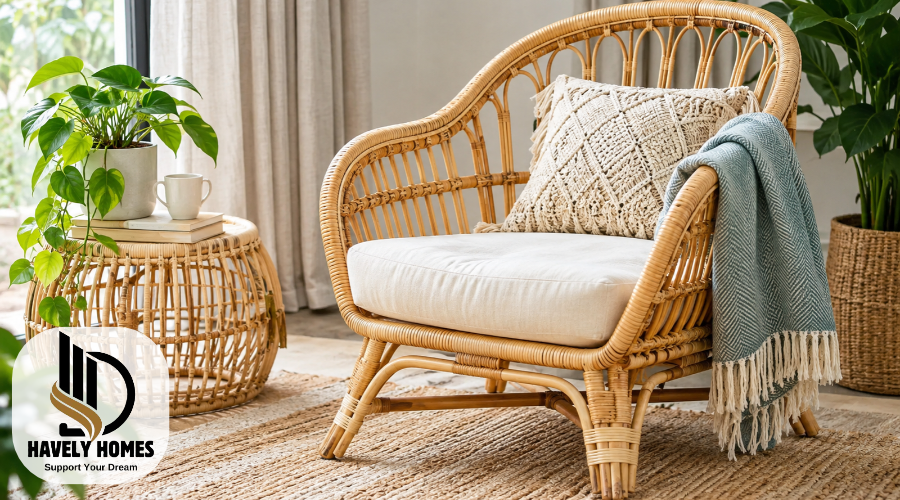
Rattan chairs have become a familiar choice in home interiors because of their natural appearance, woven details, and interesting shapes. Whether placed in a cosy living room, a bright bedroom, or a dining area, these chairs can add warmth and texture without making the space feel too heavy.
But what is a rattan chair, and what makes it different from other types of furniture? Many people confuse rattan with wicker, cane, or bamboo, even though these terms have different meanings.
Understanding the materials, construction, comfort, and maintenance requirements can help you choose the right chair for your home. This guide explains the main types of rattan chairs, their advantages and disadvantages, and how to keep them looking good.
Quick Answer:
A rattan chair is seating furniture made from the flexible, solid stems of climbing palm plants. It often features woven details and curved frames. Check whether the chair uses natural or synthetic rattan before buying.
Quick-Guide Table
| Possible problem | What to check | Recommended action |
| Unsure whether rattan is natural | Product materials and construction details | Confirm whether the chair uses natural rattan or synthetic weaving. |
| Chair feels uncomfortable | Seat depth, back support, and cushioning | Try a suitable cushion or choose a more supportive design. |
| Chair may not suit outdoor use | Weather exposure and manufacturer instructions | Choose outdoor-rated furniture for exposed areas. |
| Chair feels unstable | Frame, legs, joints, and loose fittings | Stop using it until the problem is properly assessed and repaired. |
| Woven sections are damaged | Broken strips, cracks, and loose weaving | Avoid using damaged seating and seek professional repair if necessary. |
| Chair does not fit the room | Chair dimensions and available floor space | Measure the area and allow enough space for comfortable movement. |
Helpful Steps: How to Choose the Right Rattan Chair
- Decide where it will go: Choose natural rattan for suitable indoor spaces or outdoor-rated furniture for exposed areas.
- Choose the right style: Consider an armchair, dining chair, accent chair, or lounge chair according to your needs.
- Check the materials: Read the product description to understand the frame and woven materials.
- Consider comfort: Look at the seat shape, back support, and cushion options.
- Inspect the construction: Check for secure joints, even legs, and neatly finished weaving.
- Review care requirements: Choose a chair you can clean and maintain according to the manufacturer’s instructions.
What Is a Rattan Chair?
A rattan chair is a type of seating furniture made partly or entirely from rattan, a natural material obtained from climbing palm plants. It is commonly used to create curved furniture frames, woven seats, armrests, and decorative backrests.
Rattan chairs are recognised for their woven patterns, rounded shapes, and natural colours, which often range from pale beige to warm brown. Some designs have an open, airy appearance, while others feature thicker frames and more detailed weaving.
One reason these chairs are popular is their ability to work with different home decorating styles. A simple rattan armchair can fit into a modern living room, while a decorative woven chair may become a focal point in a bedroom.
However, not every chair described as rattan is made from the natural plant. Some furniture uses synthetic strips designed to look like rattan, particularly in outdoor seating collections.
What Is a Rattan Chair Made Of?
To understand what a rattan chair is made of, it helps to learn about the plant behind the furniture.
Rattan comes from a group of climbing palms that grow naturally in tropical regions, particularly parts of Southeast Asia and Africa. These plants develop long, flexible stems that can be processed into materials suitable for furniture making.
Unlike many bamboo stems, which are hollow between their joints, rattan stems have a solid core. This structure allows suitable rattan pieces to be bent and shaped while providing support for furniture.
Furniture makers use different parts of the processed stems. Thicker, whole pieces can form chair legs, frames, and curved armrests. Thinner strips are woven together to create seats, backrests, and decorative patterns.
Some rattan furniture also includes other materials. For example, a chair may have a metal supporting frame with natural rattan woven around it. Other designs combine rattan with bamboo, wood, fabric cushions, or protective finishes.
Therefore, the materials used in a rattan chair depend on its particular design and construction.
Rattan vs Wicker vs Cane: Understanding the Differences
Rattan, wicker, and cane are closely connected in furniture making, but they do not mean exactly the same thing.
Rattan refers to the natural material obtained from climbing palm plants. It can be used for structural furniture parts or processed into thinner strips for weaving.
Wicker generally describes a method of weaving flexible materials into furniture and household objects. Wicker furniture may be made from rattan, willow, bamboo, synthetic fibres, or other suitable materials.
Cane commonly refers to thin strips taken from the outer skin of rattan stems. These strips are often woven into chair seats and backrests, including traditional open patterns. The word can also have broader meanings in furniture manufacturing.
Bamboo is another natural material used in furniture, but it comes from a different plant family. Its stems are typically hollow, while rattan stems are solid.
This distinction is useful when shopping. A wicker chair is not automatically made from rattan, and a chair with cane seating may have a wooden or metal frame.
Checking the actual materials is more reliable than depending only on the furniture’s name.
Common Rattan Chair Styles and Names
Rattan chairs are available in several designs, making them suitable for different rooms and purposes.
Rattan armchairs usually feature armrests, a supportive back, and a woven or cushioned seat. They are commonly used in living rooms, bedrooms, and reading corners.
Rattan dining chairs generally have more upright seating positions. They can complement wooden dining tables while giving the room a lighter appearance.
Rattan accent chairs are chosen partly for their decorative appeal. Their unusual shapes or woven patterns can add character to an otherwise simple room.
Rattan lounge chairs often have wider seats, relaxed backrests, and space for comfortable cushions. These designs are better suited to casual seating than formal dining.
A particularly recognisable style is the papasan chair, sometimes called a bowl chair. It usually has a large, rounded seating frame supported by a base and a thick circular cushion.
Another distinctive design is the peacock chair, known for its tall, decorative backrest that spreads outward like a fan.
These names describe chair styles rather than guaranteeing a particular material. When choosing one, consider whether appearance, practical seating, or relaxation matters most.
How Rattan Chairs Are Made
Making a natural rattan chair involves preparing the plant material, shaping the frame, and creating the woven sections.
After harvesting, rattan stems are cleaned and processed. Suitable whole stems can be heated to make bending easier, allowing furniture makers to form curved supports, arms, and chair backs.
Thinner pieces are prepared for weaving. Depending on the design, these may be arranged in close patterns, open grids, or decorative combinations.
The woven material is then attached to a supporting structure. Some chairs use rattan bindings, while others include screws, connectors, or additional frame materials.
Protective finishes may be applied to help maintain the appearance of the surface.
Construction methods vary. Handmade chairs often display small natural differences in colour, shape, and weaving, while factory-produced designs may use standardised components.
The finished chair’s strength depends on the quality of its materials, frame, joints, and workmanship rather than the weaving alone.
Are Rattan Chairs Comfortable to Sit On?
Rattan chairs can be comfortable, but the experience depends on their shape, support, and cushioning.
A chair with a gently curved backrest and suitable seat depth may feel pleasant for everyday sitting. However, a tightly woven seat without padding can feel firmer than an upholstered chair.
Cushions can make a noticeable difference. A fitted seat pad provides extra softness, while a supportive back cushion can improve the sitting experience.
Some rattan lounge chairs are designed for relaxed seating, while dining chairs usually encourage a more upright position.
The height of the seat also matters. A chair that is too low or too deep may be uncomfortable for someone who prefers an upright sitting position.
Before buying, it is helpful to sit in the chair when possible. Check whether your feet rest comfortably on the floor, your back feels supported, and the armrests are positioned naturally.
Comfort is personal, so a beautiful chair is not necessarily the most practical choice for long periods of sitting.
Benefits and Drawbacks of Rattan Chairs
Rattan chairs offer several advantages, but they also have limitations worth understanding.
One of their main benefits is their natural appearance. The woven texture adds visual interest and works especially well with wood, neutral fabrics, and other natural-looking materials.
Many rattan chairs are relatively lightweight, making them easier to move when rearranging furniture or cleaning a room.
They are also available in numerous shapes, from compact dining chairs to large decorative seating designs.
However, natural rattan requires suitable conditions. Prolonged moisture, excessive heat, and unsuitable outdoor exposure can damage the material or affect its appearance.
Woven sections may loosen or become damaged with wear. Some designs can also be harder to clean because dust collects between the strips.
Rattan is a renewable plant material, but that does not automatically make every rattan chair environmentally friendly. Responsible harvesting, manufacturing practices, and material sourcing all matter.
A well-constructed chair that receives appropriate care can provide useful seating for years, although durability varies between products.
Natural vs Synthetic Rattan: Which Is Better for Indoor and Outdoor Use?
Natural and synthetic rattan furniture can look similar, but they behave differently in everyday conditions.
Natural rattan comes from climbing palms and has an organic texture with small variations in colour and shape. It is generally most suitable for indoor rooms or protected environments.
Prolonged rain and excessive moisture can affect natural fibres, while strong sunlight and heat may cause drying, fading, or deterioration.
Synthetic rattan is manufactured from plastic materials, often polyethylene, and is designed to imitate natural woven furniture.
Outdoor-rated synthetic rattan is usually better suited to patios, gardens, and other exposed spaces. However, its weather resistance depends on the quality of the material, its UV protection, and the supporting frame.
Some synthetic chairs use aluminium frames, while others contain steel or different structural materials. These can have different maintenance requirements.
Even outdoor furniture may benefit from protection during severe weather and storage when not in use.
For an indoor living room, natural rattan offers an appealing organic appearance. For an uncovered patio, furniture specifically rated for outdoor use is generally the more practical option.
Where Can You Use a Rattan Chair in Your Home?
Rattan chairs can fit into several areas of the home when their size and design suit the available space.
In a living room, a rattan armchair can provide extra seating beside a sofa or near a window. Adding a small side table and a comfortable cushion can create a pleasant reading corner.
In a dining room, rattan dining chairs can soften the appearance of a wooden or painted table. Choose designs with suitable seat heights and surfaces that are practical to maintain.
A bedroom can also benefit from a compact rattan accent chair, particularly when there is enough room for comfortable movement around the furniture.
Natural rattan chairs may work in conservatories, sunrooms, or sheltered porches, provided the conditions are suitable for the product.
However, a covered space is not always protected from humidity, rain, or direct sunlight. Check the manufacturer’s recommendations before placing natural rattan furniture there.
Wherever you position the chair, avoid blocking doorways or placing it too close to radiators and other strong heat sources.
How to Style a Rattan Chair with Your Home Décor
Rattan chairs are versatile because their natural colours and woven surfaces can complement many decorating styles.
In a bohemian interior, a rattan chair can sit alongside patterned cushions, textured rugs, and warm-coloured accessories.
For coastal-inspired rooms, lighter rattan finishes work well with white walls, soft blue details, linen fabrics, and simple wooden furniture.
Scandinavian-style interiors can use a clean-lined rattan chair with neutral upholstery and minimal decoration.
Even modern rooms can benefit from rattan. Its woven texture can soften smooth walls, glass tables, and furniture with straight edges.
Natural rattan often pairs nicely with beige, cream, olive green, muted blue, and warm brown. Painted rattan chairs can also work, provided the finish complements the surrounding furniture.
For a small room, choose a chair with an open frame and avoid surrounding it with too many accessories. A single cushion and a nearby lamp may be enough to create an inviting corner.
What to Look for When Buying a Rattan Chair
Choosing a rattan chair involves more than finding a design that looks attractive.
Start by considering how you plan to use it. A decorative bedroom chair has different requirements from a dining chair used several times every day.
Measure the available floor space and compare it with the chair’s overall width, depth, and height. Remember to leave enough room to sit down, stand up, and move around comfortably.
Next, inspect the construction. A suitable chair should have a stable frame, secure joints, and woven sections without obvious breaks or sharp, protruding ends.
Check whether the chair sits evenly on the floor and feels steady during normal use.
Review the manufacturer’s maximum load guidance, assembly instructions, and recommendations for indoor or outdoor use.
Cushions deserve attention too. Consider their thickness, comfort, fabric, and whether their covers can be removed for cleaning.
If you specifically want natural rattan, read the materials description carefully. Some products use synthetic weaving or combine several different materials.
Finally, consider maintenance requirements and the quality of construction rather than judging the chair by price alone.
How to Clean and Maintain a Rattan Chair
Proper cleaning helps preserve the appearance and condition of rattan furniture.
Because woven surfaces contain narrow gaps, dust can collect between the strips. Regular gentle cleaning is usually easier than allowing dirt to build up.
For routine maintenance, follow these simple steps:
- Remove loose dust: Use a soft brush, dry cloth, or vacuum cleaner with a suitable soft-brush attachment.
- Clean the surface gently: Where the manufacturer allows it, wipe the chair with a lightly damp cloth and an appropriate mild cleaner.
- Remove remaining moisture: Wipe the cleaned areas with a dry cloth and allow the chair to dry thoroughly.
- Check the construction: Look for loose joints, damaged weaving, and fittings that may need attention according to the assembly instructions.
- Maintain the cushions: Follow the fabric care label rather than assuming every cushion cover can be machine washed.
Avoid soaking natural rattan or using strong cleaning chemicals without product-specific guidance. Excessive moisture and unsuitable cleaners can damage natural fibres or protective finishes.
Location also affects maintenance. Keep indoor rattan chairs away from prolonged damp conditions, strong heat sources, and excessive direct sunlight.
Over time, natural rattan may change colour slightly. This does not necessarily mean the chair is damaged.
However, cracks, broken weaving, unusual movement, or unstable joints should not be ignored.
If a chair becomes structurally unstable, stop using it until it has been properly assessed. Significant frame damage or complicated weaving repairs are better handled by an experienced furniture repair professional.
Avoid forcing loose pieces back into place or attempting major repairs without understanding the chair’s construction.
With suitable placement, gentle cleaning, and regular inspection, a rattan chair can remain an attractive and practical part of your home.
Conclusion
A rattan chair is a piece of furniture made using natural rattan, a flexible material obtained from climbing palm plants. Its distinctive woven appearance makes it suitable for various home interiors, from modern living rooms to relaxed bedrooms and dining spaces.
Understanding the differences between rattan, wicker, cane, and synthetic materials can make furniture shopping easier.
Natural rattan is generally better suited to protected indoor environments, while appropriately rated synthetic designs are often more practical outdoors.
The right choice depends on comfort, construction quality, available space, and maintenance needs. By selecting a suitable design and caring for it properly, you can enjoy a rattan chair that provides useful seating and adds natural character to your home.
Frequently Asked Questions
Is A Papasan Chair The Same As A Rattan Chair?
A papasan chair is a seating style with a rounded, bowl-shaped seat and a large cushion. Traditional versions often use rattan, but modern papasan chairs can also be made from other materials.
Can You Paint A Natural Rattan Chair?
Yes, some natural rattan chairs can be painted using suitable products and preparation methods. However, existing finishes and woven surfaces affect the results. Always follow the furniture and paint manufacturers’ recommendations.
Are All Rattan Chairs Handmade?
No. Many rattan chairs have handwoven sections, but production methods differ. Some designs combine hand weaving with factory-made frames, standardised parts, and modern manufacturing techniques.
Is Natural Rattan Furniture Environmentally Friendly?
Rattan is a renewable natural material, but its environmental impact depends on responsible harvesting, processing, transportation, and manufacturing. Choosing responsibly sourced furniture and maintaining it properly can support more thoughtful purchasing decisions.
Can A Rattan Chair Work In A Modern Living Room?
Yes. A rattan chair can complement modern interiors by adding natural texture and warmth. Simple frames, neutral cushions, and balanced furniture arrangements help it blend with contemporary décor.
Disclaimer: The information provided by Havely Homes (havelyhomes.com) is intended for general informational and educational purposes only. Furniture materials, construction, durability, and care requirements may vary between products. Always check the manufacturer’s instructions before cleaning, repairing, or using a rattan chair outdoors. Consult a qualified furniture repair professional for structural damage or unsafe seating. Havely Homes aims to provide helpful, independent home-related information. This article is intended to inform readers, not promote a particular furniture product or brand.
