
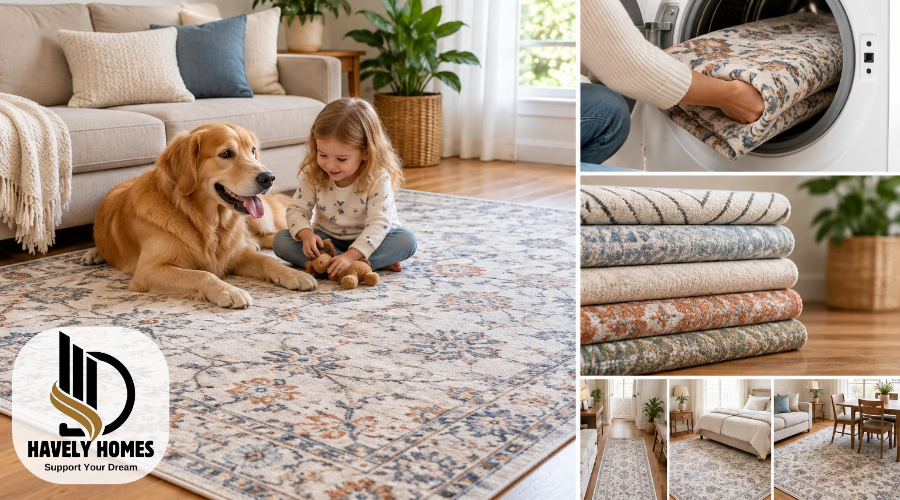
A beautiful rug can make any room feel warmer, softer, and more welcoming. However, keeping traditional rugs clean can be difficult, especially in homes with children, pets, or busy living spaces. This is where washable rugs offer a practical solution.
These rugs are designed to make everyday cleaning easier without sacrificing the appearance of your home. They come in different materials, colours, patterns, and sizes, making them suitable for bedrooms, living rooms, kitchens, and hallways.
However, not all washable rugs work the same way. Some can go directly into a washing machine, while others have removable covers or require special cleaning methods.
Understanding these differences will help you choose a rug that looks attractive, feels comfortable, and suits your household’s cleaning needs.
Quick Answer:
Washable rugs are floor coverings designed for easier cleaning, with some suitable for machine washing. Before buying or washing one, check its care label, material, size, backing, and washing-machine capacity.
Quick-Guide Table
| Possible problem | What to check | Recommended action |
| Rug is too large to wash | Washer capacity, rug thickness, and care label | Use a suitable larger machine or professional cleaning service. |
| Rug corners keep curling | Backing condition and drying instructions | Let the rug dry fully and follow the maker’s flattening guidance. |
| Rug slips on the floor | Backing grip and floor compatibility | Use a suitable non-slip rug pad. |
| Rug develops an unpleasant smell | Moisture underneath or incomplete drying | Dry the rug completely and clean and dry the floor beneath it. |
| Stains remain after washing | Stain type and permitted cleaning products | Use a compatible spot treatment without harsh scrubbing. |
| Rug loses its shape | Washing temperature and drying method | Follow the care label and avoid unapproved heat or washing settings. |
Helpful Steps for Choosing Washable Rugs
- Measure your space: Choose a rug size that fits your room and furniture arrangement.
- Select a suitable material: Consider softness, durability, pile height, and cleaning requirements.
- Choose the rug construction: Compare one-piece designs with removable-cover systems.
- Check washing requirements: Confirm that your washing machine can handle the rug or cover.
- Inspect the backing: Make sure it suits your flooring and provides adequate grip.
- Review the care instructions: Check the permitted washing, drying, and stain-removal methods before purchasing.
What Are Washable Rugs and How Do They Work?
Washable rugs are floor coverings designed to withstand specific cleaning methods without unnecessary damage to their materials or construction. Unlike many traditional rugs, certain washable designs can be cleaned in a household washing machine.
However, the word “washable” does not always mean machine washable.
Some rugs can be cleaned using a gentle washing cycle, while others require hand washing or spot cleaning. The manufacturer’s care label determines the appropriate method.
Many modern designs feature lightweight fibres, flexible backing, or removable covers. These features can make washing and drying more manageable.
For example, a two-piece rug includes a decorative cover and a separate supporting pad. When cleaning is needed, the cover is removed while the pad stays outside the washing machine.
One important detail is washing-machine capacity. Even when a large rug is labelled machine washable, it may be too bulky for an ordinary household appliance.
Different Types of Washable Rugs for Your Home
Washable rugs come in several designs, each offering different benefits for comfort, cleaning, and everyday use.
One-piece washable rugs have a single construction, sometimes with an integrated non-slip backing. The entire rug can be washed if its care instructions permit. These designs are convenient because there are no separate layers to assemble.
Two-piece washable rugs feature a removable decorative cover and a separate rug pad. Washing the lighter cover is generally easier than handling the complete rug. However, larger covers can take some effort to align correctly when putting them back.
Flatwoven washable rugs have a relatively thin construction. They are often suitable for dining rooms, hallways, and other busy areas because their short surface is easier to maintain.
Cushioned washable rugs provide additional softness through thicker materials, backing, or separate padding. They may feel more comfortable but can require more washing-machine space.
Low-pile rugs are generally easier to vacuum, while plush designs provide a softer feeling underfoot. The best choice depends on whether comfort, easy cleaning, or everyday durability matters most.
Benefits and Drawbacks of Washable Rugs
One major advantage of washable rugs is convenient cleaning. Everyday problems such as muddy footprints, food crumbs, and accidental spills may be easier to manage when the rug can be washed according to its care instructions.
They are particularly useful in family homes where floors experience frequent activity. Pet owners may also appreciate being able to clean a rug after muddy paws or occasional accidents.
Another benefit is their decorative variety. Washable designs are available in traditional patterns, modern styles, neutral shades, and colourful finishes.
However, there are some drawbacks.
Lightweight rugs may feel thinner than traditional thick-pile carpets. Certain designs can develop wrinkles, lifted corners, or curling edges, especially after washing.
Large rugs can also be difficult to move when furniture needs to be shifted.
Importantly, washable does not automatically mean waterproof, stainproof, or exceptionally durable. Some stains may remain after washing, while repeated cleaning can gradually affect certain materials.
Choosing the Best Materials for Washable Rugs
The material affects how a rug feels, how easily it dries, and how well it handles everyday use.
Polyester is common in machine-washable rugs because it can provide a soft surface while tolerating appropriate washing methods. Its drying performance depends on the rug’s thickness and backing.
Cotton offers a natural, comfortable texture. Some cotton rugs are machine washable, although shrinkage, fading, or changes in shape can occur if they are cleaned incorrectly.
Synthetic blends combine different fibres to achieve particular textures, appearances, or performance characteristics. Their cleaning requirements depend on the exact construction.
Natural materials need extra consideration. Traditional wool, silk, and jute rugs often require specialist care. Although specially manufactured washable wool rugs exist, ordinary wool rugs should not automatically be treated as machine washable.
When comparing materials, inspect the stitching, edge binding, backing, and pile quality. Secure construction is important because loose fibres and weak edges can become more noticeable after repeated washing.
For busy spaces, a well-made low-pile design is often a practical starting point.
Washable Rug Sizes: From 2×3 to 10×14
Choosing the right rug size helps create a balanced room while keeping furniture arrangements comfortable. Washable rugs are available in several common dimensions, generally measured in feet in the United States.
Washable rugs 2×3: These compact rugs can work beside beds, near entryways, or in small spaces where limited floor coverage is needed.
Washable rugs 5×7: A practical option for smaller living rooms, bedrooms, and reading corners. This size can help define a cosy furniture arrangement.
Washable rugs 6×9: Suitable for medium-sized rooms where a larger area needs coverage without overwhelming the available floor space.
Washable rugs 8×10: These are popular for larger living rooms and dining spaces. Depending on furniture dimensions, an 8×10 rug may accommodate the front legs of sofas and chairs or a substantial dining arrangement.
Washable rugs 10×14: Designed for spacious interiors with extensive seating arrangements or larger furniture layouts.
Before purchasing, measure the available floor area and consider doors, walkways, and furniture positions.
For dining rooms, leave enough rug space around the table so chairs remain supported when pulled back.
Remember that rug size also affects cleaning. An oversized rug may require a commercial machine even when its material is machine washable.
Where to Use Washable Rugs Around the House
Washable rugs can work in many rooms, provided their size, backing, and materials suit the space.
In the living room, a well-positioned rug can connect sofas, chairs, and coffee tables. Choosing a suitable size helps create a comfortable seating area.
For bedrooms, soft washable rugs beside or underneath the bed can make the floor feel more comfortable when getting up in the morning.
In kitchens, low-pile runners or compact rugs can provide decorative warmth. Position them away from cooking flames and places where they could cause slipping or interfere with movement.
Dining rooms benefit from low-pile rugs that allow chairs to slide more easily. Washable materials are especially useful where food and drinks are regularly served.
For hallways and entryways, choose durable surfaces and secure backing that can handle dirt brought in from outside.
In children’s rooms and pet-friendly spaces, prioritise softness, easy maintenance, and safe positioning. A rug that stays flat and can be cleaned conveniently often makes everyday living easier.
Comfort, Style, and Rug Pads: What Should You Consider?
A rug should feel pleasant underfoot while complementing the room’s furniture and overall design.
Pile height has a significant influence on comfort. Thin, low-pile rugs offer a flatter surface, while thicker options can create a softer feeling. Additional padding can improve comfort when a rug feels too firm.
Style also matters. Neutral rugs often blend easily with different furniture colours. Vintage patterns can add character, while modern geometric designs suit contemporary interiors.
When choosing a colour, consider your walls, flooring, curtains, and larger furniture pieces. A patterned rug can also make small marks less noticeable between cleaning sessions.
Rug pads are another important consideration. A suitable non-slip pad helps reduce unwanted movement and may provide extra cushioning.
However, not every pad suits every floor. Certain rubber-backed or latex-containing products can cause discolouration on some vinyl flooring. Always check compatibility with the flooring manufacturer’s instructions.
Make sure rug corners remain flat because lifted edges and slipping rugs can create trip hazards.
Can You Wash Large Rugs in a Regular Washing Machine?
Whether a washable rug fits inside a household washing machine depends on more than its measurements.
The rug’s weight, thickness, backing, and flexibility all affect washing requirements. Its weight increases when it absorbs water, making the washing and spinning process more demanding.
For instance, washable rugs 8×10 may fit certain larger-capacity washing machines, especially when only a lightweight removable cover needs cleaning. However, an entire thick 8×10 rug may require a bigger machine.
Oversized rugs, including many 10×14 designs, often need commercial washing equipment.
Two-piece systems can make cleaning easier because the separate pad does not need to enter the washer. One-piece designs require enough space for the complete rug.
Always compare the rug manufacturer’s washing recommendations with your appliance manual and load limits.
Never force a bulky rug into a washer. Overloading can prevent proper cleaning, cause poor spinning, and potentially damage the appliance.
How to Wash and Dry Washable Rugs Properly
Correct washing helps maintain a rug’s appearance, shape, and construction. The safest approach is to follow the specific care label rather than applying one cleaning method to every rug.
For machine-washable designs, the following general steps are useful:
- Read the care label: Check the recommended water temperature, washing cycle, detergent, and drying method.
- Remove loose dirt: Vacuum or gently shake the rug before washing to reduce accumulated dust and debris.
- Treat stains carefully: Blot fresh spills and use a compatible cleaner after testing it on a hidden area.
- Select suitable settings: Cold water and a gentle cycle are common recommendations, but the manufacturer’s instructions take priority.
- Use appropriate detergent: A measured amount of mild detergent is often suitable. Avoid bleach, fabric softeners, and other additives when the manufacturer prohibits them.
- Dry correctly: Air-dry the rug or use a tumble dryer only when the care instructions allow it.
High temperatures can damage certain fibres, coatings, and backing materials. Never assume every washable rug is dryer-safe.
Before putting the rug back, make sure it is completely dry. Trapped moisture can create unpleasant odours and affect the floor underneath.
For two-piece systems, clean the separate rug pad according to its own instructions. Many pads should only be vacuumed or spot-cleaned and must not be machine-washed.
Everyday Cleaning and Maintenance Tips
Even machine-washable rugs need regular care between deeper cleaning sessions.
Vacuuming removes everyday dust, crumbs, and loose dirt before they become embedded in the fibres. Use the suction setting recommended for your rug and avoid aggressive rotating brushes if they might catch the material.
When something spills, blot it promptly using a clean cloth. Rubbing aggressively may spread the stain or damage delicate fibres.
It is also important to check underneath the rug occasionally. Dust, trapped dirt, and moisture can accumulate between the backing and the floor.
Pay attention to corners, edges, and stitching. If the rug begins shifting or curling, check its positioning and whether the pad remains suitable.
Rotating a rug periodically may help distribute wear more evenly, especially where sunlight and foot traffic affect certain areas.
Avoid washing more frequently than necessary. Spot cleaning may be enough for small marks, reducing unnecessary wear from repeated machine cycles.
Shopping for Washable Rugs: Brands, Amazon, and Reddit Reviews
Buying the right washable rug involves comparing more than colour, size, and price.
Start by examining construction, material quality, care instructions, backing, and whether a rug pad is included.
Tumble washable rugs use a removable rug cover with a separate cushioned pad. Their designs include corner attachments that help hold the cover in position, while the pad provides support. The rug cover is machine washable according to the brand’s instructions.
Ruggable offers removable-cover systems as well as certain all-in-one machine-washable designs. However, not every product in its collection is machine washable, so checking the exact rug type remains important.
When shopping for washable rugs on Amazon, carefully read the product specifications rather than relying only on the listing title. Compare dimensions, materials, care instructions, customer photographs, and return conditions.
Some buyers also search washable rugs Reddit discussions to understand real household experiences. These conversations can provide useful observations about comfort, cleaning, curling edges, and how rugs perform after repeated use.
However, individual experiences are not proof that every rug from a brand performs identically.
Consider the complete purchase cost, including any separate rug pad, expected maintenance, and possible commercial cleaning expenses.
A less expensive rug is not necessarily better value if its construction or cleaning requirements do not suit your home.
Common Washable Rug Problems and Mistakes to Avoid
Many rug problems result from unsuitable washing methods, incorrect positioning, or choosing the wrong construction for a particular room.
One common mistake is ignoring the care label. Washing a rug at the wrong temperature or using unsuitable detergent can affect its colour, texture, or backing.
Another problem is overloading the washing machine. If the rug cannot move appropriately during cleaning, it may remain dirty or place unnecessary strain on the appliance.
Curling corners and wrinkles can also appear after washing. Allow the rug to dry completely, reposition it carefully, and follow the manufacturer’s guidance for smoothing it. Avoid applying direct heat unless specifically permitted.
A rug that slides across the floor may need a suitable non-slip pad or a different backing arrangement. Do not ignore this problem, particularly in busy walkways.
Moisture is another concern. Never return a damp rug to a floor where water could remain trapped underneath.
For stubborn stains, delicate materials, or oversized rugs that cannot be cleaned safely at home, professional rug cleaning may be the better choice. Choose a cleaner experienced with the rug’s material and construction.
Conclusion
Washable rugs offer a practical way to combine attractive home décor with easier everyday cleaning. They can be particularly useful in busy living rooms, bedrooms, hallways, and family spaces.
The best choice depends on the rug’s size, material, thickness, construction, and compatibility with your flooring. It is equally important to consider comfort, appearance, durability, and whether your washing machine can handle the rug properly.
Always follow product-specific cleaning instructions and use a suitable rug pad when needed.
With thoughtful selection and regular care, a washable rug can make your home feel more comfortable while keeping routine floor maintenance manageable.
Frequently Asked Questions
Are Washable Rugs Suitable For Homes With Pets?
Yes, washable rugs can be useful in homes with pets because they make cleaning muddy footprints, fur, and occasional accidents more manageable. Choose durable materials, secure backing, and appropriate cleaning instructions.
How Often Should Washable Rugs Be Washed?
Washing frequency depends on foot traffic, spills, pets, and the manufacturer’s instructions. Regular vacuuming and prompt spot cleaning may reduce the need for frequent full washes.
Are Washable Rugs Waterproof?
Not necessarily. Some washable rugs have water-resistant surfaces, but this does not mean they are completely waterproof. Check the manufacturer’s specifications before expecting protection against spills or moisture reaching the floor.
Can Washable Rugs Be Used Under Dining Tables?
Yes. Low-pile washable rugs often work well under dining tables because chairs can move more easily across their surfaces. Choose a size that accommodates chairs when pulled away from the table.
Do Washable Rugs Last As Long As Traditional Rugs?
Their lifespan depends on material quality, construction, foot traffic, and cleaning habits. Some washable rugs remain attractive for years, while others may show wear sooner with frequent washing or heavy use.
Disclaimer: The information provided by Havely Homes is intended for general educational purposes only. Washable rug materials, designs, and cleaning requirements vary between products. Always check the manufacturer’s care label, washing-machine manual, and official product guidance before cleaning. For delicate, oversized, or damaged rugs, consider a qualified professional rug cleaner. Havely Homes is an independent informational website created to help visitors understand home-related topics and does not engage in paid promotions or advertising. The Honeywell thermostat, electrical wiring, gas, furnace, and HVAC disclaimer points were excluded because they are unrelated to washable rugs.
