
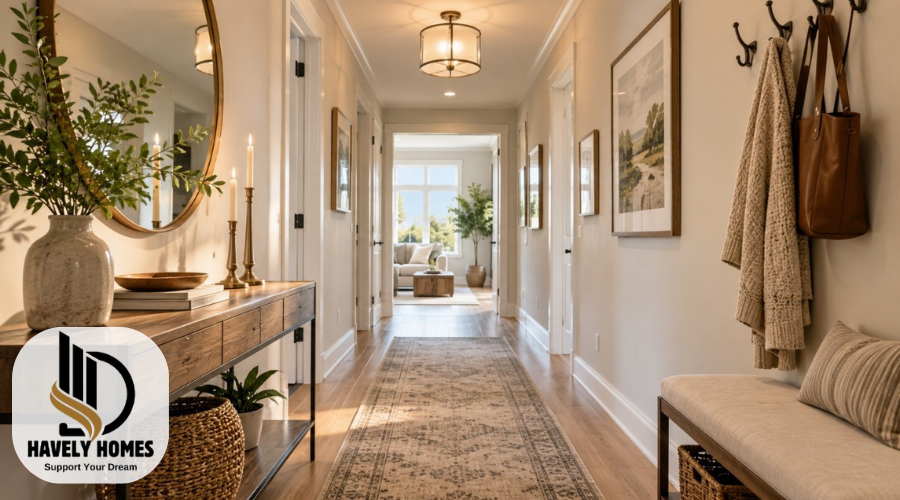
A hallway may seem like a simple passage between rooms, but it has an important effect on how a home looks and functions. It is often one of the first areas people see, and it may also be one of the busiest parts of the house. A well-planned hallway can make daily movement easier while helping the rest of the home feel more connected.
The challenge is that hallways are not always easy to decorate. Some are long and narrow. Others have little natural light, awkward door positions, or barely enough room for furniture. Clutter can also build up quickly when shoes, bags, coats, and other everyday items have nowhere to go.
Good hallway design starts with the space you actually have. Instead of trying to fit every decorating idea into one area, it is better to consider layout, lighting, flooring, storage, wall finishes, and safety together. The ideas below focus specifically on the hallway in a house and can be adapted to both compact and larger spaces.
Quick Answer:
A hallway that feels dark, narrow, or cluttered usually needs better lighting, a clearer walking path, and more suitable storage. Start by checking its dimensions, light sources, door movement, and everyday storage needs.
Quick-Guide Table
| Possible problem | What to check | Recommended action |
| Hallway feels dark | Natural light, existing fixtures, dark finishes | Improve general lighting and consider lighter or more reflective surfaces |
| Space feels narrow | Furniture depth and walking space | Remove bulky pieces and use wall-mounted or slim storage where suitable |
| Hallway becomes cluttered | Where shoes, coats, bags, and keys collect | Create simple storage or a small drop zone for frequently used items |
| Long hallway feels empty | Blank walls, lighting placement, end wall | Add carefully spaced art, lighting, a runner, or one focal feature |
| Runner moves or curls | Edges, backing, door clearance | Use a properly fitting rug with suitable anti-slip support |
| Lighting is uneven | Dark sections between fixtures | Improve light distribution; use a qualified electrician for wiring changes |
| Wall finish marks easily | Traffic level and current paint finish | Choose a durable, cleanable finish suitable for busy interior areas |
Helpful Steps Before Updating a Hallway
- Measure the hallway’s length, width, and usable wall space.
- Check how fully opened doors affect the available area.
- Note switches, vents, radiators, outlets, stairs, and access panels.
- Decide whether lighting, storage, appearance, or easier movement is the main priority.
- Remove unnecessary furniture or clutter before adding new items.
- Test paint samples and furniture dimensions in the actual space.
- Keep rugs flat and secure, and leave normal walking routes clear.
- Use a qualified professional for electrical, structural, or other complex alterations.
Start With the Hallway’s Size, Shape, and Purpose
Before choosing paint, furniture, or decorations, look carefully at the hallway itself. Its proportions will affect almost every design decision you make.
A long, narrow hallway may need better lighting and careful furniture placement. A short hallway connected to an entrance may need practical storage instead. A wider space may have enough room for a console table, bench, or cabinets without interfering with movement.
Start by measuring the length and width of the hallway. Measure wall areas where you are considering furniture or storage, and check how far doors extend when they are fully open. A piece that looks slim in a showroom can still feel bulky once it is placed in a narrow passage.
Also note permanent features such as:
- doors and door swings
- stairs and landings
- radiators
- heating or cooling vents
- light switches
- electrical outlets
- access panels
Think about how the hallway is used during an ordinary day. A main entrance hallway may need space for shoes, keys, and coats. An upstairs hallway connecting bedrooms may need little storage at all.
Once you understand the problem you are trying to solve, it becomes much easier to choose useful improvements instead of simply filling empty walls.
Hallway Ideas for Narrow and Small Spaces
In a small hallway, open walking space is usually more useful than extra furniture. Start by keeping the route through the hallway as clear as possible.
Where storage is needed, consider using the walls rather than taking up more floor area. Hooks, shallow shelves, wall-mounted organizers, or slim cabinets may work better than a deep console or freestanding unit.
Vertical features can also make better use of limited space. A row of hooks above a small shoe area, for example, may provide useful storage without making the hallway feel crowded.
Mirrors are another practical decorative option. They can reflect light that is already present and provide visual depth, which may help a compact hallway feel more open. However, they do not create light on their own, so a very dark hallway still needs suitable lighting.
A runner rug can soften a long hard floor and add color or pattern. Its shape can also emphasize the length of the hallway and lead the eye toward the next room. It should fit the available space without interfering with doors or creating loose edges underfoot.
If your hallway is too narrow for furniture, do not force it. Paint, artwork, lighting, mirrors, and carefully chosen wall details can give the space character without reducing the walking area.
How to Make a Dark Hallway Feel Brighter
A dark hallway is common in homes where the corridor sits in the middle of the floor plan and has no windows of its own.
Start by considering the surfaces already in the space. Lighter wall colors can help available light travel around the room more effectively, especially when combined with good artificial lighting. Light-colored flooring, doors, or trim may also help create a more open appearance.
This does not mean every dark hallway must be painted white. Warm neutrals, pale earth tones, muted greens, or other lighter colors can still create a comfortable atmosphere. Deeper colors can work too, but they usually create a more enclosed or dramatic effect.
Mirrors can be useful when positioned where they can reflect light from a nearby fixture, doorway, or window. Reflective finishes and glass elements can have a similar effect when used carefully.
It may also be possible to make better use of natural light from adjoining rooms. Existing glazed doors or open doorways can allow some daylight to reach an interior corridor. Major changes to doors, walls, or openings, however, should be considered as part of the building rather than treated as a simple decorating project.
Avoid assuming that the brightest possible bulb is automatically the best answer. Good lighting should make the hallway easy to see and move through without producing uncomfortable glare.
Hallway Lighting That Is Practical and Comfortable
Lighting plays both a practical and decorative role in a hallway. The first priority is general, or ambient, lighting that allows people to move through the area safely.
Low ceilings often work well with flush-mount or other low-profile ceiling fixtures because they use less overhead space. In taller hallways, pendant lighting may be an option if the fixture does not interfere with normal movement.
A long corridor may benefit from more than one light source rather than relying on a single fixture at one end. Repeating ceiling lights can distribute illumination more evenly and create a natural visual rhythm.
Wall sconces can add another layer of light without using floor space. They may be useful beside artwork, mirrors, or architectural details, provided their position does not interfere with the walking route.
Accent lighting is optional, but it can highlight artwork or wall features when the basic lighting is already adequate.
Whatever style you choose, aim for even, comfortable illumination rather than very bright spots surrounded by dark areas.
Electrical safety is more important than appearance. Changing a light shade or replacing a lamp is very different from installing new wiring or moving hardwired fixtures. The Electrical Safety Foundation International recommends using a qualified, licensed electrician for electrical work in the home. Local electrical requirements also vary, so wiring changes should be handled according to the rules that apply where you live.
Choosing Hallway Colors and Wall Finishes
Paint is one of the simplest ways to change how a hallway feels.
Light neutrals can make a narrow corridor feel calmer and brighter, while warm colors can make an entry area feel more welcoming. Darker shades can add character, especially in a larger hallway or one with good lighting, but they may make a small space feel more enclosed.
Always test a paint color in the actual hallway before committing to it. The same color can look different under daylight, warm artificial light, and cooler artificial light. Nearby flooring and furniture colors can also change how it appears.
Durability is worth considering because hallway walls often receive more contact than walls in quieter rooms. Bags, hands, furniture, and shoes can leave marks over time. Paint manufacturers commonly recommend washable finishes such as satin or eggshell for busy areas including hallways because they are generally easier to maintain than very flat finishes.
Paint is not the only option. Wainscoting, wall paneling, wallpaper, or vertical detailing can add texture and architectural interest. These treatments work best when they suit the proportions and style of the home rather than being added simply because they are fashionable.
An accent wall can also work in a hallway. A wall at the far end is often a natural place for a stronger color or pattern because it creates a clear focal point without covering every surface.
Flooring and Runner Rugs for Busy Hallways
Hallway flooring needs to cope with regular foot traffic, especially near entrances.
Durability and ease of cleaning are therefore important. Hard flooring may be practical in busy areas, while carpet can feel softer and reduce noise. The best choice depends on the rest of the home, how much traffic the hallway receives, and how much maintenance you are comfortable with.
It is also worth considering how the floor connects with adjoining rooms. Using related materials, colors, or tones can make the transition between spaces feel more intentional.
Runner rugs offer another option. They can add warmth, soften footsteps, protect parts of the floor, and introduce pattern without covering the entire hallway.
Safety matters when using any rug in a walking route. Choose one that lies flat, does not block doors, and does not leave curled or loose edges where someone could trip. Suitable non-slip backing or an appropriate rug pad may help keep it in place.
The U.S. Consumer Product Safety Commission advises keeping walking surfaces free from obstacles and notes that loose rugs, carpets, and other objects can contribute to falls.
Maintenance should also influence your choice. A pale rug in an entrance used by muddy shoes may require more cleaning than a patterned or darker design. Practicality matters just as much as appearance.
Storage Without Making the Hallway Feel Crowded
Storage can make a hallway much more useful, but too much of it can turn a clear passage into an obstacle course.
Start with what actually needs to be stored there. At an entrance, that may include coats, shoes, keys, bags, or umbrellas. In another part of the home, the hallway may need almost no storage.
Wall hooks are useful because they take up very little floor space. Small floating shelves can hold keys or a few everyday items. Slim shoe cabinets can work in wider areas, while built-in storage may be suitable when there is enough space and the project justifies the extra work.
A narrow console table can provide a useful surface in a generous hallway, but it should not be added simply because the wall looks empty. In a very narrow space, leaving the floor clear may be the better design decision.
Families may find it helpful to create a small drop zone near the entrance. Giving commonly used items a specific place can reduce the amount of clutter that collects on the floor or nearby furniture.
Whatever storage you choose, make sure doors can still open properly and that vents, switches, access panels, and normal walking routes remain usable.
Decorating Hallway Walls Without Overdoing Them
Hallway walls provide plenty of decorating opportunities because they are usually visible without needing much floor space.
Framed art, photographs, mirrors, wall panels, or a small collection of meaningful objects can make the area feel connected to the rest of the home.
A gallery wall can work especially well in a long hallway. Instead of filling every available inch, choose a consistent relationship between frames, colors, or spacing. Repeating one or two visual elements can make a varied collection feel more organized.
In a compact hallway, one larger piece of art or a single mirror may have more impact than many small items. Too many objects can make a narrow space feel busy.
Before putting holes in the wall, make a simple hallway drawing. Sketch the wall and roughly mark the position of pictures, mirrors, switches, doors, and shelves. It does not need to be artistic. The purpose is simply to check scale and spacing before installation.
Plants can add natural texture, but hallway conditions matter. A windowless corridor may not provide enough light for many plants, and temperatures near external doors can also change. Choose plants according to their actual light and care needs rather than selecting them only for appearance.
Making a Long Hallway Feel More Balanced
Long hallways sometimes feel like tunnels because the eye is drawn directly from one end to the other.
One way to reduce this effect is to create smaller visual points of interest along the route. Artwork, wall lights, paneling, color changes, or other repeated details can break up a long blank wall.
Repetition can be especially effective. Similar frames or evenly placed lights can create a sense of rhythm without making the hallway look cluttered.
The end wall is another useful design opportunity. A piece of artwork, contrasting paint color, mirror, or other focal feature can give the eye a clear destination.
Runner rugs can also influence how the hallway feels. A pattern or texture that works with the dimensions of the space can make the floor feel intentional rather than simply long and empty.
Avoid lining both sides of a narrow corridor with furniture. Even when individual pieces fit, the combined effect may make the hallway harder to use and visually heavier.
Common Hallway Design Mistakes to Avoid
One of the most common mistakes is buying furniture before measuring the available space. Always check the actual dimensions, including door movement and the space people need to walk comfortably.
Another problem is trying to decorate every surface. A narrow hallway generally benefits from restraint. One mirror, several carefully spaced pictures, or a single useful storage piece may be enough.
Poor lighting can also make an otherwise attractive hallway uncomfortable. In a long corridor, one badly positioned fixture may leave some areas noticeably darker than others.
Rugs deserve careful attention as well. Avoid runners that slide, curl at the edges, or prevent doors from opening properly.
Do not cover or block vents, switches, electrical panels, access points, or other features that need to remain usable.
Storage should not project so far into the corridor that people have to turn sideways or regularly walk around it. Keeping the path clear is more important than gaining a little extra storage.
Finally, avoid copying a hallway trend without considering your own home. A design that works in a wide, bright entrance may be unsuitable for a narrow interior corridor. The best choices respond to the dimensions, light, traffic, and architecture of the actual space.
When a Hallway Project Needs Professional Help
Many hallway updates are straightforward decorating jobs. Painting, arranging artwork, changing movable furniture, or adding a properly secured rug can often be handled without major building work.
Other projects need more care.
New electrical wiring, relocated switches, or hardwired lighting alterations should be handled by a qualified professional in accordance with local electrical requirements. Electrical work carries risks that are not appropriate for trial-and-error DIY.
You should also seek appropriate professional advice before removing or significantly altering walls when you do not know whether they are structural or contain wiring, plumbing, or other services.
Visible damage can sometimes point to a larger problem. Repeated damp patches, unexplained wall staining, badly damaged flooring, or recurring cracks should be investigated rather than simply covered with paint or decor.
Building and electrical rules differ by location, so larger renovation projects should follow the requirements that apply in your area.
The basic distinction is simple: decorating changes appearance, while work that affects wiring, structure, or unexplained building damage may require professional knowledge.
Conclusion
A successful hallway should make moving through the home easy while also feeling connected to the rooms around it. The best design choices usually begin with practical questions: How wide is the space? How much light does it receive? How often is it used? What actually needs to be stored there?
Once those needs are clear, decorative decisions become easier. Better lighting may solve a dark corridor. A secure runner can bring warmth to a long floor. Wall hooks can control entrance clutter. A mirror or carefully chosen artwork can give a small hallway personality without using valuable floor space.
You do not need to use every hallway idea at once. Choose the changes that solve real problems in your space, keep the walking route comfortable and safe, and suit the style of the rest of your home. A few thoughtful improvements are often more effective than filling the hallway with furniture and decoration.
FAQs
How Can I Make A Narrow Hallway Look Bigger?
Use slim or wall-mounted storage, keep the walking path clear, and consider mirrors, lighter colors, and suitable lighting to make the hallway feel more open.
What Is The Best Lighting For A Hallway?
The best hallway lighting provides even and comfortable illumination. Ceiling fixtures, wall sconces, or multiple lights along a long hallway can help reduce dark areas.
Are Runner Rugs A Good Idea For Hallways?
Yes. A suitable runner can add warmth, pattern, and comfort to a hallway. Make sure it fits properly, stays flat, and does not interfere with doors or walking areas.
How Can I Add Storage To A Small Hallway?
Wall hooks, shallow shelves, slim cabinets, and small organizers can provide useful storage without taking up too much floor space.
What Should I Avoid When Decorating A Hallway?
Avoid oversized furniture, loose rugs, blocked doors or vents, excessive wall decoration, and anything that makes the normal walking path difficult to use.
Disclaimer: The information in this article is provided for general informational and educational purposes only. Hallway layouts, building conditions, electrical systems, and local requirements can vary from one home and location to another. Always check your specific space before making changes. For electrical work, structural alterations, or other projects that may involve safety risks, consult a qualified professional and follow applicable local regulations.
