
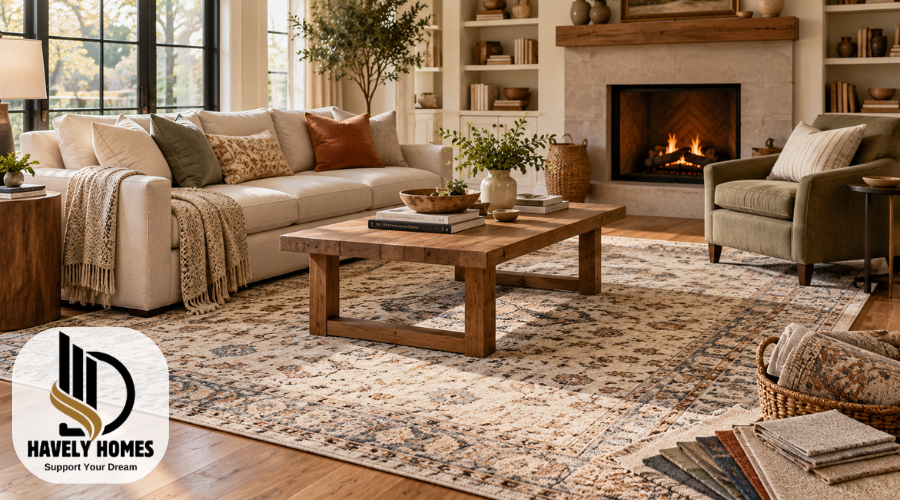
Choosing the best area rugs is not simply about finding a pattern or color you like. A rug also needs to suit the way a room is used. A soft rug that feels perfect beside a bed may not be practical under a busy dining table, while a durable low-pile rug may be ideal for a family living room.
Size, material, pile height, cleaning needs, foot traffic, pets, children, and furniture placement can all affect whether a rug works well in your home. Appearance still matters, of course, but a beautiful rug is much easier to enjoy when it also fits your daily routine.
This guide explains the main things to consider before buying an area rug so you can compare different options and choose one that suits your space instead of relying only on trends, price, or brand names.
Quick Answer:
The best area rug depends on your room, furniture layout, foot traffic, material preference, and cleaning needs. Measure the space first, then compare rug size, pile, fiber, construction, and care instructions.
Quick-Guide Table
| Possible problem | What to check | Recommended action |
| Rug looks too small | Whether the rug connects the main furniture | Choose a larger size that better anchors the seating or bed area |
| Rug is difficult to clean | Fiber, pile height, and care label | Pick a lower-pile or easier-care rug that suits your routine |
| Chairs catch on the rug | Pile height and dining-table clearance | Choose a flatter or lower-pile rug for easier chair movement |
| Rug moves on the floor | Rug backing, floor type, and rug pad compatibility | Use a suitable rug pad recommended for your flooring and rug |
| Rug shows marks quickly | Color, pattern, traffic level, and room use | Consider a practical pattern or mid-tone color for busy rooms |
| Rug feels wrong for the room | Material, softness, moisture exposure, and traffic | Match the fiber and construction to how the room is actually used |
| Online rug looks different in person | Measurements, product photos, samples, and return policy | Compare dimensions carefully and order a sample when available |
Helpful Steps for Choosing an Area Rug
- Measure the room and furniture area before looking at rug sizes.
- Decide how the rug will sit with the furniture, such as under the front sofa legs or beneath the bed.
- Match the material to the room, considering traffic, pets, children, moisture, and cleaning needs.
- Choose a suitable pile height based on comfort, vacuuming, doors, and furniture movement.
- Read the care label instead of assuming a rug is washable or stain-proof.
- Check the return policy when buying online because color and texture can look different in your home.
- Consider a compatible rug pad if extra stability or cushioning is needed.
What Makes an Area Rug a Good Choice?
A good area rug should combine appearance with practical performance. It should be suitable for the amount of foot traffic in the room, comfortable enough for its location, and realistic for you to maintain.
Durability is especially important in living rooms, hallways, and other frequently used spaces. In quieter bedrooms, softness and comfort may matter more. Construction also makes a difference because two rugs made from the same fiber can feel and perform differently depending on how they are woven or manufactured.
Cleaning requirements deserve attention before you buy. Some rugs need professional cleaning or careful spot treatment, while others have simpler care instructions. Shedding can also vary. Some new rugs may release loose fibers at first, while other constructions tend to shed less.
Stain resistance should not be confused with stain proofing. Even materials known for resisting some stains can still be damaged by spills or incorrect cleaning. Wool, for example, has a natural protective outer layer that can help limit absorption, but its exact care requirements still depend on the finished product.
It is also useful to understand the difference between an area rug and carpet. An area rug covers a selected part of the floor and can normally be moved, while wall-to-wall carpet is installed across most or all of a room.
The best choice is therefore not always the most expensive rug. It is the one that fits the room, furniture, household, and amount of maintenance you are comfortable with.
Choosing the Best Rug Material for Your Home
Rug material affects softness, appearance, durability, cleaning, and how suitable the rug is for different rooms.
Wool is commonly used for quality rugs because it feels comfortable and has natural resilience. Wool fibers can recover from pressure and have a protective surface that helps resist some staining. However, wool rugs vary widely in construction, and you should never assume that a wool rug can be machine washed. Always follow the care label provided for the specific rug.
Cotton rugs are generally lighter and can give a room a relaxed, casual look. Some smaller cotton rugs are washable, but this depends on their construction, backing, dyes, and manufacturer instructions.
Jute and sisal offer natural texture and often work well in dry living areas. They can add warmth without a deep pile. Plant fibers, however, are not always ideal where frequent moisture or wet cleaning is expected.
Polypropylene is widely used in practical rugs because it can handle regular household use and is often easier to maintain than some natural fibers. Polyester can offer softness and strong color, while nylon is often selected where durability and regular foot traffic are priorities.
Blended rugs combine two or more materials to achieve a particular feel, look, or performance level. Instead of assuming that natural or synthetic is always better, look at the fiber content together with construction and care instructions.
Best Area Rugs for Living Rooms
The best area rugs for living room spaces should make the seating arrangement feel connected. A rug that is too small can make a sofa and chairs look as though they are floating separately around the room.
One common approach is to choose a rug large enough for at least the front legs of the sofa and major chairs to sit on it. In larger rooms, placing all the main seating furniture on the rug can create an even more unified arrangement. Current rug-sizing guidance from Crate & Barrel also recommends using the furniture layout, rather than the room dimensions alone, as an important part of choosing a size.
Material should match the way the living room is used. A quiet formal room can handle a more delicate choice than a busy family room where people gather every day.
Pile height matters too. A thick, plush rug can provide softness, but it may require more vacuuming and can make furniture movement harder. Lower-pile rugs are often easier to maintain in busy spaces.
Color and pattern are both decorative and practical choices. A pale solid rug may create a clean, open appearance, while a patterned or mid-tone rug can be more forgiving of small marks from everyday life. Texture can add interest when the rest of the room uses simple colors.
The aim is not simply to fill empty floor space. The rug should help define the seating area and feel correctly scaled to the furniture around it.
Best Living Room Rugs for Families, Kids, and Pets
For a busy household, easy maintenance often matters as much as appearance. The best living room rugs for families should suit regular foot traffic, occasional spills, cleaning, pets, toys, and everyday activity.
Low-pile and flatwoven designs can be practical because dirt and crumbs have less depth to settle into, and vacuuming is generally easier than with very deep pile. This does not mean every family needs a flat rug, but maintenance should be considered before choosing a plush design.
Washable rugs can also be useful, but the word “washable” needs to be checked carefully. A rug should only go into a washing machine when its manufacturer specifically says it can. Size matters as well, because even a washable rug may be too large or heavy for a household washing machine.
Homes with pets should consider clawing, loose loops, shedding, and how easily pet hair can be removed. Tightly constructed or lower-pile surfaces may be simpler in some homes.
Patterns and middle-range colors can help disguise small crumbs, pet hair, or minor marks between cleanings, although they do not replace proper cleaning.
A suitable rug pad may also help reduce movement. Check that any pad is compatible with both the rug and your type of flooring, especially on delicate finished floors.
Best Rugs for Bedrooms
Bedrooms usually allow more freedom to focus on softness and comfort because foot traffic is often lower than in a main living area.
The best rugs for bedroom spaces should provide a comfortable surface where you are most likely to step. A large rug can sit partly or fully under the bed, while smaller rugs can be placed along one or both sides.
If you use a large rug, it should extend far enough beyond the sides or foot of the bed to give you a useful soft landing. Crate & Barrel’s current sizing guidance suggests allowing roughly 12 to 18 inches beyond the sides and foot as a starting point, although the best layout still depends on bed size and room dimensions.
A plush rug can work particularly well in a bedroom because the room usually has fewer crumbs, shoes, and heavy traffic. However, a lower pile may still be better if you prefer quick vacuuming or have pets that shed heavily.
Color also changes the mood of the room. Warm neutrals, soft colors, and gentle textures can help create a restful look, while patterns can add interest to simple bedding and furniture.
How to Choose the Right Area Rug Size
Rug size can have as much visual impact as color or pattern. Before shopping, measure the room and then measure the furniture arrangement that the rug needs to support.
In a living room, the rug should normally relate directly to the seating. Having the front legs of the sofa and chairs on the rug is a common flexible layout, while larger rooms may suit a rug that holds all furniture legs.
Dining rooms need a different approach. The rug should extend beyond the table far enough for dining chairs to remain on the rug when people pull them back. Crate & Barrel currently suggests about 24 to 30 inches beyond the table as a general guide.
For bedrooms, measure the bed along with any nightstands or bench that you want the rug to visually connect.
Standard rug sizes can provide a useful starting point, but they are not strict rules. Room shape, furniture scale, door clearance, and available floor space can change what looks best.
One simple way to check scale before buying is to mark the proposed rug dimensions on the floor with painter’s tape. This lets you see whether the rug will feel balanced before committing to a purchase.
Rug Pile, Construction, and Weave Matter More Than They Seem
Pile describes the raised surface of a rug.
A low-pile rug has shorter fibers and is usually easier to vacuum and move furniture across. A high-pile rug has longer fibers and normally feels softer and more cushioned. Medium pile sits between the two.
Construction also affects how a rug looks and performs.
Flatweave rugs do not have a deep raised pile and often work well where easy movement is important. Hand-knotted rugs are created by individually tying knots, while hand-tufted rugs use yarn inserted into a foundation material. Handwoven and braided rugs use other construction techniques, and machine-made rugs are produced through mechanized processes.
None of these labels automatically guarantees that a rug is excellent or poor quality. Fiber, workmanship, density, backing, finishing, and quality control also matter.
Dining areas often benefit from flatter or lower-pile rugs because chairs can slide more easily and crumbs are less likely to disappear into deep fibers. Current dining-room guidance similarly recommends considering a low pile for easier chair movement.
Natural, Synthetic, and Washable Rugs Compared
Natural and synthetic rugs each have advantages, so the better choice depends on your household.
Wool offers comfort, resilience, and natural resistance to some stains. Woolmark notes that wool fibers have a protective outer layer and that wool products can be easier to care for than people sometimes assume. However, cleaning directions still need to come from the individual rug’s care label.
Cotton can create a softer, casual appearance and is often used in lighter-weight rugs.
Jute and similar plant fibers are useful when you want visible natural texture. They generally make more sense in dry indoor spaces than in areas exposed to regular water or heavy wet cleaning.
Synthetic materials such as polypropylene, polyester, and nylon can be practical where easy maintenance, frequent use, or cost is an important consideration.
Washability should be treated as a product-specific feature rather than a fiber-wide rule. Even Woolmark advises checking the care claim before machine washing wool products. The same principle applies to rugs: follow the manufacturer’s instructions instead of assuming a material can be cleaned in a particular way.
What Should You Look for in the Best Area Rug Brands?
Searching for the best area rug brands or best rug brands can be useful, but a brand name alone does not tell you whether a particular rug is right for your home.
Start with how clearly the seller explains the product. Useful information should include fiber content, construction, size, pile height where relevant, care instructions, and any special backing.
Return terms are also important, especially when buying online. A rug can look very different once it is placed beside your own furniture and seen in your home’s lighting.
Warranty information and customer support may also matter for higher-cost purchases.
Two rugs from the same company can perform very differently if one is wool and hand-knotted while another is synthetic and machine-made. Judge the individual product rather than assuming everything from a well-known brand offers the same qualities.
Independent certification can provide extra information in some categories. For example, Woolmark certification covers wool carpets and other interior products, with products tested against defined specifications before certification.
What Country Makes the Best Rugs?
People often ask what country makes the best rugs, but there is no fair single answer.
Rug weaving has deep traditions across several regions. Museum collections document important historical rug and carpet traditions from Persia, present-day Iran, Turkey, India, the Caucasus, and Central Asia. The Metropolitan Museum of Art, for example, holds historic carpets representing many of these traditions and describes weaving practices that developed across different communities and periods.
Pakistan, Afghanistan, Morocco, and other regions also have their own rug-making traditions and styles.
However, country of origin alone cannot prove quality. A well-made rug depends on its material, weaving or knotting technique, consistency, finishing, dyes, design, and overall workmanship.
It is also important to distinguish traditional handmade rugs from modern machine-produced products. A country known for handwoven carpets may also produce mass-market rugs at different quality levels.
Instead of choosing solely by nationality, inspect the actual construction and specifications of the rug you are considering.
Buying Area Rugs Online Without Making an Expensive Mistake
Online shopping provides far more choices than most local stores, but rugs can be difficult to judge from a screen.
Always check the exact dimensions rather than relying on room photographs. Product images may be staged in spaces that make the rug appear larger or smaller than it really is.
Read the material composition, pile height, construction, backing information, and cleaning instructions carefully. Also check shipping costs and the return policy before ordering, particularly with large rugs that may be expensive to send back.
Look through several photographs when possible. Close-up images can help you understand texture, fiber thickness, edge finishing, and pattern detail.
Color is harder to judge. Screens display colors differently, and lighting in your room can change how a rug looks. If the seller provides fabric or rug samples, they can be useful before an expensive purchase.
Customer reviews can provide useful real-world information, especially when many buyers repeatedly mention the same issue. One unusually positive or negative review should carry less weight than a consistent pattern.
Searches such as best rugs online Reddit can also reveal personal experiences from homeowners. Forums can help you discover issues people noticed after months of use, but they should not replace manufacturer specifications, official care instructions, or your own measurements.
Compare information from several sources before making a major purchase.
Common Area Rug Mistakes to Avoid
One of the most common mistakes is buying a rug that is too small. A tiny rug in the middle of a large seating group can make the furniture feel disconnected rather than bringing the room together.
Another mistake is choosing entirely by appearance. A beautiful pale shag rug may not be practical in a dining area where food and chair movement are regular concerns.
Pile height also needs to work with the room. Very thick rugs can interfere with doors, chair movement, or furniture placement.
Do not assume a rug is machine washable because it looks lightweight or because similar rugs are washable. Always check the individual care instructions first.
Material requirements matter too. Ignoring shedding, moisture sensitivity, stain care, or vacuuming needs can turn an attractive purchase into regular frustration.
Household use should be considered before buying. Pets, young children, outdoor shoes, frequent visitors, and food or drink can all change what type of rug is practical.
Rug pads should not be treated as one-size-fits-all accessories. If you use one, make sure it suits the rug and the flooring beneath it.
Finally, avoid experimenting with strong chemicals, soaking, steam, or aggressive stain treatments unless the rug manufacturer specifically allows that cleaning method. Different fibers, dyes, backings, and construction methods respond differently to moisture and cleaning products.
Conclusion
The best area rugs are the ones that match the room rather than simply following a popular style. Size, material, construction, pile height, comfort, cleaning needs, and daily household activity should all play a part in the decision.
Start by measuring your space and thinking about how the room is actually used. A family living room, quiet bedroom, and dining area may each need a very different type of rug.
Brand name, price, country of origin, or appearance can provide useful information, but none of them should make the decision alone. Look at the complete rug, including how it is made and how it needs to be maintained.
A well-chosen area rug should feel like a natural part of the room. Choose one that works with your furniture, household routine, cleaning preferences, and personal style, and it is far more likely to remain practical and enjoyable long after current decorating trends change.
FAQs
Are Wool Area Rugs A Good Choice For Living Rooms?
Wool can work well in living rooms because it is comfortable and naturally resilient. However, quality and care needs vary, so always check the rug’s construction and manufacturer’s cleaning instructions.
Are Washable Rugs Always Better For Homes With Children Or Pets?
Not always. Washable rugs can make cleaning easier, but size, construction, durability, pile height, and washing requirements also matter. Confirm that the specific rug is genuinely machine washable before buying.
Is A High-pile Or Low-pile Rug Better?
It depends on the room. High-pile rugs usually feel softer, while low-pile rugs are generally easier to vacuum and may work better under dining chairs or in busier areas.
Does The Country Of Origin Tell You Whether A Rug Is High Quality?
No. Many countries have respected rug-making traditions, but quality depends more on materials, construction, workmanship, finishing, and quality control than on the country name alone.
Should I Use A Rug Pad Under An Area Rug?
A rug pad can improve stability and cushioning in many situations. Choose one that is compatible with both your rug and flooring, because some floor finishes may require specific pad materials.
Disclaimer: This article is provided for general informational purposes only and is intended to help homeowners understand common area-rug materials, sizes, construction types, placement, and care considerations. Rug materials, backings, dyes, cleaning requirements, and manufacturer instructions can vary between products. Always check the care label and official product guidance before washing, spot-cleaning, steaming, or applying cleaning products to a rug. If a rug is valuable, antique, delicate, badly stained, or requires specialist treatment, consider contacting a qualified rug-cleaning or restoration professional. HavelyHomes.com does not represent or imply an official affiliation with any rug manufacturer, retailer, certification body, or brand mentioned for informational purposes.
