
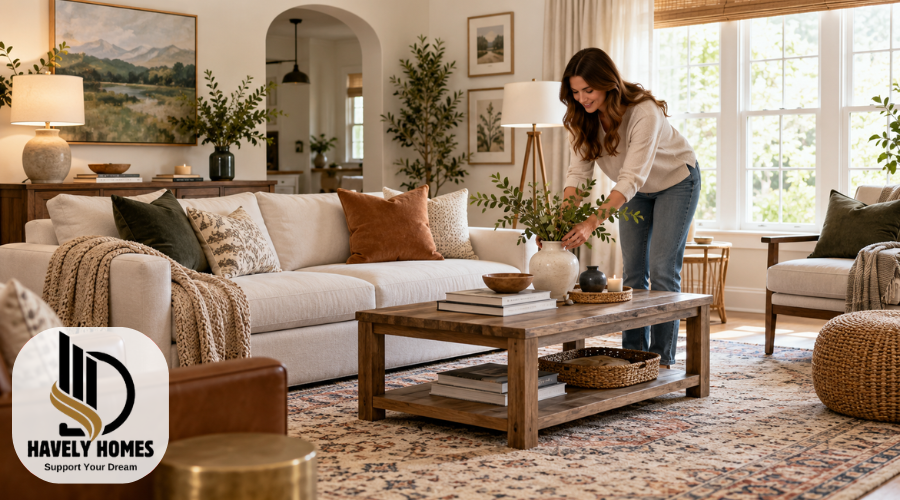
Learning how to decorate a home can feel difficult at first because there are so many decisions to make. You may be thinking about paint colors, furniture, rugs, curtains, lighting, artwork, and dozens of small accessories at the same time. The easiest approach is to slow down and work in a practical order.
Good decorating usually begins with understanding the room, not with buying decorations. Think about how the space will be used, what furniture you already own, how much room you have, and what you can comfortably spend. From there, you can build the room gradually through layout, color, lighting, textiles, and personal details.
You also do not need to replace everything or copy one particular interior design style. A comfortable home can combine old and new pieces as long as the room feels balanced, useful, and connected to your personal taste.
Quick Answer:
To decorate your home well, start with the room’s purpose, measurements, existing furniture, and budget. Plan the layout and color palette first, then add lighting, rugs, artwork, textiles, and personal details.
Quick-Guide Table
| Possible problem | What to check | Recommended action |
| Room feels crowded | Furniture size, layout, and walking paths | Remove unnecessary pieces and rearrange large furniture first |
| Colors do not work together | Walls, flooring, furniture, and fixed finishes | Choose a smaller, coordinated color palette and test paint samples |
| Room feels flat or unfinished | Lighting, texture, artwork, and textiles | Add task lighting, lamps, rugs, curtains, or a few personal details |
| Furniture looks out of proportion | Room dimensions and furniture scale | Measure before buying and choose pieces that suit the available space |
| Décor looks cluttered | Shelves, tables, walls, and accessories | Keep fewer meaningful items and leave some visual breathing room |
| Different rooms feel disconnected | Repeated colors, materials, or finishes | Repeat a few design elements while allowing each room its own character |
Simple Steps for Decorating a Room
- Decide how the room will be used.
- Measure the room and existing furniture.
- Set a realistic decorating budget.
- Plan the furniture layout and walking paths.
- Choose a simple color direction.
- Position large furniture before smaller décor.
- Add suitable rugs, curtains, and lighting.
- Finish with artwork, textiles, plants, and personal objects.
- Review the room before buying additional accessories.
Start With the Room’s Purpose, Needs, and Budget
Before choosing paint or ordering new furniture, decide what you need the room to do. A living room used mainly for family evenings will have different needs from one used for entertaining guests. A bedroom should support rest and storage, while a dining area needs enough space for people to sit and move comfortably.
Think about who uses the room and what happens there during a normal week. Do children need open floor space? Do you need somewhere to work or read? Is storage a problem? These everyday questions are more important than following a decorating trend.
Next, look at what you already own. A good sofa, table, bed, rug, or cabinet does not need to be replaced simply because you are redecorating. Existing pieces can become the starting point for the room’s colors and style.
It also helps to divide your spending into priorities. Furniture you use every day may deserve more of the budget than purely decorative pieces. Artwork, cushions, plants, lamps, and accessories can often be added later.
There is no need to finish the whole room in one shopping trip. Decorating gradually gives you time to see what the space actually needs and reduces the chance of buying items that do not work together.
Measure and Plan the Space Before Buying Anything
One of the most useful steps when learning how to decorate is also one of the simplest: measure first.
Record the length and width of the room, along with the positions of doors, windows, built-in storage, fireplaces, radiators, or other permanent features. Measure the larger furniture that will remain in the room too.
You can then sketch a basic floor plan on paper or use a room-planning app. If you are unsure how large a new sofa, table, or cabinet will feel, marking its approximate footprint on the floor with removable painter’s tape can help you visualize it before buying.
Plan the largest furniture first. In a bedroom, that usually means the bed. In a living room, it may be the sofa or sectional. In a dining space, the table normally becomes the main reference point.
Pay attention to movement as well as appearance. People should be able to enter the room, open doors, reach storage, and move between furniture without constantly walking around obstacles.
Furniture that looks perfect in a showroom may feel very different inside a smaller room. Measuring both the room and the item before purchasing is one of the easiest ways to avoid problems with scale.
Choose a Decorating Direction That Feels Like You
You do not have to identify your home as modern, traditional, farmhouse, Japandi, rustic, or any other named style before you can decorate it well.
Instead, begin with the atmosphere you want. Perhaps you want your living room to feel warm and relaxed, your bedroom quiet and simple, or your kitchen bright and practical.
Look at a small collection of inspiration images and notice what repeatedly catches your attention. You may find that you consistently like warm wood, soft neutral colors, curved furniture, patterned textiles, black accents, natural materials, or clean lines.
Those repeated preferences are more useful than trying to recreate one photograph exactly.
A simple mood board can bring these ideas together. It may contain a few paint colors, fabric samples, furniture images, flooring tones, and decorative details. Before buying something new, ask whether it fits comfortably with that overall direction.
Also consider your home’s architecture and permanent features. Flooring, cabinetry, fireplaces, trim, windows, and built-in details can influence which colors and materials feel natural in the space.
The goal is not to create a showroom. It is to create a home that looks considered while still feeling personal.
Build a Color Palette That Works With the Room
Color becomes easier to manage when you start with things that are difficult or expensive to change. Flooring, kitchen cabinets, countertops, tile, and major furniture pieces can provide useful clues for the rest of the palette.
Choose a small group of colors that work together rather than introducing a new unrelated color with every purchase. You might use one main neutral or wall color, one or two supporting shades, and a stronger accent color in smaller amounts. This is a flexible design approach rather than a rule that must be followed exactly.
Think about nearby rooms too. Your home does not need to use the same paint everywhere, but connected areas often feel calmer when they share something in common, such as similar undertones, wood finishes, or repeated accent colors.
Lighting matters when choosing paint. Natural daylight and artificial lighting can noticeably affect how a color appears, which is why looking at a small swatch only in a store can be misleading. Benjamin Moore recommends observing color samples under different natural and artificial lighting conditions and at different times of day.
Test your preferred colors in the actual room before making a final choice. Look at them in the morning, later in the day, and after the room’s lights are switched on. This is especially useful for colors with warm, cool, gray, green, or pink undertones that may become more noticeable under different lighting.
Arrange Furniture for Comfort, Scale, and Easy Movement
Once the overall direction is clear, arrange the largest furniture first.
Start with the pieces that are essential to the room. A living room may be organized around conversation, television viewing, a fireplace, or a combination of these. In a bedroom, the bed normally determines where most other furniture can go.
Try to distribute large or visually heavy pieces around the room instead of placing everything on one side. A tall cabinet, dark sofa, large table, or substantial bookcase can strongly affect visual balance.
Avoid assuming every piece of furniture must sit against a wall. In larger rooms, pulling seating inward can create a more comfortable conversation area and help define different zones.
At the same time, do not fill empty areas simply because they exist. Some open floor space is useful. It makes movement easier and gives furniture room to stand out.
Scale is also important. A very small coffee table may look lost beside a deep sectional, while an oversized armchair can dominate a compact bedroom. Rather than focusing on individual items, think about how their sizes relate to one another.
Use Rugs, Curtains, and Wall Décor to Define the Space
Rugs are useful because they can visually connect several pieces of furniture and help establish a clear zone within a larger room.
Choose the rug according to the furniture layout rather than buying a size based only on price or pattern. One widely used living-room arrangement places the front legs of sofas and chairs on the rug, helping the seating group feel connected. Larger spaces may suit a rug big enough to hold all the main furniture legs.
Curtains also affect the room’s proportions. Consider the width and height of the window, the available wall space, privacy needs, and how much daylight you want. Curtain length and placement should suit the actual window rather than following one rule for every room.
Wall décor should work with the furniture underneath it. A tiny picture above a wide sofa may look disconnected, while too many small pieces scattered around the room can create visual noise.
Artwork, photographs, mirrors, textile art, and other decorative pieces can all work well. You do not need to cover every empty wall. Leaving some areas undecorated gives the eye somewhere to rest.
Layer Lighting Instead of Depending on One Fixture
Lighting has both a practical and decorative role. A room often feels more comfortable when several light sources are available instead of one bright ceiling fixture trying to do everything.
Start with general lighting that makes the room usable. Then consider task lighting for activities that require more focused light, such as reading, preparing food, applying makeup, or working at a desk.
Finally, decorative or accent lighting can add warmth or highlight a particular feature. Depending on the room, this might include table lamps, floor lamps, wall lights, picture lights, or lighting integrated into shelves.
Bulb color temperature can influence how paint and furnishings appear. Warmer light generally makes a room feel different from cooler light, and artificial lighting can shift the apparent undertones of wall colors.
Plug-in lamps are an easy way to change the lighting arrangement without modifying the home’s electrical system. Hardwired lighting, new switches, rewiring, or other electrical alterations should be treated differently. The Electrical Safety Foundation International recommends using a qualified, licensed electrician for electrical work in the home.
Add Texture, Materials, and Personal Details
Once the major furniture, colors, and lighting are working together, smaller details can make the room feel more complete.
Texture is especially useful in rooms with a simple color palette. Wood, linen, cotton, wool, glass, metal, ceramics, woven fibers, and other materials reflect light and feel different from one another, adding depth without requiring many different colors.
Textiles are one of the easiest ways to introduce this variety. Cushions, throws, rugs, curtains, and upholstered furniture can soften rooms that contain many hard surfaces.
Personal objects are equally important. Family photographs, books you actually read, artwork you enjoy, collected objects, handmade pieces, and items with sentimental value can prevent the space from feeling generic.
Plants can also bring shape, color, and natural texture into a room, provided you choose plants suited to the available light and your household conditions.
When styling tables, shelves, or cabinets, vary the shapes and heights of objects instead of arranging many similar items in a straight row. More importantly, leave some open space. A surface does not need to be completely filled to look finished.
How to Decorate a Room Step by Step for Beginners
If you are decorating for beginners and want a simple order to follow, use the process below:
- Clear unnecessary clutter. Remove items that no longer serve the room and decide what you genuinely want to keep.
- Measure the space. Record the room and furniture dimensions before planning new purchases.
- Create a basic layout. Decide where the largest pieces should go while protecting comfortable walking routes.
- Choose your general decorating direction. Identify the mood, colors, materials, and style details you prefer.
- Set the main color palette. Work with existing flooring, furniture, cabinetry, and other fixed features.
- Place the major furniture. Get the functional part of the room right before worrying about accessories.
- Add rugs and window treatments. Use them to define the room and introduce softness, color, or texture.
- Improve the lighting. Combine appropriate general and task lighting with decorative lamps where useful.
- Add artwork and personal details. Bring in photographs, books, plants, textiles, and other meaningful objects.
- Stop and review the room. Look at it from different entrances and seating positions before buying anything else.
This order helps prevent the common problem of collecting accessories before the room itself has a clear plan.
How to Decorate Your House Without Making Every Room Look the Same
A coordinated home does not require identical colors, furniture, or décor in every room.
Instead, look for small ways to create continuity. You might repeat the same wood tone, metal finish, trim color, flooring material, or one accent shade in several spaces.
Then allow each room to respond to its purpose. A bedroom can be quieter and softer than the living room. A dining area may contain stronger artwork or more dramatic lighting. An entryway can be simple but practical, with enough storage to manage shoes, bags, or everyday items.
Open-plan spaces need slightly more coordination because several areas can be seen at the same time. Repeating a few colors or materials can connect them while rugs, lighting, and furniture arrangements help define separate functions.
Avoid purchasing complete matching furniture sets simply because coordination feels difficult. A home often feels more natural when pieces relate to one another without being identical.
Work one room at a time, but occasionally look through doorways into the neighboring spaces. This makes it easier to notice whether colors and finishes feel connected or unexpectedly clash.
Decorating Mistakes That Can Make a Home Feel Unfinished
Many decorating problems come from rushing the early decisions.
Buying furniture without measuring is one of the most common examples. An attractive piece can still be wrong for the room if it blocks movement or feels out of proportion.
Another mistake is using too many unrelated colors, patterns, and styles. Variety can make a home interesting, but it works better when some elements repeat.
Lighting is often overlooked as well. Depending only on a central ceiling fixture can leave reading areas, desks, or corners poorly lit while making the overall room feel flat.
Rug size can create similar problems. A rug that is disconnected from the main seating may visually divide pieces that should feel like one group.
Clutter is another issue. Filling every wall, shelf, coffee table, and corner leaves little visual breathing room. A smaller number of meaningful objects often has more impact.
Finally, avoid copying a trend without asking whether it suits your home. A design seen online may have different light, architecture, room dimensions, and daily requirements. Use inspiration as a starting point, not as a set of rules.
When Professional Help May Be Worth Considering
Professional help is not necessary for ordinary home decorating. Many people can improve a room successfully by working slowly, measuring carefully, and making thoughtful choices.
However, an interior designer or decorator may be useful if you are planning several connected spaces, making expensive furniture decisions, or repeatedly struggling to create a layout or color direction that works.
Professional installation can also make sense for large mirrors, heavy artwork, valuable objects, or difficult wall-mounted pieces, particularly when you are unsure about the wall construction or suitable fixings.
Electrical work deserves a clearer safety boundary. If your decorating plans involve replacing hardwired fixtures, adding new electrical points, altering wiring, or dealing with electrical problems, use an appropriately qualified professional rather than treating the work as a decorative DIY task. ESFI specifically recommends qualified electricians for home electrical work because improper work can create shock and fire risks.
For everything else, professional advice is optional. Careful planning and gradual changes can go a long way.
Conclusion
Understanding how to decorate a home becomes much easier when you work from the big decisions toward the small ones. Start with the room’s purpose, measure the space, plan the furniture layout, choose a comfortable color direction, and think about lighting before adding decorative accessories.
You do not have to decorate your entire house at once or replace everything you already own. Working one room at a time makes it easier to manage your budget and understand what each space genuinely needs.
Most importantly, your home should support everyday life. Keep useful furniture, display objects that mean something to you, and choose colors and materials that you enjoy living with. Trends can provide inspiration, but a well-decorated home should ultimately feel comfortable, practical, and personal to the people who live there.
FAQs
How Do I Start Decorating My House As A Beginner?
Begin with one room and decide its purpose, layout, and budget. Measure everything before buying furniture, then choose your main colors and gradually add lighting, textiles, artwork, and personal décor.
Do All Rooms In A House Need To Match?
No. Rooms can have different personalities while still feeling connected. Repeating a few colors, wood tones, metals, materials, or finishes can create continuity without making every space look identical.
How Can I Decorate My Home Without Buying Everything New?
Keep furniture and décor that still work well. Rearrange existing pieces, reduce clutter, update textiles, move artwork, improve lighting, and introduce a few carefully chosen accessories instead of replacing the entire room.
How Do I Know Whether Furniture Is The Right Size For A Room?
Measure both the room and furniture before purchasing. Consider doors, windows, existing pieces, and walking space. A simple floor plan or removable tape on the floor can help you judge proportions.
Should I Choose Paint Before Furniture?
Not always. Existing flooring, cabinets, countertops, and major furniture can help determine a suitable color palette. Test paint samples in the actual room because natural and artificial lighting can change their appearance.
Disclaimer: This article is provided for general home decorating information only. Decorating choices depend on room size, layout, existing finishes, budget, personal preferences, and household needs. Readers should follow manufacturer instructions when installing or using décor products, fixtures, or hardware. Decorating projects involving hardwired lighting, electrical wiring, gas systems, furnaces, HVAC equipment, structural changes, or other complex home work should be handled by an appropriately qualified professional. The thermostat- and Honeywell-specific disclaimer points in your prompt do not apply to the keyword “how to decorate,” so I have not added unrelated Honeywell or thermostat claims to this Home decorating article.
