
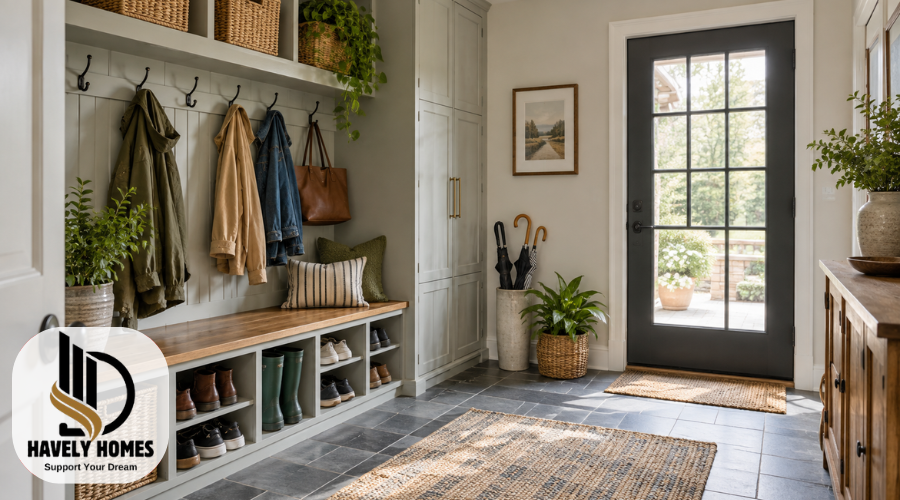
A mud room is one of those home spaces that can make everyday routines feel much easier. Positioned between the outdoors and the main living areas, it gives shoes, coats, bags, umbrellas, sports gear, and other frequently used items a practical place to land before they spread through the house. A well-planned mudroom can also help contain dirt, moisture, and general entryway clutter.
You do not need a large dedicated room to get these benefits. A back entrance, garage entry, hallway, laundry area, unused closet, or small section of an entryway can often perform the same job. The best design depends less on size and more on how your household actually enters, leaves, and stores everyday belongings.
The following mud room ideas focus on practical planning, useful storage, suitable furniture, small-space solutions, easy-care surfaces, and sensible renovation decisions.
Quick Answer:
A mud room is a practical transition area near an entrance where shoes, coats, bags, and outdoor items can be stored. Start by checking your available space, household storage needs, and everyday entry routine.
Quick-Guide Table
| Possible problem | What to check | Recommended action |
| Shoes collecting near the door | Available floor and under-bench space | Add a shoe rack, cubbies, baskets, or suitable under-bench storage |
| Coats and bags creating clutter | Number and location of hooks | Add accessible hooks without overcrowding the walking area |
| Small mudroom feels crowded | Furniture depth and open walking space | Use narrow furniture and make better use of vertical wall storage |
| Wet or muddy footwear creates mess | Entry mat, flooring, and shoe-storage area | Use an easy-clean mat or boot tray and keep wet footwear in a defined area |
| Small accessories are easily lost | Storage for gloves, hats, keys, and pet items | Use labeled baskets, drawers, trays, or small cubbies |
| Cabinets do not hold what you need | Interior measurements and actual belongings | Measure items before choosing or installing cabinets and built-ins |
| Entryway looks constantly overloaded | Seasonal and rarely used belongings | Move out-of-season items to other storage and keep daily essentials accessible |
Simple Steps for Planning a Mud Room
- Identify the main clutter problem. Decide whether shoes, coats, bags, sports equipment, pet supplies, or another category needs the most attention.
- Measure the available area. Check walls, floor space, doors, and walking paths before selecting furniture.
- Plan storage around real belongings. Measure baskets, boots, bags, and larger equipment so storage is actually usable.
- Keep daily items easy to reach. Reserve convenient hooks, shelves, or cubbies for things used regularly.
- Use vertical space carefully. Shelves and hooks can increase storage without taking up valuable floor space.
- Choose practical surfaces. Consider cleaning, moisture exposure, foot traffic, and manufacturer recommendations when selecting flooring and finishes.
- Leave complex renovations to professionals. Structural, electrical, plumbing, or other building-system changes may require qualified trades and local permits.
What Is a Mud Room and What Is It Used For?
A mudroom is traditionally a space where people can remove wet or dirty footwear and outer clothing before moving farther into the home. Merriam-Webster lists mudroom as the standard single-word dictionary form and describes it as a room intended especially for removing dirty or wet footwear and clothing.
In modern homes, the purpose is usually broader. The space may hold coats, shoes, backpacks, handbags, pet leashes, umbrellas, sports equipment, hats, gloves, and other things that are regularly carried through the door. Keeping these items near the entrance can make them easier to find while reducing clutter in kitchens, bedrooms, and living rooms.
If you are wondering about mud room or mudroom, you will see both forms in everyday writing, but “mudroom” is commonly presented as one word in dictionaries.
A traditional mudroom may be a complete room with cabinets, flooring designed for heavy use, seating, and perhaps laundry facilities. A simpler version might only be a bench, shoe rack, hooks, and baskets placed beside the entrance. Both can work well if they solve the household’s real storage problems.
Plan the Mud Room Around Your Household
Before buying cabinets or building cubbies, think about who uses the entrance and what regularly comes through it. A household with young children may need backpack hooks, shoe storage, and easy-to-reach baskets. Someone who gardens frequently may need space for outdoor footwear and work clothing. A home with pets may benefit from a designated place for leashes, towels, or walking supplies.
Start by identifying what truly needs to stay near the door. Daily shoes, current-season coats, school bags, keys, and frequently used outdoor items usually deserve the easiest-to-reach spaces. Things used only occasionally can often be moved to higher shelves, closed cabinets, closets, or other storage areas.
This planning-first approach prevents a common problem: installing a lot of storage without knowing what it needs to hold. Storage works better when cubbies, baskets, shelves, and cabinets are selected around real belongings and household habits. This Old House similarly recommends considering family routines and storage needs when planning built-ins.
Also protect the walking path. A mudroom that contains plenty of storage but feels difficult to walk through will quickly become frustrating.
Where Can You Create a Mudroom?
A mudroom is often placed near the entrance a household uses most frequently. Depending on the home’s layout, that might be a back door, garage entrance, side entrance, or hallway connecting an exterior door with the kitchen.
A laundry room can also work as a combined mudroom when its location and available space make sense. Laundry and mudroom functions can complement each other because dirty or damp clothing can stay near a cleaning area instead of being carried through the rest of the house.
Smaller homes still have options. An underused closet can sometimes become a compact drop zone after appropriate shelving, hooks, or freestanding storage are added. An alcove or section of hallway may have enough room for a shallow bench and wall-mounted hooks.
A dedicated room becomes more useful when a household has substantial outdoor gear, several family members, frequent muddy conditions, or enough available floor space to justify it. For many homes, however, a well-organized section near the door is enough. A small entryway can still function effectively when storage is chosen carefully.
Essential Mud Room Furniture and Storage
Useful mud room furniture should solve practical problems rather than simply fill empty space. Common choices include a bench, wall hooks, shelving, cubbies, baskets, shoe racks, cabinets, and freestanding storage units.
A bench is particularly useful because it provides a stable place to sit while putting on or taking off footwear. Storage beneath the seat can also hold shoes, baskets, seasonal items, or smaller accessories, depending on the design.
Open and closed storage serve different purposes. Open hooks and shelves keep frequently used coats, backpacks, and shoes easy to reach. Closed storage can make the room look calmer by hiding less attractive items or belongings that are used less often. A combination of both can provide everyday convenience without leaving everything on display.
A mud room cabinet can be useful for seasonal accessories, cleaning items, extra bags, or other belongings that do not need immediate access. Before ordering or building one, measure both the available area and the objects that will go inside.
Giving commonly used belongings a predictable home is more valuable than simply maximizing the number of cabinets.
Mud Room Ideas for a Small Space
Limited floor area does not rule out a useful mudroom. Some of the most effective mud room ideas for a small space rely on walls rather than bulky furniture.
Hooks can keep coats and bags off chairs and floors. Shelves mounted above them can provide room for baskets or less frequently used items. Narrow shoe storage, a compact bench, or wall-mounted organizers can provide useful function without taking over a hallway.
Vertical storage is especially helpful in tight spaces. This Old House recommends wall-mounted options for compact entry areas because they can add storage while preserving floor space.
Furniture that performs more than one job is another useful approach. A small bench may provide both seating and shoe storage. A shelf can hold baskets while hooks underneath manage coats and bags.
Do not try to use every available inch. Leave enough open room for people to enter, remove shoes, open nearby doors, and walk comfortably through the space. A smaller mudroom with a clear path is often more useful than a crowded one with extra storage.
Entryway Mudroom Ideas for Homes Without a Separate Room
A regular entrance can perform many mudroom functions without being turned into a heavy-duty utility room.
For a front entrance, choose storage pieces that coordinate with the surrounding living spaces. A simple combination of a bench, hooks, baskets, a narrow cabinet, or a slim console can establish a clear drop zone while still looking appropriate from nearby rooms.
Closed storage is particularly helpful when the entryway is visible from the living or dining area. Everyday essentials can remain accessible, while spare shoes, seasonal accessories, or visual clutter stay behind doors or inside baskets.
For secondary entrances, function may take greater priority. A garage or back-door entry might benefit from more shoe capacity, boot trays, sturdy hooks, and storage for outdoor equipment.
These entryway mudroom ideas show that the purpose of a mudroom can be created through organization rather than room size. Even a small section of wall can become a useful arrival and departure zone when every storage feature has a clear role.
Flooring, Walls, and Surfaces for Everyday Mess
Mudroom surfaces have to cope with frequent foot traffic and, depending on climate and lifestyle, moisture, dust, grit, or muddy shoes. Ease of cleaning should therefore be an important part of material selection.
Common practical flooring options include ceramic or porcelain tile, some types of vinyl flooring, and stone. This Old House identifies tile, porcelain, luxury vinyl, and stone among common choices for entryways and mudrooms because these areas regularly encounter dirt and moisture.
That does not mean one flooring material is automatically right for every home. Existing subfloor conditions, climate, moisture exposure, installation requirements, maintenance expectations, comfort, and budget can all affect the choice. Check the flooring manufacturer’s instructions for appropriate locations, installation methods, cleaning, and moisture limitations.
A washable entrance mat or boot tray can help contain dirt and water before it spreads across the room. Boot trays are particularly useful for wet or muddy footwear.
Walls and trim deserve similar attention. Areas behind benches and hooks can be exposed to shoes, bags, damp clothing, and repeated touching. Choose finishes that suit routine cleaning and the expected level of wear.
Storage for Shoes, Coats, Bags, and Small Items
Good mudroom organization starts by giving the items that cause the most clutter a defined place.
Shoes might go in open cubbies, baskets, racks, or storage beneath a bench. The right system depends on the number and type of shoes your household keeps near the entrance. Tall boots, for example, need different storage from everyday trainers or children’s footwear.
Frequently worn coats and bags are usually easiest to manage on accessible hooks. However, hooks can quickly become overloaded when old or out-of-season clothing is never removed. Periodically moving those items elsewhere keeps everyday storage usable.
Small items such as gloves, hats, sunglasses, pet leashes, and similar accessories can disappear easily in a busy entrance. Drawers, baskets, trays, or small cubbies help keep them together.
Larger households may find individual storage zones helpful. One basket, hook area, or cubby per person can reduce confusion when everyone is leaving at once.
Wet umbrellas also need somewhere suitable to drain without soaking nearby belongings. A water-resistant umbrella holder or container with a way to contain drips is more practical than placing a wet umbrella against coats or bags.
Family-, Pet-, and Season-Friendly Mud Room Ideas
A useful mudroom should change with the people and routines of the home.
For children, frequently used storage should be accessible enough to encourage them to put away their own bags, shoes, and outdoor items. Adults may need separate higher storage for belongings that children should not access.
Homes with pets can dedicate a washable basket or cabinet area to leashes, towels, waste bags, grooming items, and walking accessories. Muddy pet supplies are easier to manage when they have a defined place instead of mixing with clean clothing.
Sports equipment, gardening clothing, helmets, school bags, and similar gear may also need their own zones. Open cubbies and hooks can help frequently used equipment air out rather than remaining buried beneath other items.
Seasonal rotation is equally important. There is little reason for heavy winter accessories to occupy the easiest-to-reach hooks throughout warm weather. Moving off-season belongings to upper shelves, closed cabinets, or other closets keeps the mudroom focused on current needs.
Where possible, keep wet and dirty belongings apart from clean bags, clothing, and household items.
Simple Mud Room Ideas Without a Full Remodel
An effective mudroom does not have to begin with custom carpentry.
Some of the best simple mud room ideas use ready-made pieces that can be adjusted as household needs change. A storage bench, wall shelf, coat hooks, baskets, shoe rack, or freestanding coat stand may provide enough organization without altering the room itself. This Old House also notes that combinations of ready-made furniture can provide many of the practical functions of built-ins.
Start with the clutter problem that causes the most frustration. If shoes cover the floor, improve footwear storage first. If bags are dropped on chairs, add suitable hooks. If keys constantly disappear, give them a consistent tray or small storage point near the entrance.
Existing furniture can sometimes be reused if its dimensions, stability, materials, and condition suit the space. A sturdy bench or small cabinet may only need better organization around it.
Matching baskets or containers can make inexpensive storage feel more intentional, but appearance should remain secondary to function. The goal is not to fill the mudroom with organizers. It is to make normal routines simpler.
Common Mudroom Planning Mistakes to Avoid
One of the easiest mistakes is adding cabinets and cubbies before deciding what they will store. Measure important belongings first, particularly baskets, boots, sports equipment, and large bags. Storage that looks attractive but does not fit the household’s actual possessions will not solve the clutter problem.
Another problem is oversizing the furniture. Deep cabinets, large benches, or freestanding units can make narrow entries difficult to use. Check door swings, walkways, and access to adjoining rooms before committing to a layout.
Do not underestimate shoes and hanging storage. A beautiful row of hooks may look spacious when empty but quickly become crowded if several people use it every day.
Damp belongings also need attention. Packing wet footwear, coats, towels, or sports equipment tightly into unsuitable closed storage can make drying more difficult. Allow practical drying and airflow based on the items being stored.
Finally, think about cleaning. Dirt naturally collects around footwear storage and beneath benches. Leaving reasonable access to the floor and choosing storage that can be cleaned around will make long-term maintenance easier.
When a Mudroom Project Needs Professional Help
Adding freestanding furniture, baskets, mats, or other simple organization features is very different from changing the structure or building systems of a home.
If a mudroom renovation involves removing or altering walls, creating a new exterior opening, making substantial structural changes, or performing work beyond your experience, consult an appropriately qualified building professional. Permit and inspection requirements vary by location, so significant remodeling should also be checked with the relevant local building authority before work begins.
Electrical work deserves particular care, especially in mudrooms where moisture may sometimes be present. The Electrical Safety Foundation International recommends using qualified, licensed electricians for home electrical work rather than treating wiring modifications as a casual DIY task.
If a remodel requires new or relocated outlets, lighting circuits, plumbing, laundry connections, drains, or other building-system changes, use the qualified trades required in your area and follow applicable codes.
For cabinets, flooring, fixtures, and similar products, follow the manufacturer’s installation instructions rather than relying on a generic method. A straightforward storage update may be homeowner-friendly, but structural, electrical, plumbing, and other complex renovation work should not be presented as simple DIY.
Conclusion
A practical mudroom does not depend on having a large room, expensive built-ins, or a complete renovation. What matters most is creating a transition area that fits the way your household actually uses the home.
Start with the everyday problem you most want to solve. It may be shoes gathering by the door, coats covering chairs, children’s backpacks on the floor, pet supplies without a home, or seasonal equipment taking over the entryway. Then choose storage, furniture, and easy-care surfaces that directly address those needs.
Keep walkways comfortable, give frequently used items predictable places, and avoid adding storage simply because there is an empty wall. Whether you create a full mudroom or a small entryway drop zone, thoughtful planning can make arriving home, heading outside, storing belongings, and keeping the rest of the house organized much easier.
FAQs
Does A Mud Room Have To Be A Separate Room?
No. A mudroom can be part of an entryway, hallway, laundry room, garage entrance, alcove, or converted closet. The important part is providing practical storage near the entrance your household regularly uses.
What Furniture Is Most Useful In A Mud Room?
Useful choices often include a bench, coat hooks, shoe storage, shelves, baskets, cubbies, and cabinets. The best combination depends on available space and the belongings your household needs to store.
How Can I Create A Mud Room In A Small Entryway?
Use wall-mounted hooks, narrow shelving, compact shoe storage, and furniture that serves more than one purpose. Avoid oversized cabinets and preserve enough open space for doors and comfortable movement.
What Type Of Flooring Works Well In A Mudroom?
Choose flooring suitable for frequent traffic and the moisture conditions of your home. Tile and suitable vinyl products are common options, but installation requirements vary, so always follow the flooring manufacturer’s guidance.
Is A Mudroom Worth Adding To A Home?
A mudroom can be useful when an entrance regularly collects shoes, coats, bags, or outdoor equipment. Whether a dedicated room is worthwhile depends on your household routines, available space, renovation scope, and budget.
Disclaimer: This article is provided for general home-planning and informational purposes only. Mudroom layouts, materials, installation requirements, and renovation needs can vary depending on the home’s construction, available space, local building requirements, and the products being used. Always follow manufacturer instructions for flooring, cabinets, fixtures, and other installed products. Check applicable local permit and building requirements before making significant changes. Structural alterations, electrical or plumbing work, and other complex modifications should be assessed and completed by appropriately qualified professionals where required. HavelyHomes.com does not replace professional architectural, construction, electrical, plumbing, or building-code advice.
