
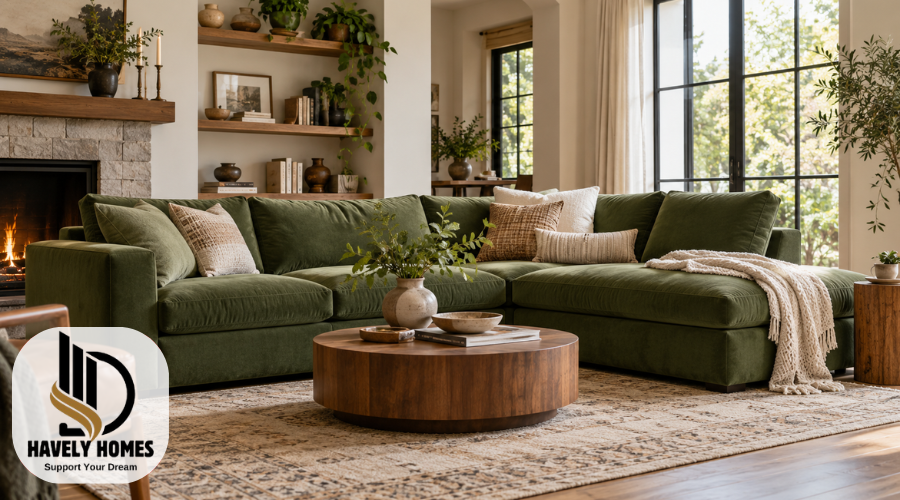
A green sectional sofa can give a living room comfortable seating while also becoming one of its strongest design features. Green is available in many tones, from soft sage and earthy olive to deep forest and emerald, so it can work with many different interior styles.
The color is only one part of the decision. A sectional also needs to fit your room, provide the type of seating you want, work with your daily routine, and actually make it through the delivery route. Upholstery, orientation, cushion depth, modular pieces, recliners, and sleeper features can all change how a sectional feels and functions.
Before buying, it helps to consider these details in the right order rather than choosing a sofa only because it looks attractive in a product photo. This guide covers the main points you should know when choosing, styling, buying, and caring for a green sectional.
Quick Answer:
A green sectional sofa can add comfortable seating and a strong color feature to a living room. Before buying, check the room size, sectional orientation, upholstery, seat dimensions, delivery access, and care requirements.
Quick-Guide Table
| Possible problem | What to check | Recommended action |
| Sectional feels too large | Room dimensions and walking space | Measure and mark the sofa footprint before ordering |
| Chaise is on the wrong side | Left- or right-facing orientation | Check the retailer’s orientation diagram carefully |
| Green looks different at home | Room lighting and nearby colors | Order a fabric sample when available and view it in your room |
| Fabric is difficult to maintain | Upholstery type and care label | Follow the manufacturer’s cleaning and care instructions |
| Sofa cannot reach the room | Doors, stairs, hallways, and turns | Measure the complete delivery route before purchasing |
| Sofa is uncomfortable | Seat depth, seat height, and cushion design | Compare dimensions with your seating preferences before buying |
Helpful Steps Before Buying
- Measure the available floor space in your living room.
- Decide whether an L-shaped, U-shaped, chaise, or modular sectional suits the layout.
- Confirm the correct left- or right-facing orientation.
- Compare sage, olive, dark green, or other shades in your actual room lighting when possible.
- Check upholstery, seat depth, cushion details, and care instructions.
- Measure doors, hallways, stairs, elevators, and tight delivery turns.
- Review assembly, shipping, return, and warranty information before placing the order.
Choosing the Right Green Shade for Your Living Room
Green is not a single look. The shade you choose can change the mood of the entire room.
A sage green sectional sofa has a soft, muted appearance. It can work especially well in relaxed rooms with cream, warm white, light wood, beige, and other quiet colors. Sage is useful when you want green to be noticeable without making the sofa feel too bold.
An olive green sectional sofa usually has a warmer, earthier appearance. It works naturally with wood, tan, brown, cream, woven materials, and other warm finishes. Olive can suit traditional, modern, rustic, or casual living spaces depending on the shape of the sofa and the rest of the furniture.
A dark green sectional sofa, including forest or deep emerald tones, makes a stronger visual statement. Dark green can create an elegant focal point, especially when the rest of the room includes lighter walls, flooring, or accessories.
Moss, muted green, and brighter emerald shades give you even more choices.
Remember that green fabric may not look exactly the same in your home as it does on a screen. Natural daylight, warm lamps, cool lighting, wall colors, and nearby furniture can affect how the shade appears. If the retailer or manufacturer offers fabric samples, check them in your actual room during both daytime and evening before making a final decision.
What Size and Shape of Sectional Will Fit Your Space?
Measure your room before deciding which sectional you want. There is no single standard size for sectional sofas because configurations can vary greatly. Current sectional-buying guidance also recommends checking the room layout and delivery route before ordering.
Start with the overall width, depth, and available floor space. Then consider the shape.
An L-shaped sectional is common because it can sit against two walls, fit into a corner, or help divide an open living space. A sectional with a chaise gives one side an extended lounging area.
A U-shaped sectional provides seating on three sides and usually needs more open floor space. It can work well in a larger family room where the seating is arranged around a coffee table or central conversation area.
A modular sectional consists of separate pieces that can be combined in different arrangements when the design allows it. This may be useful if you like changing your room layout or expect to move in the future.
Orientation is another important detail. Furniture descriptions may refer to left-facing and right-facing pieces. Crate & Barrel, for example, explains that the designation refers to the side of the arm when you are looking directly at the piece. Always check the manufacturer’s diagram because you do not want the chaise extending across a doorway or main walkway.
Also consider:
- Doors and windows
- Heating or cooling vents
- Fireplaces
- Coffee and side tables
- Main walking paths
- Other seating
- Access to outlets
Do not assume the biggest sectional that fits on paper is the best option. A slightly smaller one may make the room easier to move through and give your other furniture more breathing space.
Finally, measure the entire delivery route, including exterior doors, hallways, stairs, elevators, and tight turns. A sofa that fits beautifully in the living room is not useful if its largest section cannot reach that room.
Green Sectional Sofa Fabrics and What to Expect From Them
The upholstery affects the sofa’s appearance, texture, care needs, and everyday comfort.
A green sectional sofa velvet design usually has a soft surface that reflects light differently depending on the direction of the pile. This can make deep green shades look especially rich. Velvet care, however, varies by the exact fabric. Some modern velvets are synthetic performance materials, while others require more specific cleaning methods.
Chenille is another popular choice. Its textured surface can give a sectional a soft, cozy appearance. Corduroy uses visible ridges that create a casual, tactile look and can work especially well with oversized or lounge-style designs.
You may also find woven polyester fabrics, fabric blends, microfiber, and other upholstery options. Rather than assuming one fabric is always more durable or easier to clean, read the specifications for the particular sofa you are considering.
Check whether the cushions or covers are removable. Removable components can be convenient, but they do not automatically mean the fabric is machine washable.
The safest approach is to follow the care instructions supplied for your exact sofa. Even two sofas that both use velvet can have different cleaning requirements. Article, for example, gives specific care directions for its own velvet upholstery, showing why universal cleaning advice should not be applied to every fabric.
Standard, Modular, Cloud-Style, Sleeper, or Reclining?
The best configuration depends on what you expect the sofa to do every day.
A standard sectional has a defined layout. It may be ideal when you already know exactly where the sofa will stay.
A modular sectional provides separate components that can be arranged in different combinations when the product is designed for reconfiguration. Current retailer guidance describes modular sectionals as a way to customize layout and orientation with individual components.
People searching for a green sectional sofa cloud are often looking for a deep, relaxed, soft-looking sofa with generous cushions and a lounge-focused appearance. However, “cloud” should not be treated as a universal technical specification. Check the actual seat depth, cushion filling, dimensions, and construction rather than relying on the style name.
A sleeper sectional may be useful in a multipurpose room because certain models can convert part of the seating area into a sleeping surface.
A green sectional sofa recliner can provide additional lounging positions, but it needs extra attention during planning. Check the manufacturer’s required reclining clearance, the location and type of controls, power requirements if applicable, and the fully extended dimensions. Never assume every reclining sectional operates in the same way.
Storage compartments and matching ottomans are also available on some models. Treat these features as useful extras only if they suit your home rather than making them essential requirements.
How to Style a Green Sectional Without Overwhelming the Room
A green sectional is already a substantial piece of furniture, so it does not need many competing features around it.
One simple approach is to let the sofa act as the room’s main color statement. Warm white, cream, beige, taupe, and some soft gray finishes can give green upholstery a calmer background.
Natural wood can also work nicely alongside green. A wooden coffee table or side table adds warmth without requiring another strong color. Woven baskets, textured rugs, linen-look curtains, and natural-looking decorative materials can soften the overall space.
Cushions and throws are an easy way to connect the sofa with other parts of the room. Instead of matching every accessory to the exact same green, use a small selection of complementary colors and textures.
Artwork can help as well. A piece containing a little green can visually connect the wall and sofa without making the whole room feel overly coordinated.
Most importantly, style for the exact shade you own. A cool sage sectional may need different surroundings from a warm olive or dramatic emerald one.
Color Pairings for Sage, Olive, and Dark Green Sectionals
Different greens respond to different color combinations.
For sage green, soft neutrals are an easy starting point. Warm white, oatmeal, beige, light taupe, and natural wood can maintain the gentle character of sage. Muted blue or dusty blush may also work as small accents depending on the rest of the room.
For olive green, consider warmer companions such as cream, tan, camel, rust, brown, and medium or dark wood tones. These colors can support olive’s earthy appearance without competing with it.
With dark green, lighter surroundings can create useful contrast. Cream walls, pale rugs, light-colored cushions, or natural wood furniture may stop a deep green sectional from making the whole space feel visually heavy.
Brass-toned decorative details can look attractive with deeper greens, while black accents can create a sharper contemporary appearance.
You do not need to repeat green everywhere. A few smaller connections, such as a cushion pattern, artwork detail, plant pot, or decorative object, are usually enough to make the sectional feel integrated into the room.
Finding a Green Sectional Sofa Under $1000
It is possible to find shoppers specifically searching for a green sectional sofa under $1000, and current retailer buying guides include budget-oriented sectional categories. However, price alone should not decide which sofa you buy.
Start by comparing exactly what is included.
A lower-priced sectional may have fewer pieces, smaller dimensions, a simpler frame, different upholstery, or require more assembly. Another model may include an ottoman, reversible chaise, storage, or other features.
Check:
- Overall dimensions
- Number of seats or sections
- Upholstery material
- Cushion construction
- Frame information when provided
- Assembly requirements
- Included pillows or ottomans
- Delivery charges
- Return conditions
- Warranty terms
Do not compare two sofas only because their product photos look similar. Construction and dimensions can be quite different.
Prices and promotions also change frequently, so an article or social media post showing an old sale should not be treated as the current price. Verify the total cost directly with the retailer before ordering, including delivery or other charges that may apply.
Shopping for a Green Sectional Sofa Online
Online shopping gives you access to many more combinations of color, size, shape, and upholstery, but it also makes careful specification checking more important.
If you are searching for a green sectional sofa on Wayfair or another large furniture retailer, begin with practical filters rather than scrolling through hundreds of photos. Current Wayfair guidance suggests considering space, sectional shape, orientation, upholstery, additional features, and budget.
Filter by the maximum width and depth your room can handle. Then narrow the selection by orientation, upholstery, shape, reclining or sleeper features, and price.
Read the measurements rather than trusting labels such as “large,” “oversized,” “compact,” or “cloud.” Those terms do not tell you whether the sectional will fit your particular room.
Customer reviews and photos can offer useful real-world context about appearance and experience, but use the manufacturer’s or retailer’s specifications for measurements, materials, assembly, and care requirements.
Before checking out, confirm whether the pieces require assembly and how delivery works. Also read the current return and warranty policies rather than assuming they are the same for every product or retailer.
What to Check Before You Buy
A final checklist can prevent many expensive mistakes.
First, mark the sofa’s approximate footprint on your floor with painter’s tape or another removable method. Wayfair’s measuring guidance recommends using the intended footprint to help visualize how much room a sectional will occupy.
Then confirm:
- Overall width, depth, and height
- Chaise length and orientation
- Seat height and depth
- Number of sectional pieces
- Upholstery composition
- Cushion materials when listed
- Frame and suspension information when available
- Manufacturer care instructions
- Included pillows or ottomans
- Storage, sleeper, or reclining mechanisms
- Assembly requirements
Seat depth deserves attention because people have different comfort preferences. Someone who likes sitting upright may prefer a different seat from someone who enjoys curling up or lying down.
Product specifications really can vary substantially. For example, current sectional listings provide separate measurements for total size, seat depth, seat height, materials, cushion filling, and package dimensions.
Finish by checking your delivery route one more time.
Common Green Sectional Sofa Buying Mistakes
One common mistake is choosing the color entirely from an online photograph. Screen settings and room lighting can influence what you see. Use fabric samples when they are available.
Another is measuring the living room but forgetting about the route to it. Doors, stairs, hallways, elevators, and corners matter too.
Orientation can also cause problems. A left- or right-facing chaise placed on the wrong side may interfere with the natural traffic flow through the room.
Other mistakes include buying a sectional that leaves too little open floor space, choosing upholstery only for its appearance, and ignoring cleaning requirements.
Be careful with descriptive words as well. “Modular,” “reversible,” “performance,” “cloud-style,” and “reclining” may describe different features from one manufacturer to another. Read the actual specifications.
Finally, do not let a large discount distract you from shipping charges, return terms, assembly requirements, or missing components. The better purchase is the sofa that works properly in your home, not simply the one showing the biggest sale percentage.
Caring for a Green Sectional and Keeping It Looking Good
Good care starts with the manufacturer’s instructions.
Check the upholstery label or official care information before applying any cleaner. Do not assume that a cleaning method suitable for one velvet, chenille, or woven fabric is safe for another.
When spills occur, follow the recommended method for that specific material. Avoid experimenting with strong household chemicals or homemade cleaning mixtures unless the manufacturer confirms they are suitable.
Regularly removing crumbs, dust, pet hair, and other loose debris can also help keep the seating area tidy, provided you use a cleaning method approved for the fabric.
If the sectional has removable cushions, rotate, reposition, or fluff them when recommended. Some manufacturers specifically advise regular cushion fluffing to help maintain their shape.
Sunlight is another consideration. Some upholstery manufacturers warn that prolonged direct sunlight can fade particular fabrics. Article gives this warning for several of its velvet products, for example. Check the advice for your exact sofa and position it accordingly when practical.
Conclusion
A green sectional sofa can be comfortable, practical, and visually distinctive, but the right choice depends on much more than color. The sofa needs to fit your room, suit your everyday routine, provide comfortable seating, and work with your preferred interior style.
Start with size and orientation. Once you know what will physically work, compare shades such as sage, olive, forest, or emerald and decide whether velvet, chenille, corduroy, or another upholstery fits your needs.
Then consider whether you really need a modular layout, cloud-style seating, sleeper function, storage, or recliner. These features can be valuable, but only when they solve a real need in your home.
Before ordering, measure the room and delivery route carefully, review the full product specifications, understand the upholstery care requirements, and confirm current delivery, return, and warranty details. Taking these practical steps makes it much easier to choose a green sectional that looks good in your living room and works comfortably in everyday life.
FAQs
Is A Dark Green Sectional Sofa Suitable For A Small Living Room?
Yes, but size and layout matter more than color alone. A compact dark green sectional can work well in a smaller room when there is enough walking space and lighter surrounding finishes provide visual balance.
What Colors Go Well With A Sage Green Sectional Sofa?
Sage green works naturally with warm white, cream, beige, light wood, taupe, and other muted tones. Small accents of dusty blue, soft blush, or earthy colors can also complement it.
Is Velvet A Practical Fabric For A Green Sectional?
It can be, but velvet fabrics vary considerably. Check the specific upholstery composition, cleaning code, manufacturer care instructions, and household needs rather than assuming every velvet sectional has the same durability or maintenance requirements.
What Does A Cloud-style Green Sectional Mean?
Cloud-style generally describes a deep, soft-looking, lounge-focused sofa rather than a standardized construction type. Compare actual seat depth, cushion filling, dimensions, and specifications because designs can vary significantly between manufacturers.
Is A Modular Green Sectional Better Than A Fixed Sectional?
Neither is automatically better. Modular designs can offer more layout flexibility, while fixed sectionals provide a defined arrangement. The better option depends on your room, seating needs, budget, and how often you expect to rearrange it.
Disclaimer: This article is provided for general informational purposes only and is intended to help readers understand common considerations when choosing, styling, buying, and caring for a green sectional sofa. Furniture dimensions, materials, construction, upholstery care, assembly requirements, warranties, prices, and product features can vary by manufacturer and retailer. Always check the current product specifications, care label, assembly instructions, delivery requirements, warranty terms, and official manufacturer or retailer information before purchasing or cleaning a sectional. HavelyHomes.com does not manufacture, sell, endorse, or provide official support for any furniture brand or retailer mentioned in the article, and no brand affiliation should be assumed.
