
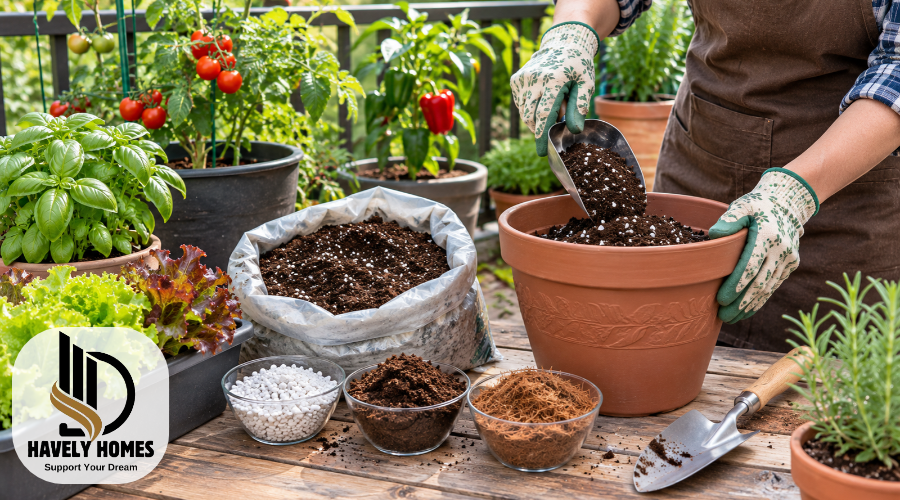
Container gardening is a convenient way to grow vegetables, herbs, flowers, and ornamental plants at home. Whether you have a large patio, a small balcony, or just a few pots near a sunny window, the right growing mixture can make a big difference to your plants’ health. One of the most important decisions is choosing suitable potting soil container gardening.
Unlike plants growing directly in the ground, container plants depend on a limited amount of growing material for water, air, and nutrients. Ordinary garden soil may become too dense in a pot, making it difficult for roots to develop properly. A suitable potting mix provides a better balance of moisture retention, drainage, and aeration.
You can purchase a ready-made potting mix from a garden store or prepare your own using ingredients such as compost, coconut coir, peat moss, perlite, and vermiculite. Both options can work well when the ingredients are appropriate for your plants.
Understanding these materials, choosing the right mixture, and maintaining it properly will help you create healthier containers and enjoy a more successful home garden.
Quick Answer:
For successful container gardening, use a lightweight potting mix that retains moisture while draining excess water. First, check the ingredients, plant requirements, and container drainage holes.
Quick-Guide Table
| Possible problem | What to check | Recommended action |
| Potting soil stays too wet | Drainage holes, watering frequency, and soil texture | Clear blocked holes and adjust watering. |
| Potting mix dries too quickly | Container size, pot material, and moisture retention | Consider a suitable mix with better moisture-holding ingredients. |
| Growing medium becomes compacted | Soil texture and breakdown of organic ingredients | Refresh or replace the mixture if drainage and aeration are poor. |
| Plants show slow growth | Light, root space, watering, and nutrient availability | Identify the cause before adjusting fertilizer or soil. |
| Water drains poorly | Container openings and growing medium structure | Improve drainage and use a suitable container potting mix. |
| Plants develop recurring root diseases | Previous plant health and condition of reused soil | Avoid reusing contaminated growing media. |
Helpful Steps: How to Prepare Potting Soil for Container Gardening
- Choose suitable ingredients: Select a quality potting mix containing appropriate moisture-retaining and aeration materials.
- Check your plants: Consider whether vegetables, herbs, flowers, or succulents need a specialized growing mixture.
- Prepare the mixture: Combine homemade ingredients according to a reliable recipe, measuring them consistently by volume.
- Moisten dry materials: Gradually add water to very dry peat-based mixtures until moisture is evenly distributed.
- Prepare your containers: Check that drainage holes are clear and allow excess water to escape.
- Fill the pots: Add the growing medium loosely without pressing it tightly.
- Monitor plant health: Check moisture regularly and provide fertilizer when necessary according to plant requirements.
What Makes Potting Soil Suitable for Container Gardening?
Good container growing media should provide three essential things: water, air, and nutrients. Plant roots need moisture to absorb nutrients, but they also need oxygen to remain healthy. If the growing mixture stays saturated for too long, roots may struggle because the spaces that normally hold air become filled with water.
A suitable potting mix should be lightweight, reasonably fluffy, and capable of draining excess water while retaining enough moisture between watering sessions. It should also provide enough support for the plant as it grows.
Another important quality is its ability to maintain its structure. Some organic materials gradually break down, making the mixture denser and reducing the air spaces around roots. This can affect drainage and plant growth over time.
The terms potting soil, potting mix, and growing media are often used interchangeably on gardening products. However, many modern container mixes are actually soilless. They contain combinations of organic and mineral materials rather than ordinary field soil.
When choosing a mixture, focus on its actual ingredients and intended use instead of relying only on the name printed on the bag.
Potting Mix vs. Garden Soil and Topsoil: Which Should You Use?
Garden soil is useful for growing plants in the ground, but it is generally not the best choice for filling containers by itself. Soil that performs well in a garden bed may behave differently when placed inside a pot.
In the ground, water can move through a much larger area, and roots can spread beyond the immediate planting location. A container limits both processes. Ordinary garden soil can become compacted, reducing the movement of air and water.
Here is how the main options differ:
- Potting mix: Usually lightweight and made from ingredients such as peat moss, coir, perlite, bark, and compost. It is designed to provide suitable growing conditions in containers.
- Garden soil: Natural soil collected from outdoor garden beds. Its texture and drainage characteristics vary depending on its sand, silt, and clay content.
- Topsoil: The upper layer of natural soil or a commercially prepared product sold under that name. Its composition and suitability for containers can vary considerably.
Using untreated garden soil may also introduce weed seeds, insects, or disease-causing organisms into containers. Heavy mixtures can retain too much water and restrict root growth.
Some gardeners use specially prepared soil-based mixtures for larger containers. These require suitable amendments to improve aeration and drainage. However, they are heavier and may introduce unwanted organisms if the ingredients are not properly prepared.
For most beginners, a quality commercial soilless potting mix is the simpler and more dependable starting point.
Essential Ingredients in a Quality Container Garden Soil Mix
Understanding the ingredients in potting soil makes it easier to choose a suitable product or prepare a homemade mixture. Different materials perform different jobs, and manufacturers combine them to achieve the desired growing conditions.
Sphagnum peat moss
Peat moss is commonly used because it holds moisture and provides a lightweight base for growing media. It can become difficult to wet evenly after drying out, so peat-based mixtures sometimes need gradual rewetting before planting.
Coconut coir
Coir comes from coconut husks and is commonly used as an alternative to peat. It helps retain moisture while providing structure to the mixture. Some compressed coir products need to be soaked in water before use.
Perlite
Perlite consists of lightweight, expanded mineral particles. Its main purpose in potting mixes is to help maintain air spaces around roots and improve the physical structure of the growing medium.
Vermiculite
Vermiculite is another lightweight mineral material. It helps retain moisture and nutrients, making it useful in mixtures that need additional water-holding capacity.
Compost
Properly finished compost contributes organic matter and nutrients. It can also support beneficial microbial activity. However, its nutrient content varies, and its nutrients may not become available quickly enough to support every plant throughout an entire growing season.
Composted pine bark
Bark particles can contribute structure and help maintain air spaces in growing media. Their size and degree of decomposition influence how they affect the mixture.
Not every potting mix needs all these ingredients. A simple combination of suitable materials can work very well. What matters most is whether the finished mixture provides the moisture retention, aeration, and nutrition required by the plants.
How to Choose the Best Potting Soil for Container Gardening
The best potting soil for container gardening depends on what you intend to grow. A mixture suitable for leafy vegetables may not provide the same conditions needed by succulents or acid-loving plants.
Before purchasing a product, check its label and look for the following qualities:
- It should be specifically intended for container gardening.
- The mixture should feel reasonably light rather than extremely heavy.
- Its ingredients should support both drainage and moisture retention.
- Any included fertilizer should be clearly identified.
- The product should not appear excessively compacted or heavily clumped.
You should also consider the needs of individual plants.
Vegetables: Tomatoes, peppers, lettuce, and other vegetables generally benefit from a lightweight mixture that holds moisture while allowing excess water to drain. A suitable multipurpose potting mix is a practical starting point.
Herbs: Basil and parsley generally grow well in ordinary container potting mixes. Rosemary and some other Mediterranean herbs prefer more freely draining conditions, so a mixture with a suitable proportion of coarse material may be helpful.
Flowering plants: Many common flowering annuals grow successfully in general-purpose potting mixes. Check the plant label because some flowers have more specific growing requirements.
Succulents and cacti: These plants generally need a particularly free-draining mixture. A specialized cactus and succulent mix is often more appropriate than a moisture-retaining general-purpose product.
Acid-loving plants: Blueberries and certain other plants need more acidic growing conditions. Choose a suitable specialized growing medium rather than assuming a standard potting mix will meet their requirements.
For beginners, a good-quality multipurpose container mix is usually sufficient for several common plants. You can explore specialized mixtures as your gardening experience grows.
DIY Container Garden Soil Mix Recipe and Potting Mix Ratios
Making your own container garden soil mix can be useful when you have several pots to fill or want greater control over the ingredients. It also allows you to adjust the mixture according to the moisture and drainage requirements of your plants.
However, there is no single potting soil mix ratio that works perfectly for every container garden. Different plants, ingredients, and growing conditions require different combinations.
A Penn State Extension potting mix recipe
Penn State Extension provides an example of a homemade soilless potting mix using three ingredients:
- 1 part finished compost
- 1 part vermiculite
- 1 part peat moss
Measure the ingredients by volume rather than weight. For example, you can use the same container to measure one portion of each ingredient.
The ingredients should be screened through a quarter-inch screen and mixed evenly.
The published recipe also includes specific nutrient amendments for each gallon of base mixture:
- 0.6 ounces (approximately 17 grams) of blood meal.
- 0.4 ounces (approximately 11 grams) of clay phosphate.
- 0.4 ounces (approximately 11 grams) of greensand.
These quantities belong to that particular extension recipe. They are not universal fertilizer recommendations. Do not automatically add them to a commercial mixture that already contains fertilizer or to another homemade recipe without considering its existing nutrient content.
A simpler container garden soil mix recipe for vegetables
If you want a less complicated option, University of Maryland Extension identifies several suitable growing media choices for container vegetables:
- 100% quality soilless growing mix.
- 100% properly prepared compost.
- 50% soilless growing mix and 50% compost.
The 50:50 option is particularly useful for gardeners who want to combine the structure of a commercial potting mix with the organic matter and nutrients provided by compost.
Always use mature, properly finished compost from a reliable source. Unfinished compost can contain materials that interfere with healthy plant growth. Its nutrient content can also vary, so additional feeding may still be necessary.
Choosing a suitable potting mix ratio
When adjusting a homemade mixture, consider these factors:
- Use materials that improve air movement if the mixture is too dense.
- Include suitable moisture-retaining ingredients if the growing medium dries too quickly.
- Avoid adding excessive compost or fertilizer without considering the plant’s requirements.
- Use a plant-specific mixture when growing crops with unusual drainage or pH needs.
Peat-free gardeners can use coconut coir in place of peat moss, but remember that different ingredients do not behave identically. Check the properties of the finished mixture rather than assuming that a direct substitution will always produce the same result.
How to Prepare and Fill Containers with Potting Soil
Preparing potting soil correctly helps create an even growing environment before you introduce plants.
First, gather the ingredients and choose a suitable mixing area. A large garden tub, wheelbarrow, or clean container can make the process easier.
If you are preparing a homemade recipe, measure each ingredient carefully and mix it until the materials are evenly distributed.
Very dry peat-based potting mixes may initially repel water. Instead of immediately filling your pots, gradually add water while mixing the material by hand. Continue until the growing medium feels evenly moist, similar to a wrung-out sponge.
When filling containers:
- Check that the drainage holes are clear.
- Add the prepared potting mix gradually.
- Distribute it evenly without pressing it tightly.
- Leave some space between the surface of the mix and the container rim.
- Position the plant at the appropriate depth and cover its roots.
- Water thoroughly after planting.
Avoid packing the mixture firmly because this can reduce the air spaces that roots need. The aim is to provide enough support for the plant without making the growing medium unnecessarily dense.
Choosing the Right Container Size, Soil Depth, and Drainage
Even a high-quality potting mix cannot compensate for an unsuitable container. Plants need enough space for their roots to develop, and the amount of growing medium should match the plant’s expected size.
Some useful container-size examples from University of Maryland Extension include:
| Plant | Suggested minimum container volume |
| Leaf lettuce | ½ gallon |
| Small-statured herbs | 2–5 gallons |
| Peppers | 5 gallons |
| Standard tomatoes | 5 gallons |
| Large-statured herbs | 5 gallons or larger |
These are general minimum examples, not guarantees for every variety. Larger containers may support bigger plants and provide more room for root development.
University of Maryland Extension
Container depth also matters. Leafy greens generally have less demanding root-space requirements than larger fruiting vegetables or deep-rooted crops. Consider the plant’s mature size and follow variety-specific recommendations when selecting a pot.
Drainage is equally important. Most ordinary vegetable, herb, and flowering plants need containers with holes that allow excess water to escape.
One common mistake is placing gravel, rocks, or broken pottery underneath the potting mix. This does not improve drainage. Water can collect in the growing medium above the gravel, leaving the root zone too wet.
If a drainage opening is large enough for growing media to escape, a small piece of suitable mesh or a paper filter can help retain the mixture without blocking water movement.
Container material also influences watering needs. Terracotta and fabric pots tend to lose moisture faster than plastic or glazed ceramic containers. Dark-colored and metal containers can absorb more heat, which may increase stress on roots in sunny locations.
Finally, make sure pots are positioned so water can escape freely rather than remaining trapped underneath them.
Buying Bagged Potting Soil: What to Look for at Costco and Home Depot
Buying ready-made potting soil is often the easiest option for home gardeners. Retailers such as Costco and Home Depot may offer different bag sizes, formulations, and gardening products depending on the location and season.
Rather than choosing a product based only on its price or packaging, examine its label.
Start by checking whether the product is specifically designed for containers. Garden soil, topsoil, and raised-bed mixtures are not automatically interchangeable with potting mix.
Next, review the ingredients. Look for suitable materials such as peat moss, coconut coir, perlite, vermiculite, compost, or composted bark. Consider whether the product is intended for vegetables, flowers, houseplants, or another particular use.
Also check whether fertilizer is included. Some products contain nutrients for initial plant growth, while others require additional feeding after planting.
When comparing potting soil container gardening options at Costco or Home Depot, consider:
- Bag volume: Check the actual quantity rather than judging by the bag’s physical appearance.
- Price per volume: Compare the cost per gallon or cubic foot instead of looking only at the total bag price.
- Ingredients: Make sure the formulation suits your plants.
- Fertilizer: Check whether nutrients are already included and how long the manufacturer says they are intended to last.
- Product condition: Avoid bags that are damaged or contain heavily compacted material.
Availability, packaging, and prices can change between retailers and locations. Checking the product information before purchasing is more useful than relying on a particular brand or an old online recommendation.
Watering and Fertilizing Container Plants
Container plants usually require closer attention to watering than plants growing in garden beds. Their roots have access to a smaller amount of moisture, and the growing medium can dry out relatively quickly.
However, watering every pot on a fixed schedule is not always appropriate. The right frequency depends on the plant, container size, growing medium, weather, and location.
A simple way to check moisture is to feel the surface of the potting mix. For many plants, if the upper inch feels dry, it may be time to water. Some plants prefer drier conditions, so always consider their individual requirements.
When watering most container plants, apply enough water to moisten the growing medium thoroughly. Allow excess water to escape through the drainage holes. If a saucer collects water, empty it rather than allowing the roots to remain in standing water.
Fertilizing is another important part of container gardening. Some commercial potting mixes contain fertilizer, while others provide little or no initial nutrition. Nutrients can also be lost through repeated watering.
Slow-release fertilizers gradually supply nutrients, while liquid fertilizers provide another option for feeding container plants.
Before applying fertilizer, read the potting mix and fertilizer labels. Avoid adding extra nutrients simply because a plant appears to be growing slowly. Excessive fertilizer can damage roots and create additional growing problems.
Common Potting Soil Problems and How to Fix Them
Even when you start with a good potting mix, problems can develop during the growing season. Understanding the possible causes helps you make appropriate adjustments before replacing the entire mixture.
Waterlogged potting soil
Excessively wet growing media may result from frequent watering, blocked drainage holes, or a container without suitable drainage. Check the openings and remove standing water from the saucer. Allow the medium to dry to an appropriate level before watering again.
Dry potting mix
Some peat-based mixtures become difficult to wet after drying out. Gradually work water through the material in a separate tub until the moisture is distributed evenly.
Compacted growing media
Organic ingredients gradually break down, causing the mixture to settle and lose some of its original structure. If the medium has become dense and drains poorly, refreshing or replacing it may be necessary.
Slow plant growth
Poor growth does not always mean the potting soil is responsible. Check the plant’s light exposure, watering routine, root space, and nutrient availability before changing the mixture.
Poor drainage
Inspect the container openings and make sure water is not being trapped underneath the pot. Also consider whether the growing medium has become too dense.
Nutrient deficiencies
Container plants may develop nutrient problems when their growing medium contains insufficient available nutrients. Check the product label and plant requirements before choosing an appropriate fertilizer.
Recurring plant diseases
If a plant has suffered from root disease, do not automatically reuse its growing medium for another plant. Contaminated media may carry disease-causing organisms.
If problems continue despite correcting basic watering, drainage, and growing conditions, contact a local university extension service or qualified plant diagnostic specialist. They can help identify problems that are difficult to diagnose from appearance alone.
Can You Reuse Old Potting Soil for Container Gardening?
Reusing potting soil can reduce gardening costs and prevent usable growing material from being discarded unnecessarily. However, it is important to check its condition before using it again.
Growing media from healthy plants may be suitable for reuse if it has not experienced serious disease or pest problems. Start by removing old roots, dead leaves, plant stems, and other unwanted material.
University of Maryland Extension recommends refreshing previously used vegetable-container growing media by mixing it in equal amounts with fresh growing media and/or compost. This is a useful 50:50 approach for suitable, healthy material.
For example, you could combine one bucket of previously used potting mix with one bucket of fresh potting mix or suitable compost.
There are several reasons why refreshing is important:
- Organic ingredients gradually decompose.
- The original growing volume can decrease.
- Air spaces and drainage characteristics may change.
- Nutrients become depleted through plant growth and repeated watering.
Do not reuse media from containers where root diseases were a problem. It is also better to replace growing media when it has become heavily compacted, drains poorly, or has persistent contamination problems.
Reusing potting soil does not mean using the same mixture indefinitely. Regularly checking its condition helps you decide when refreshing is sufficient and when replacement is more appropriate.
Safe Handling and Storage of Potting Mix
Potting soil is a common gardening material, but it should be handled carefully. Bagged potting mix, compost, and other gardening materials can sometimes contain Legionella bacteria. Breathing in contaminated dust or water droplets can cause Legionnaires’ disease, a serious lung infection.
The Government of Western Australia’s health department recommends several precautions when handling these materials:
- Wear gardening gloves.
- Use a well-fitting face mask to reduce the risk of inhaling dust.
- Open bags carefully with scissors, keeping your face away from the opening.
- Lightly dampen dry potting mix before handling it to reduce airborne dust.
- Avoid shaking or pouring dry material in a way that creates dust.
- Wash your hands thoroughly after gardening.
Older adults, smokers, and people with weakened immune systems should take particular care because they have a higher risk of serious infection.
After use, store unused potting mix in a suitable closed bag or container. Keep it in a cool, dry place away from direct sunlight, following any additional storage instructions on the packaging.
If you develop symptoms such as fever, coughing, or shortness of breath after handling potting mix, seek medical advice and mention the possible gardening exposure.
Conclusion
Choosing suitable potting soil for container gardening is an important step toward growing healthy vegetables, herbs, and flowers at home. The right mixture provides roots with enough air, moisture, and nutrients while allowing excess water to drain.
A quality commercial potting mix is a convenient choice for beginners, while a homemade mixture offers greater control over ingredients and proportions. Whichever option you choose, consider your plants’ individual requirements, use appropriately sized containers, and maintain proper drainage.
Remember that potting soil needs attention throughout the growing season. Check moisture regularly, provide nutrients when necessary, and refresh older growing media when its structure begins to deteriorate.
With the right growing mixture and consistent care, even a small balcony or patio can become a productive and enjoyable container garden.
Frequently Asked Questions
Can I Use The Same Potting Mix For Indoor And Outdoor Container Plants?
Yes, many general-purpose potting mixes work for both indoor and outdoor containers. However, consider each plant’s moisture, drainage, and nutrient requirements before choosing a mixture.
What Does Soilless Potting Mix Mean?
Soilless potting mix is a growing medium made without ordinary garden soil. It commonly contains materials such as peat moss, coconut coir, perlite, and vermiculite.
Can I Mix Two Different Brands Of Potting Soil?
Generally, yes. However, check both ingredient lists and fertilizer contents first. Combining different formulations may change moisture retention, drainage, and nutrient levels.
Is Regular Potting Mix Suitable For Starting Seeds?
Not always. Seeds generally benefit from a fine-textured, lightweight seed-starting medium. Check the product label to make sure the mixture is suitable for germination.
How Can I Calculate How Much Potting Soil My Containers Need?
Check the container’s capacity or measure its internal dimensions to estimate its volume. Compare that amount with the volume listed on potting soil bags before purchasing.
Disclaimer: This article is intended for general gardening and informational purposes only. Plant requirements, potting soil ingredients, and growing conditions can vary. Always check product labels and follow the manufacturer’s instructions before preparing or using a growing mixture. For persistent plant diseases or unusual growing problems, consult a qualified gardening professional or local university extension service. Havely Homes is an independent informational website created to provide helpful content to visitors. It is not affiliated with any gardening product manufacturer and does not engage in paid promotions or advertising.
