
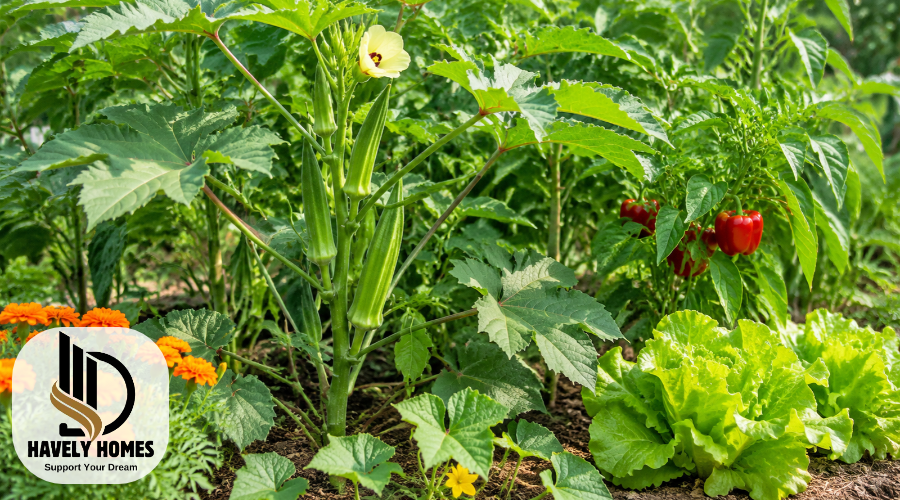
Growing okra at home can be more rewarding when you plan the surrounding garden carefully. Instead of giving every vegetable its own separate growing space, you can combine suitable vegetables, herbs, and flowering plants to make better use of your available garden area. This approach is known as companion planting or intercropping.
Companion gardening okra involves choosing plants that can share sunlight, soil, water, and growing space without creating too much competition. Some combinations have been studied by agricultural researchers, while others are practical suggestions based on plant size, growing seasons, and general garden needs.
Peanuts, southern peas, watermelon, and peppers are particularly interesting because researchers at Texas A&M University studied them in mixed vegetable-growing systems with okra. Other plants, such as basil, dill, and radishes, may also fit into a carefully planned home garden.
However, not every traditional companion-planting claim is supported by reliable research. Choosing suitable plants, allowing enough room for growth, and understanding common soil problems are more important than following a long list of supposed plant partnerships.
Quick Answer:
Companion gardening for okra means growing suitable vegetables, herbs, or flowers nearby while managing space and sunlight. First check each plant’s mature size, growing season, water needs, and potential soil-pest risks.
Quick-Guide Table
| Possible problem | What to check | Recommended action |
| Okra is not getting enough sunlight | Check whether taller companion plants are creating shade. | Rearrange plants to give okra sufficient direct sunlight. |
| Plants are overcrowded | Check mature plant sizes and available root space. | Thin crowded plants and provide appropriate spacing. |
| Watermelon vines are spreading too much | Check whether vines are covering okra or blocking access. | Guide vines toward open ground and choose compact varieties when space is limited. |
| Okra has yellow leaves or weak growth | Check soil moisture, drainage, roots, and possible nutrient problems. | Correct watering issues and consider soil testing if symptoms continue. |
| Plants show possible root-knot damage | Inspect roots for unusual swellings or galls. | Seek local agricultural advice and consider appropriate nematode testing. |
Helpful Steps: How to Plan an Okra Companion Garden
- Choose a sunny location: Select a garden area that receives sufficient direct sunlight for healthy okra growth.
- Check plant sizes: Review the mature height and spreading habits of every vegetable before planting.
- Select suitable companions: Consider peanuts, southern peas, peppers, watermelon, and smaller herbs according to your available space.
- Plan planting dates: Check the growing seasons and maturity times of companion crops to reduce competition.
- Allow enough room: Follow recommended spacing guidelines for each variety and maintain good airflow.
- Monitor plant growth: Check regularly for shading, overcrowding, unusual leaf changes, and pest problems.
- Adjust when necessary: Guide spreading vines, remove competing weeds, and separate plants when they need more room.
What Is Companion Gardening for Okra, and Why Does It Matter?
Companion gardening means growing two or more plant types in the same garden area. Instead of planting only okra in a bed, you might combine it with a low-growing legume, a spreading vegetable, or a small herb. The goal is to use available resources more efficiently while giving each plant enough room to develop.
This approach is closely related to intercropping, an agricultural method in which different crops grow together. When plants have different growth habits, they may use sunlight and growing space in complementary ways.
For example, okra grows upright and can become quite tall, while peanuts grow closer to the ground. Watermelon spreads across the soil, and peppers have a different structure from both crops. With thoughtful planning, these differences can help gardeners make better use of a limited area.
There are several possible benefits:
- Better use of garden space: Combining plants with different growth habits can make a vegetable bed more productive.
- Ground coverage: Spreading crops such as watermelon can cover exposed soil and help limit weed growth.
- Support for beneficial insects: Flowering plants can provide food and habitat for insects that help manage certain garden pests.
- More varied harvests: A mixed garden allows you to grow several vegetables in the same general area.
- Improved crop diversity: Growing different plant families can make a garden more varied and interesting to maintain.
Legumes such as peanuts and cowpeas can also fix nitrogen through their relationship with beneficial soil bacteria. However, this does not mean that all the nitrogen they fix immediately becomes available to nearby okra. Much of the benefit depends on plant growth, root activity, and the breakdown of plant material.
It is equally important to understand that companion planting is not a guaranteed pest-control method. A good combination can help with space management and garden diversity, but each crop still needs suitable growing conditions and regular attention.
Best Companion Plants for Okra in a Home Vegetable Garden
The best companion plants for okra are generally those that fit its warm-season growing conditions without creating excessive competition. Some combinations have been tested in agricultural research, while others are reasonable choices for home gardeners based on their growth habits.
Peanuts
Peanuts are one of the most interesting partners for okra. They are low-growing legumes that can occupy some of the space beneath taller vegetable plants.
A Texas A&M intercropping study included peanuts with okra and watermelon. Some combinations produced better overall yields per unit of land than growing the crops separately.
Peanuts also form relationships with nitrogen-fixing bacteria in their roots. This makes them useful when planning a diverse vegetable garden, although gardeners should not assume that growing peanuts automatically eliminates okra’s fertilizer requirements.
Southern peas and cowpeas
Southern peas, commonly called cowpeas, are another suitable option to consider. They grow well in warm conditions and belong to the legume family.
Cowpeas were included in research involving okra, peanuts, watermelon, and peppers. Their growth habit can complement taller crops, particularly when the planting arrangement provides enough sunlight and root space.
Choose a suitable bush or compact variety if your garden is small. Also, remember that ordinary English peas have different temperature requirements and are generally better suited to cooler growing conditions.
Watermelon
Watermelon is a spreading crop that can cover exposed soil as its vines develop. This growth habit makes it interesting for gardeners who want to combine upright and ground-covering vegetables.
Its leaves can shade the soil and help suppress weeds. However, watermelon vines need plenty of room, so they should not be allowed to spread over young okra plants or block access to the vegetable bed.
Miniature watermelon varieties may be easier to manage in smaller gardens than standard spreading varieties.
Peppers
Peppers and okra share warm-season growing requirements, making them possible neighbors in a home vegetable garden.
Both need sufficient sunlight, moisture, and nutrients. The main concern is competition as the plants become larger.
Peppers were included in the Texas A&M intercropping research, although their yields were lower than expected in the tested combinations. Therefore, they should be considered a possible planting partner rather than a guaranteed beneficial companion.
Basil and other flowering herbs
Basil, dill, and similar herbs can add variety to an okra garden. Their flowers may provide food for beneficial insects, including adult hoverflies, whose larvae feed on aphids.
Allowing some suitable herbs to flower can help provide a more varied habitat for insects. However, there is not enough evidence to claim that basil or dill reliably repels specific okra pests.
Choose herbs that have compatible sunlight and watering requirements, and avoid allowing large plants to crowd the okra.
Radishes
Radishes are fast-growing vegetables that can be useful when planning a mixed garden. They mature relatively quickly compared with okra, so they may be harvested before the larger plants need more room.
This makes them a possible temporary crop between young okra plants, provided the planting season and local temperatures suit radish growth.
They should not be treated as a proven okra pest-control plant or as a guaranteed way to improve soil conditions.
Okra Companion Planting Chart: Which Plants Work Well Together?
An okra companion planting chart can make garden planning easier by showing which plants have been studied together and which combinations are mainly practical suggestions.
| Companion plant | Potential benefit | Growth habit | Planting consideration |
| Peanuts | Legume-based intercropping and ground coverage | Low-growing | Allow room for spreading foliage |
| Southern peas | Nitrogen fixation and crop diversity | Bush or semi-upright | Select warm-season varieties |
| Watermelon | Soil coverage and potential weed suppression | Spreading vines | Provide adequate space for vines |
| Peppers | Compatible warm-season growing conditions | Upright and bushy | Prevent competition and shading |
| Basil | Flowers can support beneficial insects | Compact herb | Avoid overcrowding |
| Dill | Flowering habitat for beneficial insects | Upright herb | Allow enough room for mature plants |
| Radishes | Short-season harvest between larger crops | Low-growing | Harvest before competition increases |
The first four crops have been included in Texas A&M intercropping research. Basil and dill are general garden suggestions based on their flowering characteristics, while radishes are a practical option for making temporary use of available space. These are not equally proven combinations.
Use this chart as a planning guide rather than a fixed planting rule. Results depend on plant varieties, climate, soil conditions, available sunlight, and how the crops are arranged.
Watermelon and Okra Companion Plants: How to Grow Them Together
Watermelon and okra can be an interesting combination for gardeners with enough growing space. The two vegetables have different growth habits: okra grows upward, while watermelon develops spreading vines along the ground.
This difference can help gardeners use different parts of the same growing area. Okra produces an upright canopy, while watermelon foliage covers some of the exposed soil.
Texas A&M University researchers investigated this combination in a two-year intercropping study. They tested okra, peanuts, southern peas, peppers, and watermelon in different planting arrangements. Some combinations involving three or four crops produced higher overall yields per unit of land than growing the crops separately. However, results varied between years and individual crops.
To grow watermelon and okra together successfully, consider these points:
- Choose suitable varieties: Compact or miniature watermelon varieties can be easier to manage in a home garden.
- Plan the planting area: Allow watermelon vines to spread without covering young okra plants.
- Consider planting dates: Watermelon and okra do not necessarily need to be planted on the same day. Different planting times can reduce competition during early growth.
- Maintain sunlight: Both crops need suitable sunlight, so avoid arrangements that leave either vegetable heavily shaded.
- Monitor moisture: Watermelon and okra both need sufficient water, particularly during active growth and fruit development.
The Texas A&M research also highlights the importance of planting dates. For example, slower-growing crops may need a head start before faster-growing plants begin spreading.
A successful arrangement depends on the size of your garden and the varieties you select. Do not assume that simply placing watermelon beside okra will automatically improve production.
Companion Planting Okra and Tomatoes: Are They Compatible?
Okra and tomatoes can grow in the same home vegetable garden, but their compatibility requires some planning. Both are warm-season vegetables that need sunlight, suitable soil, and consistent moisture.
The main concerns are competition and soil-related problems rather than an automatic harmful relationship between the two plants.
Tomatoes can develop large root systems and dense foliage, especially when grown as indeterminate varieties. Tall tomato plants may also shade nearby okra if they are positioned incorrectly.
Another important consideration is root-knot nematodes. These microscopic organisms live in soil and feed on plant roots. Both tomatoes and okra can be affected by certain root-knot nematode species.
An infected plant may show yellow leaves, weak growth, and reduced production. Its roots can develop unusual swollen areas called galls. These symptoms can sometimes resemble nutrient deficiencies.
Before growing tomatoes and okra together, consider the following:
- Check whether either crop has previously shown signs of nematode damage.
- Avoid overcrowding both vegetables in the same bed.
- Position taller tomato varieties where they will not block sunlight from okra.
- Maintain suitable spacing according to the mature size of each variety.
- Avoid planting okra after tomatoes in soil known to have a root-knot nematode problem.
It is important to distinguish between growing two vegetables beside each other and planting one after another in the same soil. Clemson Cooperative Extension recommends avoiding okra plantings after susceptible crops, including tomatoes, peppers, squash, and sweet potatoes, as part of nematode management.
This does not mean tomatoes automatically damage neighboring okra. It means the garden’s soil history and existing pest problems should influence your planting decisions.
Bad Companion Plants for Okra: What Should You Avoid?
There is no universally accepted list of vegetables that are always harmful when planted beside okra. A plant may work well in one garden but create problems in another because of differences in soil, climate, spacing, and pest history.
Rather than avoiding every plant that appears on an online bad-companion list, focus on the actual growing conditions that can affect your okra.
Squash and sweet potatoes
Squash and sweet potatoes need considerable growing space. Their spreading growth can compete with okra for sunlight, moisture, and access to nutrients.
They also deserve attention when planning crop rotation because they can host root-knot nematodes. Clemson Extension specifically advises against planting okra after these susceptible crops where nematode management is a concern.
Tomatoes and peppers
These vegetables are not automatically unsuitable neighbors. However, tomatoes, peppers, and okra can all be affected by root-knot nematodes.
If your garden has a history of nematode damage, avoid repeatedly growing susceptible crops in the same affected soil.
Other plants that create excessive shade
Large vegetables, tall flowering plants, and climbing crops can become problematic if they block too much sunlight.
Okra needs full sun for good production. Therefore, avoid placing tall plants where their mature foliage will cover the okra for much of the day.
Plants that compete heavily for space
Even vegetables with similar growing requirements can become poor companions when planted too closely.
Avoid combinations that create:
- Overcrowded foliage.
- Limited airflow.
- Competition for water and nutrients.
- Difficulty reaching plants during harvesting.
- Excessive shade over smaller vegetables.
Remember that a bad planting arrangement does not necessarily mean the plants are naturally incompatible. Sometimes the problem is simply insufficient growing space.
How to Plan the Best Companion Garden Layout for Okra
A successful companion garden begins with a layout that considers the mature size of every plant. Young seedlings may look small and easy to arrange, but their roots, leaves, and stems will need much more room as they develop.
Start by choosing a sunny location with well-drained soil. Okra grows best in full sunlight, and its height can affect neighboring vegetables.
In the Northern Hemisphere, placing taller plants toward the north side of a garden bed generally helps reduce shading of shorter plants. In the Southern Hemisphere, the direction is usually reversed because the sun follows a different path across the sky.
Next, consider these practical arrangements:
- Place okra where its mature height will not block sunlight from smaller crops.
- Grow low-growing companions where they can use available ground space without crowding the okra.
- Keep spreading crops such as watermelon toward an area where their vines can develop freely.
- Avoid placing tall trellised plants directly between okra and its main source of sunlight.
- Leave enough room to walk around the bed and harvest pods comfortably.
Spacing is especially important. Recommendations differ between growing guides and varieties. For example, University of Maryland Extension suggests approximately 12 to 18 inches between plants in a row, while Clemson Extension recommends 9 to 12 inches for its South Carolina growing conditions. Row spacing recommendations also vary. Follow the guidance for your chosen variety and local growing conditions rather than applying one measurement to every garden.
For a raised bed, draw the layout before planting. Mark the expected positions of mature plants and consider how much space their roots and foliage will occupy.
For traditional garden rows, make sure the arrangement allows sunlight and airflow to reach the crops. In a small backyard, separate containers may be more practical than squeezing several large vegetables into one bed.
Starting With Okra Seeds and Companion Seeds
Choosing suitable seeds is an important part of companion gardening. Your selection should reflect your climate, available space, and the amount of time each crop needs to mature.
Okra is a warm-season vegetable. Planting it in cold soil can lead to slow germination and weak seedlings. Clemson Extension recommends waiting until the soil reaches at least 65°F at a depth of four inches.
You can start okra from seeds directly in the garden once conditions are warm enough. This is often a convenient option because okra generally does not need an indoor starting process in areas with a sufficiently long warm growing season.
Okra seeds have a relatively hard outer coat, which can slow germination. Some gardeners soak seeds in water before planting. University of Maryland Extension also describes gently scratching the seed coat and soaking seeds for 12 to 24 hours as ways to improve germination.
If you choose to prepare your seeds, handle them carefully to avoid damaging the embryo. Remember that soaking cannot compensate for cold, unsuitable soil.
When selecting companion seeds, consider the following:
- Choose peanuts or southern peas if your climate and growing season support them.
- Select compact watermelon varieties when garden space is limited.
- Choose pepper varieties according to their mature size.
- Select herbs that can grow comfortably beside taller vegetables.
- Consider radishes as a short-season crop if local temperatures are suitable.
Planting dates also matter. Fast-growing crops may need to be planted later than slower-growing companions to prevent early competition. Check seed packets for recommended planting depth, spacing, and maturity time.
Best Companion Plants for Okra in Containers and Small Spaces
You do not need a large backyard to enjoy companion gardening. Okra and suitable companion plants can also be grown on patios, balconies, and other small outdoor spaces.
However, container gardening requires more attention to root space and watering than many gardeners expect.
Okra can become a tall plant, so choose a large, stable container that can support its mature growth. Make sure it has suitable drainage holes and enough growing depth for healthy roots.
For small spaces, growing okra in its own container and placing companion herbs or smaller vegetables in nearby pots is often a practical arrangement. This gives you greater control over each plant’s growing conditions and reduces competition inside a shared container.
Some useful options include:
- Basil: A compact herb that can grow in a separate pot near okra.
- Radishes: Suitable for smaller containers and relatively quick harvests.
- Compact peppers: Can be grown in their own containers if sufficient sunlight is available.
- Small flowering herbs: Can provide flowers that support beneficial insects.
University of Maryland Extension recommends matching container size to the mature size and root system of each crop. It also notes that containers need adequate drainage and that overcrowding can limit airflow, sunlight, and root development.
Place your containers where okra receives full sunlight. Warm-season vegetables generally need around six to eight hours of direct sunlight, although requirements can vary by crop.
Watering is another important consideration. Containers dry out faster than garden soil, especially during hot weather. Check the growing medium regularly rather than following a fixed watering schedule.
If you want to combine several vegetables in one large container, choose compact varieties and make sure their mature sizes and watering needs are compatible.
Essential Care Tips for a Healthy Okra Companion Garden
Even a well-planned companion garden needs regular care. Different vegetables may share the same growing area, but each still has its own requirements.
Provide sufficient sunlight. Okra grows best in full sun. Check the garden throughout the day to make sure larger companion plants are not creating excessive shade.
Maintain suitable soil conditions. Well-drained soil is important for healthy okra growth. A soil test can help identify nutrient deficiencies and guide fertilizer decisions.
Water consistently. Okra can tolerate some dry conditions, but moisture becomes particularly important during flowering and pod development. Avoid allowing the soil to remain waterlogged.
Use organic mulch. A suitable layer of mulch can help conserve soil moisture and reduce weed growth. Keep it from piling directly against plant stems.
Manage weeds carefully. Remove weeds before they become established and compete with vegetables for available resources. Avoid deep cultivation around okra because damaging roots can affect plant growth.
Avoid excessive fertilizer. Too much nitrogen can encourage excessive leaf growth at the expense of pod production. Follow soil-test recommendations rather than applying fertilizer unnecessarily.
Finally, harvest okra regularly. Young pods are generally more tender than older ones, and allowing mature pods to remain on the plant can reduce continued production. Check your plants frequently during the harvest period.
Common Companion Gardening Mistakes, Pest Problems, and When to Get Expert Help
One common mistake is planting too many vegetables in a small space. A mixed garden may look attractive when the plants are young, but overcrowding can eventually reduce sunlight, airflow, and available nutrients.
Another mistake is assuming that every companion plant will protect okra from insects. Basil, marigolds, and other flowering plants are often promoted as natural pest repellents, but many such claims lack reliable supporting evidence.
University of Minnesota Extension explains that companion-planting recommendations found online are not always supported by research. Flowering plants can provide food and habitat for beneficial insects, but this does not mean they will eliminate pest problems.
Home gardeners should also monitor okra for common pests, including:
- Aphids: Small insects that feed on plant sap and can cause damaged or weakened leaves.
- Corn earworms: Caterpillars that can feed on developing okra pods.
- Stink bugs: Insects that can damage pods and cause distorted growth.
- Leaf-footed bugs: Insects that feed on plant tissues and may damage developing pods.
- Root-knot nematodes: Microscopic soil organisms that damage roots and interfere with healthy plant growth.
Home & Garden Information Center+1
Pay attention to unusual changes in plant appearance. Yellow leaves, stunted growth, wilting, and poor pod production can indicate problems with watering, nutrients, roots, or pests.
If an okra plant looks unhealthy despite suitable watering and sunlight, carefully inspect its roots when removing it from the garden. Unusual swollen areas or galls can indicate root-knot nematode damage.
However, do not diagnose a soil problem from leaf symptoms alone. Several growing conditions can produce similar signs.
If nematode damage continues, consider professional soil testing or nematode identification through a local agricultural extension service or qualified horticultural professional. They can help determine which organisms are present and recommend suitable crop rotation practices.
When using gardening tools, handle sharp blades carefully and wear gloves if your okra variety has prickly stems. If a pesticide is needed, select a product approved for the intended crop and pest in your location, follow its label instructions, and observe all stated precautions.
Conclusion
Companion gardening okra can help home gardeners make better use of available growing space while creating a more varied vegetable garden. The most interesting research-supported combinations include okra with peanuts, southern peas, and watermelon, although the results depend on planting arrangements, growing conditions, and crop varieties.
Peppers are another crop included in intercropping research, while flowering herbs and radishes offer additional possibilities for practical garden planning.
The most important factors are choosing suitable plants, providing enough sunlight, allowing adequate root space, and managing water and nutrients carefully. Pay particular attention to crop rotation if your garden has a history of root-knot nematodes.
You do not need to combine many vegetables at once. Start with a few suitable companions, observe how they grow together, and adjust your layout as needed. A carefully planned garden that meets the needs of each plant will be more useful than following a companion-planting chart without considering your actual growing conditions.
Frequently Asked Questions
Can Okra And Cucumbers Grow In The Same Garden?
Yes, provided both receive enough sunlight and growing space. Train cucumbers on a separate trellis and guide their vines away from okra to reduce shading and make harvesting easier.
Do Marigolds Protect Okra From Garden Pests?
Marigolds can add flowers that support insect diversity, but planting them beside okra is not a reliable way to control pests or prevent root-knot nematode problems.
Can Okra Be Planted In The Same Garden Bed Every Year?
It is better to rotate okra rather than grow it repeatedly in one bed, especially where root-knot nematodes have occurred. Choose suitable rotation crops based on local agricultural guidance.
Is Basil Suitable For Growing In A Container With Okra?
Basil can grow nearby, but sharing a pot may create root and water competition as okra matures. Growing basil in its own pot gives each plant more control over space and care.
Should Companion Crops Be Planted At The Same Time As Okra?
Not always. Planting dates should match each crop’s temperature requirements and growth rate. Cool-season crops such as radishes may need a different schedule from warm-season okra.
Disclaimer: This article is for general gardening information only. Results can vary depending on climate, soil conditions, plant varieties, and local pest problems. Check seed instructions and local agricultural guidance before planting or treating garden problems. Havely Homes provides information for visitors and does not accept paid promotions or advertising. For persistent soil or pest problems, consult a qualified local horticultural professional.
