
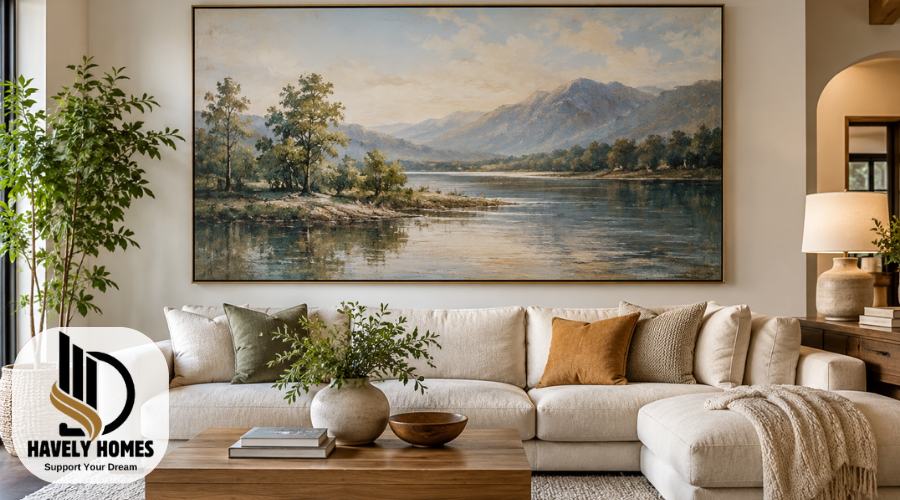
A large blank wall can make an otherwise comfortable room feel unfinished. Large wall art can solve that problem by creating a clear focal point and giving the space more character. However, choosing an oversized piece involves more than finding an image or design you like.
The size of the wall, nearby furniture, ceiling height, artwork orientation, colors, materials, and hanging method can all affect the final result. A piece that works beautifully above a wide sofa may feel awkward on a narrow hallway wall, while a heavy 3D decoration may require a very different installation method from a lightweight canvas.
This guide explains how to choose large wall art for living rooms and other Home spaces, including prints, canvases, horizontal and vertical designs, multi-panel artwork, 3D pieces, and more affordable options.
Quick Answer:
Large wall art should fit the available wall, nearby furniture, and room proportions. Measure the space first, choose a suitable orientation, and confirm the artwork’s weight and mounting requirements before installation.
Quick-Guide Table
| Possible problem | What to check | Recommended action |
| Artwork looks too small | Compare its width with the wall and nearby furniture | Choose a larger piece or create a coordinated multi-piece arrangement |
| Artwork feels too large | Check clearance around furniture, windows, doors, and wall edges | Reduce the artwork size or choose a simpler layout |
| Art looks too high | View the artwork from normal standing and seated positions | Lower it until it feels visually connected to the room and furniture |
| Horizontal art feels awkward | Compare the artwork shape with the available wall proportions | Try a vertical, square, or multi-panel format |
| Multi-panel art looks disconnected | Check whether gaps between pieces are consistent | Adjust spacing so the pieces read as one composition |
| Heavy artwork feels difficult to hang safely | Check its total weight, wall construction, and mounting instructions | Use suitable rated hardware or hire a professional installer if uncertain |
| Artwork clashes with the room | Compare its main colors and visual strength with existing décor | Choose artwork that complements or intentionally contrasts with a few room elements |
Helpful Steps Before Choosing Large Wall Art
- Measure the usable width and height of the wall.
- Measure any sofa, bed, console, or other furniture below it.
- Decide whether horizontal, vertical, square, or multi-panel art suits the space.
- Make a paper template to test the proposed size on the wall.
- Check the artwork’s finished dimensions, depth, and weight.
- Review the supplied hanging instructions and mounting requirements.
- Step back and judge the planned position from normal seating and walking areas.
- Use professional installation if a piece is unusually heavy or the correct fixing method is uncertain.
What Counts as Large Wall Art?
There is no single measurement that automatically makes artwork “large.” A piece can feel oversized in a small room but look modest on a wide wall with high ceilings. This is why proportion matters more than relying on one fixed size.
Large wall art generally refers to artwork that takes up a noticeable part of the available wall and has enough visual presence to act as an important part of the room’s design.
It may take several forms. You could use one oversized framed print, a large canvas, two coordinated pieces, a three-panel triptych, or a larger arrangement made from several related artworks.
The surrounding space matters as well. Think about the width of the wall, furniture beneath the art, nearby doors and windows, ceiling height, and the distance from which the artwork will usually be viewed.
Before deciding that a particular measurement is right, measure the actual area you want to decorate. A well-proportioned piece usually looks more intentional than artwork chosen simply because it is described as “large” by a seller.
Choosing the Right Size for Your Wall
Start by measuring the usable width and height of the wall rather than the entire room. Exclude areas occupied by doors, windows, switches, shelves, or furniture that visually interrupt the display.
If the artwork will sit above a sofa, bed, console table, or another substantial piece of furniture, use that furniture as part of the composition. One commonly used interior-design guideline is for the artwork or artwork grouping to span about two-thirds of the width of the furniture below it. Pottery Barn includes this proportion in its current artwork-hanging guidance. It is best treated as a starting point rather than a strict rule because wall proportions and furniture shapes vary.
An empty wall without furniture underneath gives you more freedom. On a wide wall, a larger horizontal piece or several coordinated works may prevent the artwork from looking lost. Narrow wall sections often suit a vertical piece better.
A useful way to judge scale before buying is to create a temporary outline. Cut paper to roughly the proposed artwork dimensions and tape it to the wall using a removable method suitable for the surface. IKEA recommends paper templates when planning picture arrangements because they let you test size and positioning before making holes.
Stand back and look at the template from the places where you normally sit, walk, or enter the room. This simple test often tells you more than measurements alone.
Large Wall Art for Living Room Spaces
The living room is one of the most common places for oversized artwork because it usually contains large furniture and open wall areas.
Above a sofa, artwork should feel visually connected to the seating area rather than appearing like a separate object floating high on the wall. Start by considering the sofa’s width, then compare the proposed artwork with the entire arrangement around it.
Large wall art for living room spaces can also work above a console table, on a main feature wall, or near a fireplace where the wall design and heat conditions make artwork appropriate. If you are placing art near a working fireplace or another heat source, follow the fireplace manufacturer’s clearance guidance and consider the artwork material rather than assuming every piece can be positioned there.
The best extra large wall art for living room use is therefore not one particular style. A large abstract canvas may suit one room, while a landscape print, textured piece, or restrained photographic image may work better elsewhere. Scale and compatibility with the room matter more than following a universal trend.
Look at existing upholstery, rugs, curtains, wood finishes, cushions, and lighting. Your artwork does not need to match every color. Repeating one or two existing tones can create connection, while a controlled contrast can make the art stand out.
In rooms that already contain many accessories, one strong oversized piece can sometimes feel calmer than filling the same wall with numerous small frames.
Horizontal, Vertical, or Multi-Panel Art?
Orientation can make a noticeable difference to how large artwork fits into a room.
Large wall art horizontal designs naturally suit wide areas such as the wall above a long sofa, sideboard, or bed. Their shape follows the furniture beneath them and can create a broad visual anchor.
Large wall art vertical pieces can work well on narrower wall sections, between architectural features, or in areas where you want to make use of vertical space. They may also suit rooms where the available width is limited.
The shape of the wall should usually guide this decision. Choosing horizontal or vertical art simply because one format is fashionable can lead to awkward proportions.
Another option is a diptych, triptych, or larger multi-panel set. Several coordinated panels can cover a wide area while remaining easier to handle than one extremely large frame.
When hanging multiple pieces, think of them as one visual composition. Pottery Barn advises treating multiple artworks as a collective unit and keeping spacing intentional rather than positioning each piece independently.
Keep the gaps reasonably consistent so the individual panels still appear connected.
Prints, Canvas, Framed Art, and 3D Wall Art
Different artwork formats create different visual effects and have different practical needs.
Large wall art prints are widely available and can be displayed in simple poster frames, traditional frames, or more decorative framing. A frame can give the image a defined border and may help connect it with other finishes in the room.
A large wall art canvas usually has a softer, simpler appearance because the image extends across a stretched surface without requiring a traditional glazed frame. Canvas can work particularly well where you want a large image without a visually heavy outer frame.
Framed art can provide more structure, but the complete frame, glazing, backing, and artwork may add weight. Always check the finished dimensions and total weight rather than judging installation needs only from the print itself.
Large wall art 3D may include sculptural panels, carved or molded décor, layered designs, metal pieces, or other textured wall objects. Because these pieces project farther from the wall, think about depth as well as width and height.
Three-dimensional décor may also collect dust differently and can require more clearance in narrow passages. Its weight and mounting points may be different from those of a flat canvas, so check the manufacturer’s installation instructions carefully.
There is no single best format. Choose according to the room, the look you prefer, maintenance needs, available wall space, and how securely the piece can be installed.
Finding a Style That Works With the Room
Once size and format are under control, focus on the artwork itself.
Common choices include abstract designs, botanical artwork, landscapes, photography, geometric pieces, minimalist compositions, and textured designs. Instead of choosing a style in isolation, consider what already exists in the room.
A simple room with neutral furniture can support a strong, colorful statement piece. A room with patterned fabrics, detailed furniture, or many decorative objects may benefit from calmer artwork.
Color does not need to match perfectly. You might repeat a few tones that already appear in the rug or upholstery, choose related shades, or deliberately introduce a contrasting accent.
The purpose also matters. If you want the artwork to become the room’s main focal point, choose something with enough contrast, scale, or visual detail to attract attention. If another feature already dominates the space, such as a dramatic fireplace or architectural wall, quieter artwork may provide better balance.
Most importantly, choose something you actually enjoy looking at. Home décor trends change, while large artwork often remains in place for years.
Placement and Hanging Height
Good placement helps artwork feel connected to the room rather than randomly attached to the wall.
A common starting point is to position the center of the artwork around normal standing eye level. Pottery Barn currently uses approximately 60 inches from the floor to the center of the artwork as a general reference.
That number should not be treated as a rule for every room. Furniture height, ceiling height, artwork dimensions, stairways, and grouped displays can all change what looks balanced.
Artwork above furniture usually needs to feel visually related to the object beneath it. Leaving an excessive gap can make the two elements look disconnected. Pottery Barn’s hanging guidance, for example, suggests keeping a relatively modest space between artwork and furniture rather than hanging the art far above it.
With a gallery arrangement or multi-panel set, judge the entire grouping as one composition. The visual center of the complete arrangement matters more than the center of each individual frame.
Before fixing anything permanently, step across the room and check the placement from normal viewing positions. What looks correct while standing close to the wall can feel too high or too small from across the room.
How to Plan the Layout Before Making Holes
Planning first can prevent unnecessary wall damage and make installation easier.
Begin by measuring the wall, furniture, and artwork. Then decide where the center of the display should sit.
For a more accurate preview, create full-size paper templates. IKEA’s hanging guide recommends tracing frames onto paper, marking their hanging points, and testing the paper pieces on the wall before installing the actual artwork. It also suggests trying multi-piece arrangements on the floor first.
A practical process is:
- Measure each piece, including its frame.
- Cut paper templates to the same dimensions.
- Arrange multi-piece displays on the floor first.
- Temporarily position the templates on the wall.
- View the arrangement from normal seating and walking areas.
- Adjust the height and spacing until it feels balanced.
- Mark the correct hanging points.
- Use a level where accurate alignment is important.
This extra planning is especially useful with large artwork because moving a small frame is easy, while repositioning an oversized or heavy piece can be much more difficult.
Safe Installation for Large and Heavy Wall Art
Size does not always tell you how difficult a piece will be to hang. A large lightweight canvas may require a very different mounting method from a heavy framed print, mirror, metal sculpture, or 3D decoration.
Check the actual weight of the finished piece and read any hanging instructions supplied by the manufacturer. The mounting hardware must be suitable for both the artwork and the wall construction.
Drywall, masonry, solid wood, plaster, and other wall materials do not all accept the same fittings. Avoid assuming that one nail, basic hook, adhesive strip, or anchor will work everywhere.
Adhesive hanging products also have specific limits. For example, 3M publishes different weight and frame-size limits for different Command picture-hanging products and instructs users to follow the directions for the specific product being used. This is a useful reminder not to select adhesive products based only on appearance.
Before installation, confirm:
- the full artwork weight;
- the type and condition of the wall;
- the number and type of mounting points;
- the hardware manufacturer’s stated limits;
- and the artwork manufacturer’s installation instructions.
Take extra care with valuable art, heavy frames, mirrors, sculptural décor, or anything installed above seating or other regularly occupied areas. If the artwork is unusually heavy, difficult to lift safely, or you are unsure about the wall construction or mounting method, use an experienced installer or other qualified professional.
Inexpensive Large Wall Art Without Making the Room Look Cheap
Filling a large wall does not necessarily require an expensive original painting.
Inexpensive large wall art can include poster-size prints, downloadable artwork printed locally, stretched canvas, photography, or coordinated print sets. The key is to choose the right scale and present the piece neatly.
Standard-size frames can sometimes make budgeting easier because custom framing can add significant cost. Before buying a print, check whether its dimensions match a readily available frame size in your area.
If you purchase downloadable artwork, confirm that the file is intended for printing at the size you need. Enlarging a low-resolution image too far can reduce visible quality. You should also make sure your purchase or licence allows the intended personal printing use.
Pay attention to frame condition, clean edges, straight installation, and appropriate scale. A simple print that fits the wall properly can look more considered than several small decorations bought only to fill empty space.
You can also save money by concentrating your budget on one well-scaled focal piece instead of buying numerous unrelated items.
Common Large Wall Art Mistakes to Avoid
One of the easiest mistakes is buying artwork before measuring the wall. Images on shopping pages rarely give an accurate sense of scale, so a piece that appears huge on a screen may look surprisingly small above a full-size sofa.
Another common problem is hanging art too high. Large pieces should feel connected to the room and nearby furniture rather than sitting close to the ceiling without a clear reason.
Avoid choosing too many colors simply because you want the artwork to match every cushion, curtain, and accessory. A more limited connection between the art and the room often feels more natural.
Installation mistakes can also create real problems. Do not ignore the frame’s depth and weight, and do not assume the supplied or existing hardware is automatically suitable for your wall.
With multi-panel artwork, inconsistent gaps can make the arrangement look accidental. Very large gaps may cause related panels to appear disconnected, while crowding them together can make the display feel cramped.
Finally, avoid buying a large piece only because it represents a current decorating trend. Scale and style matter, but you will probably enjoy the room more if the artwork also reflects your own taste.
A Simple Checklist Before You Buy
Before ordering or bringing home a large piece of wall décor, check the basics:
- Measure the usable wall width and height.
- Measure the sofa, bed, console, or other furniture below the intended location.
- Decide whether horizontal, vertical, square, or multi-panel artwork fits the space best.
- Consider the room’s main colors, materials, and existing focal points.
- Decide whether a print, framed work, canvas, or 3D piece is practical for the location.
- Check the finished width, height, depth, and weight.
- Confirm what hanging hardware is included and whether it is suitable for your wall.
- Review the manufacturer’s mounting instructions.
- Test the dimensions with a paper template before buying or drilling.
A few minutes spent checking these details can prevent problems with proportion, placement, and installation later.
Conclusion
Choosing large wall art successfully is mainly about balance. The artwork needs to suit the size and shape of the wall, relate naturally to nearby furniture, and work with the colors and materials already in the room.
Measure before buying rather than relying on one universal decorating rule. Think about whether a horizontal, vertical, canvas, framed, multi-panel, or 3D design best suits the available space, and test the proposed size with a paper template whenever possible.
Installation deserves the same attention as style. Oversized framed pieces, heavy objects, and three-dimensional wall décor should always be mounted using hardware appropriate for their weight and the wall construction.
The best large wall art does not have to follow every current trend. It should feel properly scaled, safely installed, visually comfortable in the room, and enjoyable for the people who live there.
FAQs
Can Large Wall Art Work In A Small Room?
Yes. A large piece can work in a smaller room when its proportions suit the available wall. Measure carefully and avoid overcrowding the surrounding space with too many competing decorations.
Is Canvas Or Framed Wall Art Better For A Living Room?
Neither is automatically better. Canvas often gives a simpler appearance, while framed art adds a defined border. Choose according to your decorating style, artwork weight, maintenance needs, and available wall space.
Should Large Wall Art Match The Furniture Exactly?
No. Artwork does not need to match every color in the room. Repeating one or two existing tones, using related shades, or introducing a controlled contrast can create a more natural look.
Can I Use Several Smaller Pictures Instead Of One Oversized Piece?
Yes. A diptych, triptych, or coordinated gallery arrangement can fill a large wall effectively. Keep the spacing intentional and judge the complete arrangement as one visual composition rather than separate pictures.
Is Large 3d Wall Art Harder To Install?
It can be because depth, shape, weight, and mounting points vary considerably. Check the manufacturer’s instructions and use hardware suitable for both the piece and your wall construction.
Disclaimer: This article is provided for general Home décor and informational purposes only. Wall materials, artwork weights, mounting systems, and installation requirements can vary, so always follow the instructions supplied with your artwork and hanging hardware. Do not assume that a nail, adhesive strip, hook, or wall anchor is suitable for every large or heavy piece. If the artwork is unusually heavy, valuable, difficult to handle, or you are unsure about the wall structure or correct mounting method, consider using a qualified professional installer. HavelyHomes.com is sharing general information only and does not represent or claim affiliation with any artwork, hardware, furniture, or installation brand mentioned in related content.
